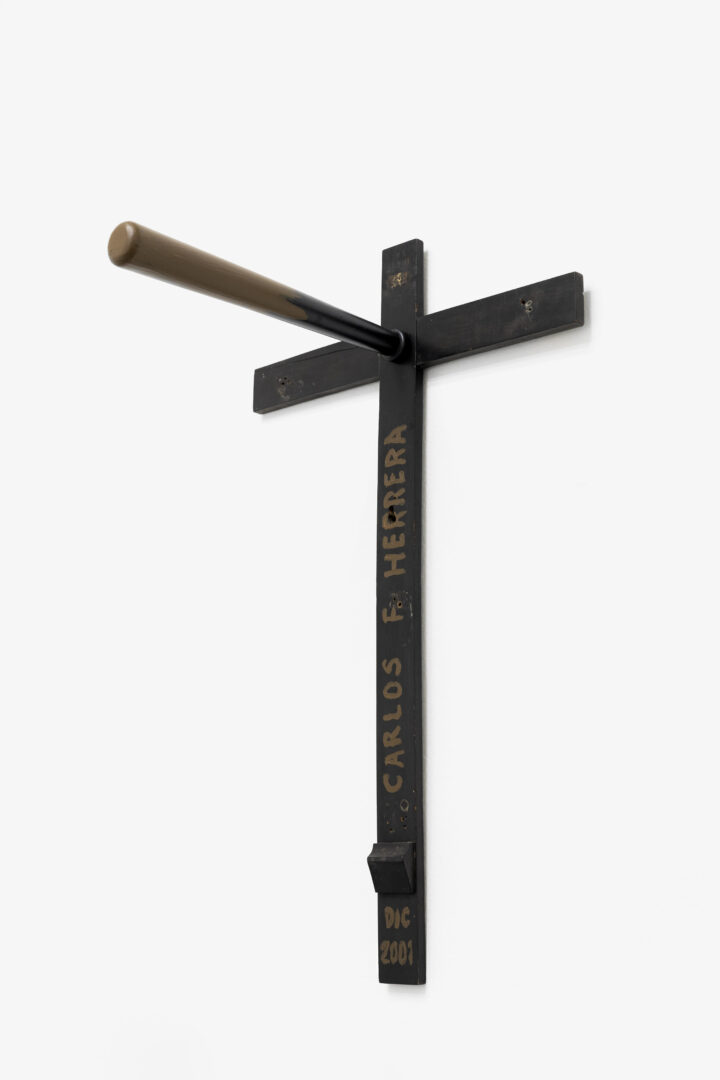
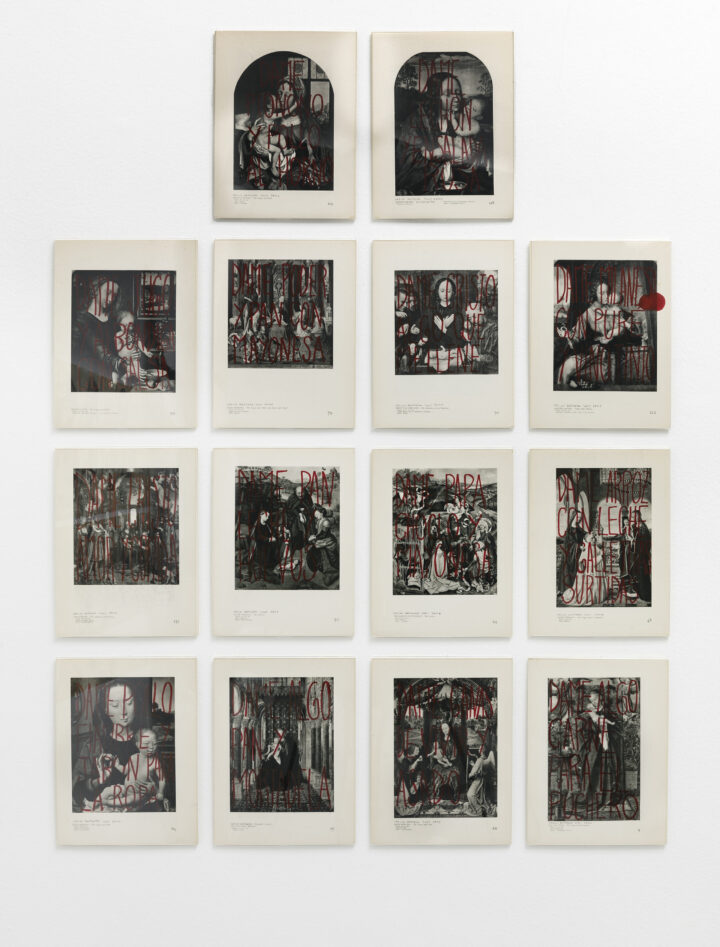
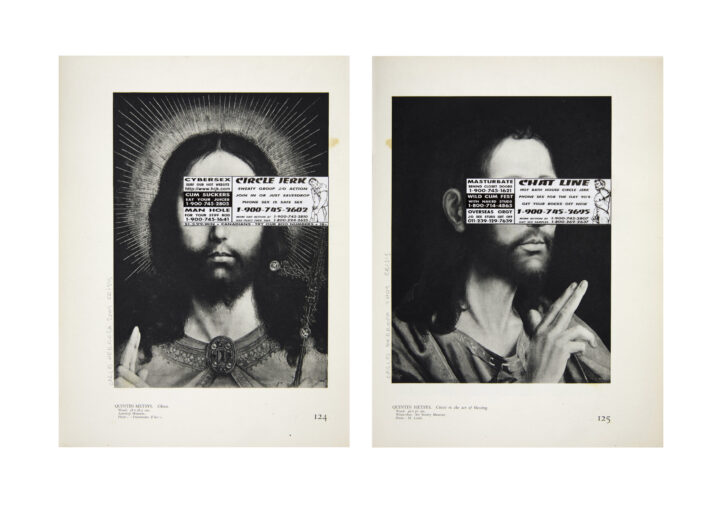
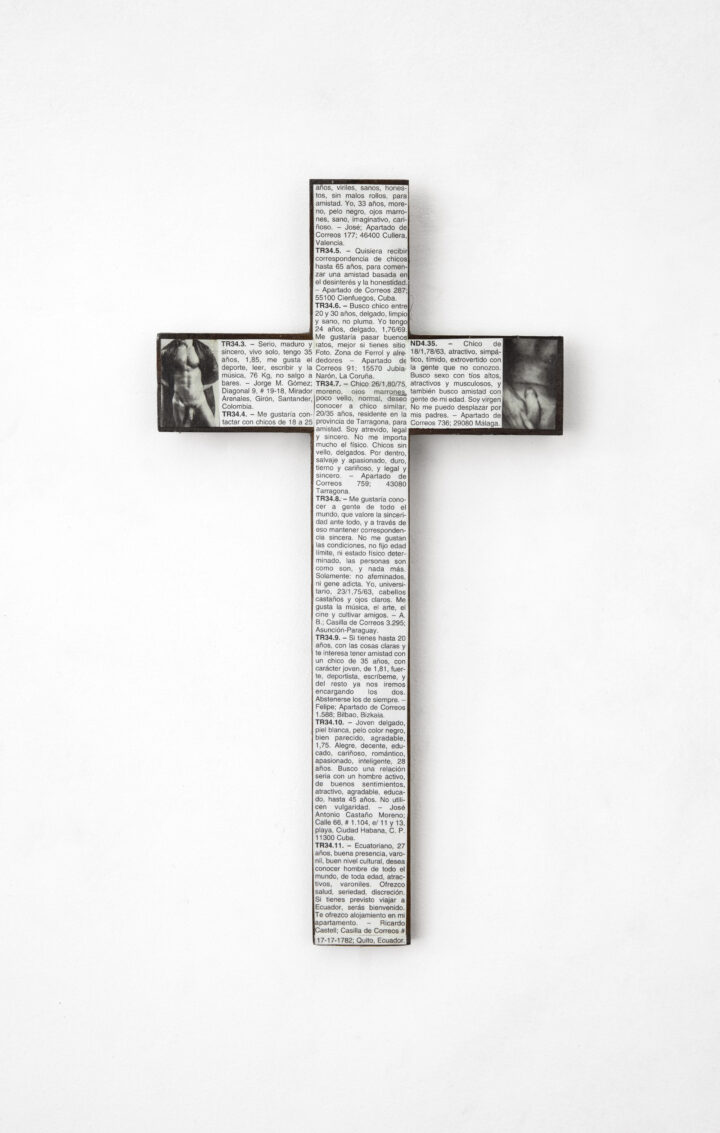
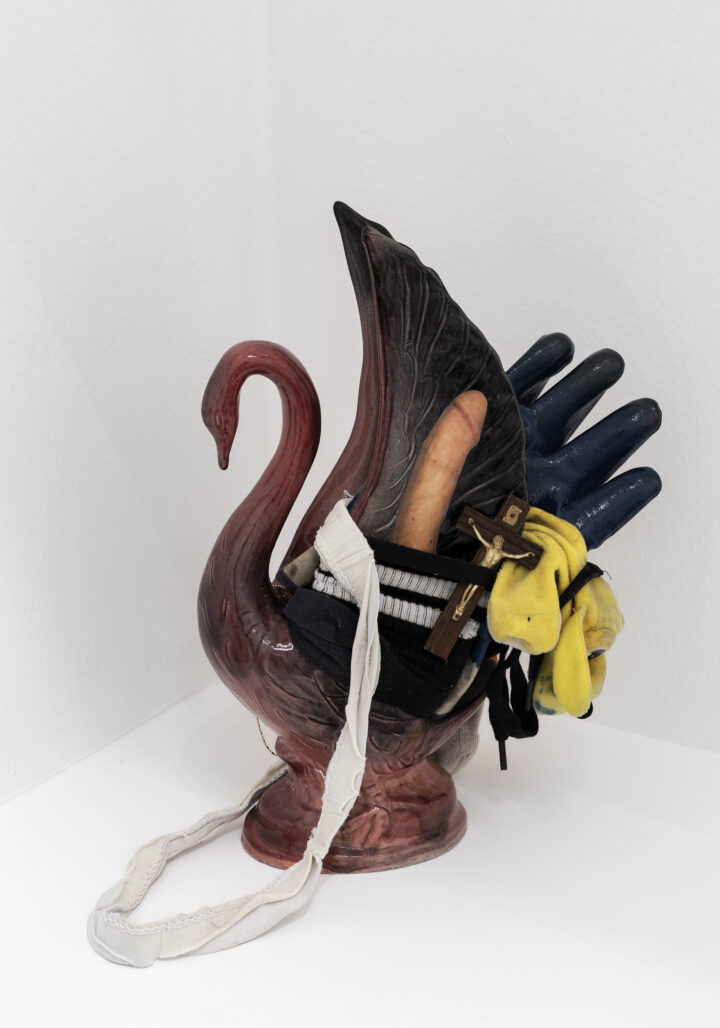
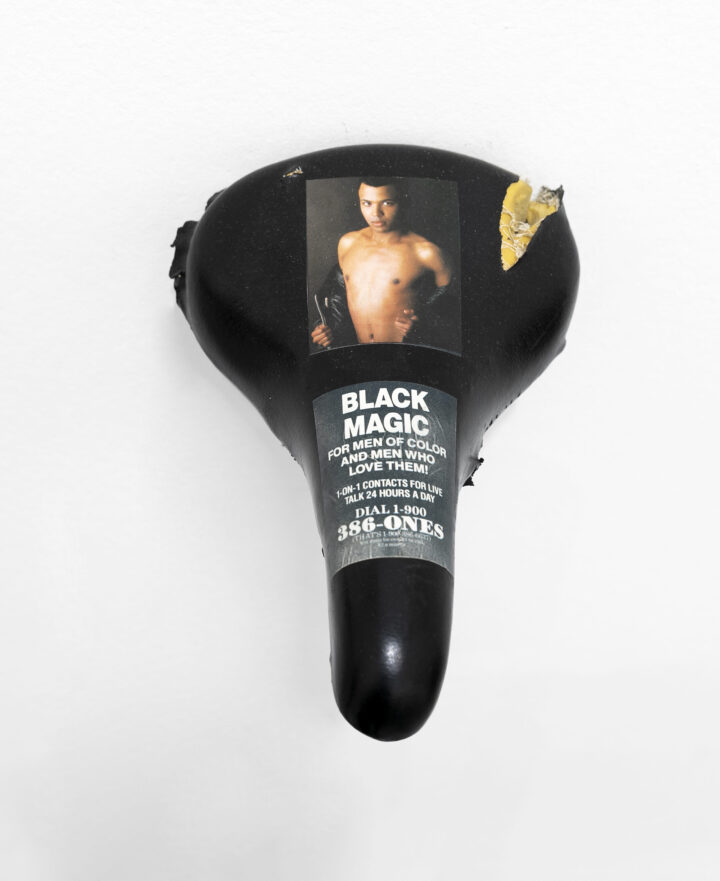
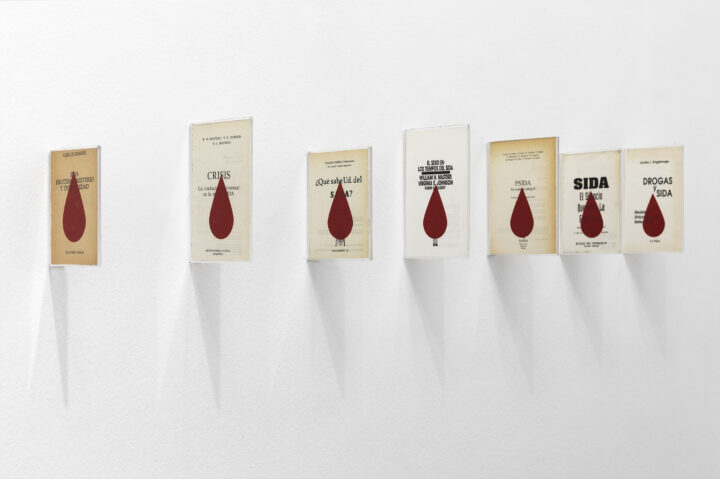
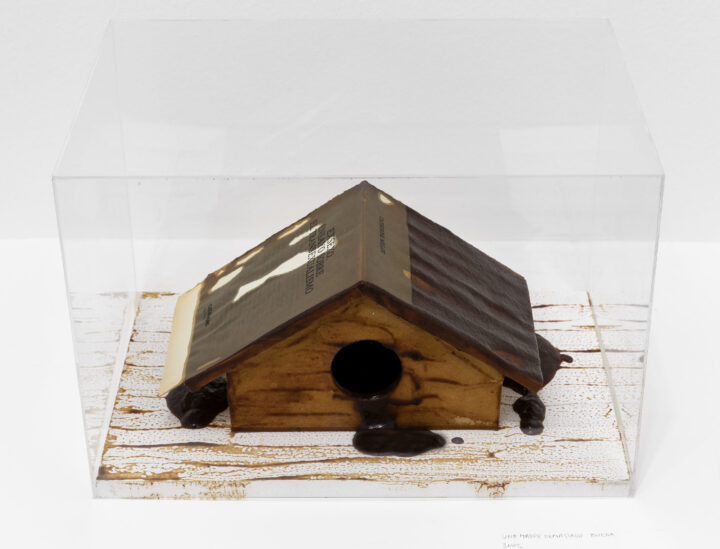
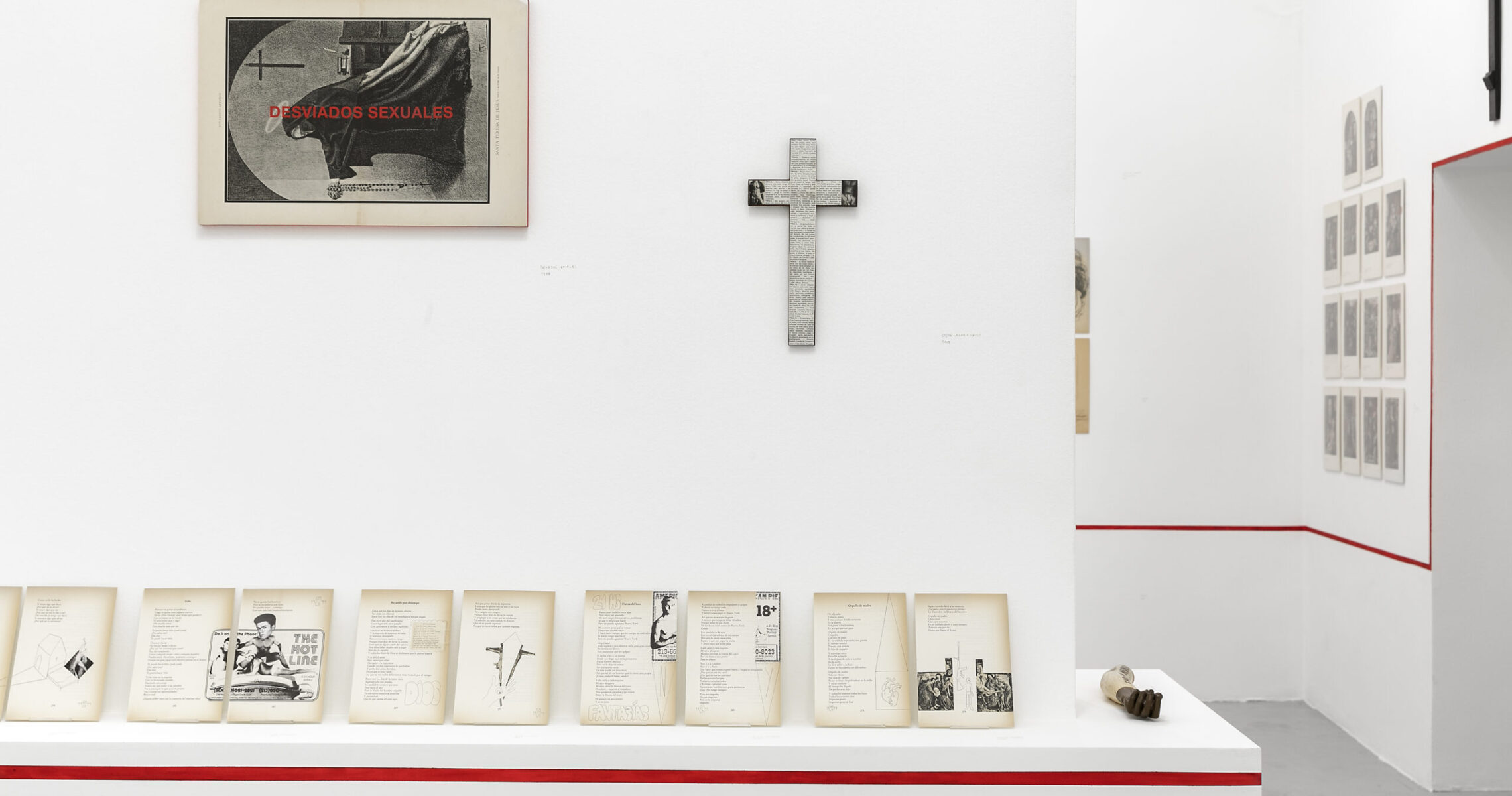
The exhibition ADENTRO AFUERA is part of a broader project, underway since 2025, that will culminate in 2027 with a book and a retrospective exhibition on the work of the artist Carlos Herrera. Throughout this year, we have carried out a comprehensive process of review, organization, and research of the artist’s 30 years of production. This exhibition specifically focuses on the period between 1996—the beginning of his artistic practice—and 2006, thus presenting a decade of work that is fundamental to understanding the signs, symbols, gestures, and devices that recur throughout his work, as constancy and persistence, in a kind of ethic of insistence, as we can also observe in the conceptual issues the artist addresses, demonstrating this poietic resistance.
One could say that the exhibition presents more of a spiritual question than a temporal one, despite the notions of retrospectivity, chronology, or timeline imposed upon it. After all, these very concepts have been questioned in recent decades by different branches of the Humanities; more than ever, because we are confronted with the problem of temporal boundaries that escape a normative principle of ontological separation between past and present. This polychronic vision assumes a more political and performative character of time, which seems to me more interesting when it comes to the subjectivity of an artist.
When does the present begin?
As Michel de Certeau wrote: “Modern Western history indeed begins with the differentiation between the present and the past. […] Initially, historiography separates its present from a past. However, it always repeats the gesture of dividing. […] Therefore, the cut is the postulate of interpretation (which is constructed from a present) and its object (the divisions that organize the representations that are reinterpreted)” (2006, pp. 14–15).
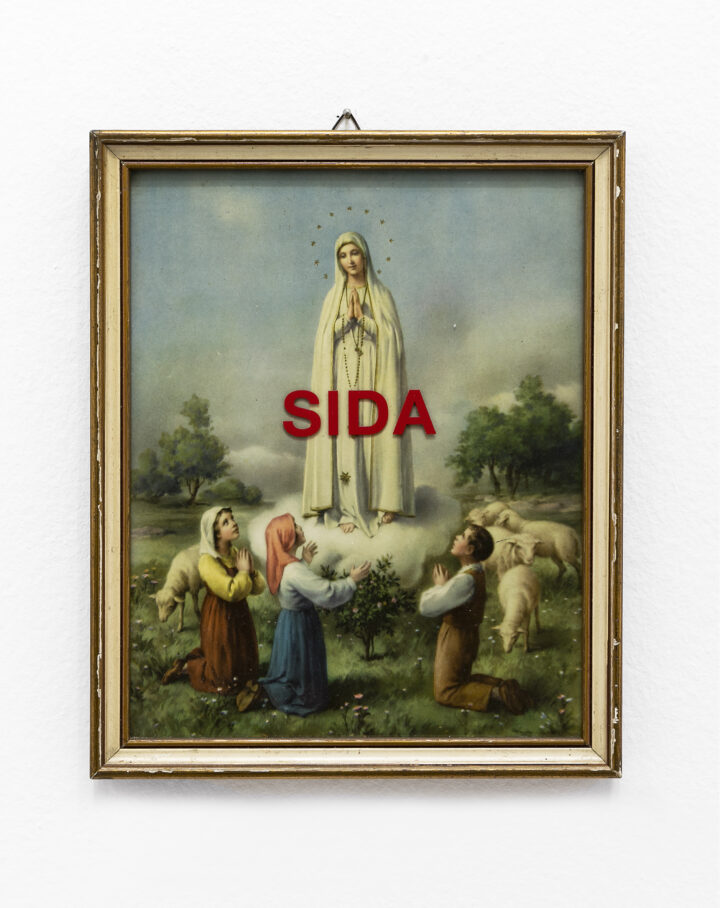
This non-normative stance in relation to time also serves as a key to the work of a gay artist (as he himself strives to emphasize) who, since the beginning of his career, has maintained a state of queerness based on the tension of a binomial apparently surpassed by the new generations: that of religion and sexuality.
This polychronicity and performativity of time points to something that several queer researchers have called queer resonance, that is, like a virus, connections unite LGBTQ+ experiences across time and space, challenging a heteronormative vision of history, where progress is different from process. Carlos’s work responds precisely to these unresolved issues, posing the question: Why is it important to keep talking about this from a national/global perspective?
Born in 1976 on the outskirts of the city of Rosario, Argentina—the same city as Marcella Althaus-Reid, an important theologian internationally recognized for her research on Queer Theology and who will become a reference for him—Carlos Herrera was a young rural fag, born into a religious family of Spanish and Italian immigrants.
Surrounded by a landscape that was both specific and universal (ah! Charly, how many times have we talked about Derek Jarman, his Prospect Cottage, and his entire relationship with religion?), the artist’s family cultivated seasonal flowers, with the city’s funeral homes as their main clients. Christ was everywhere: in the house, in school, in funeral homes.
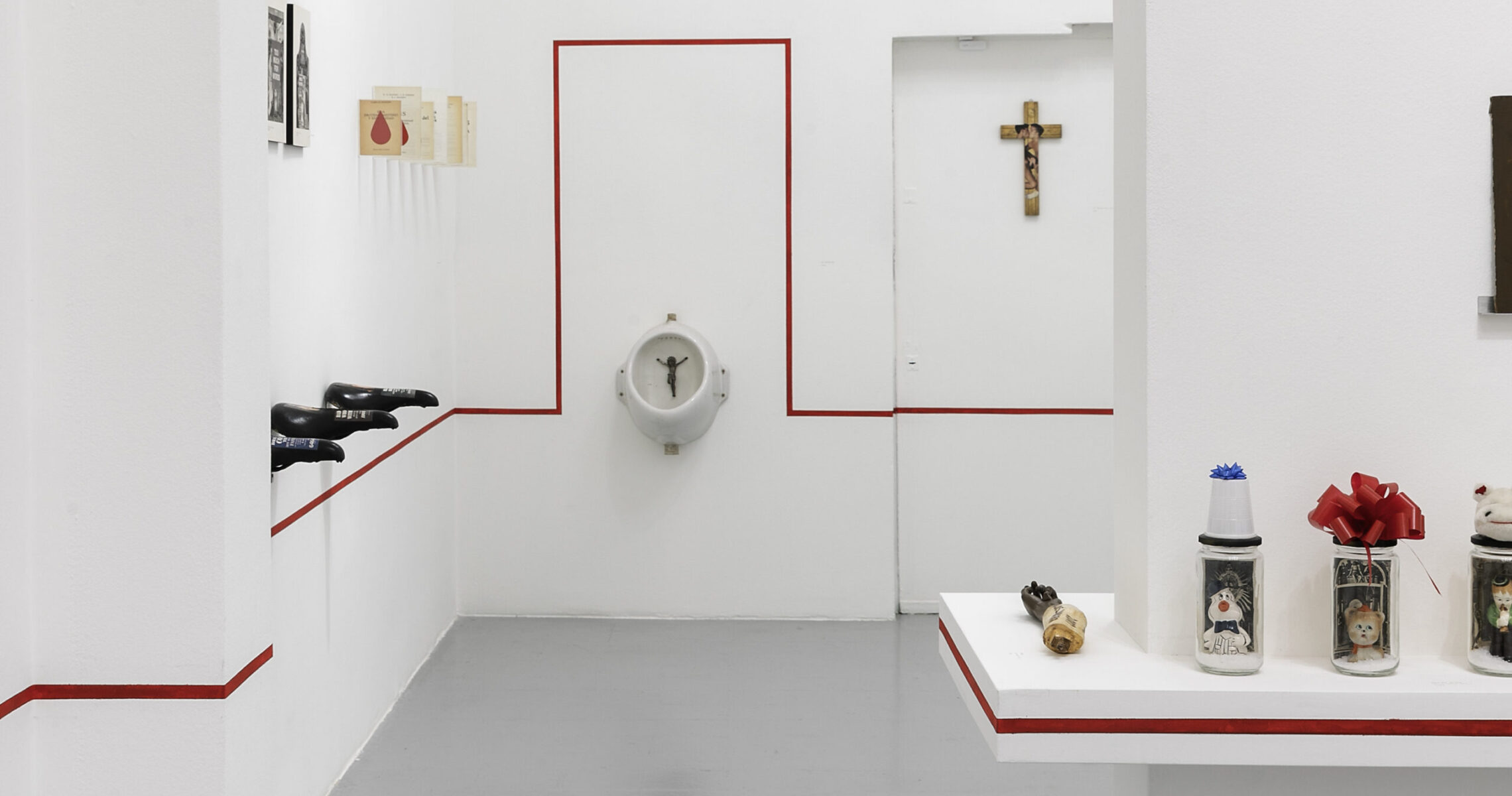
The title of the exhibition, ADENTRO AFUERA, written in capital letters as a kind of shout, a statement, but also without hierarchy between uppercase and lowercase, was conceived by the artist precisely as a synthesis of his relationship with religion; that is, something that is always inside him as a constitutive part, but that, when transformed, came out, expanded—not only in the literal sense of coming out of the closet, or a liberation of this creation, but also as this “outside” that refers to poetics, that is, something that transmuted and became his artistic production.
This transformation occurred through a deep personal process of resignifying guilt, repulsion, and conflicting feelings, and it was transferred into an investigation, a micropolitics, as his fellow countrywoman Marcella Althaus-Reid and many other queer artists and researchers who have focused on this paradigm have done.
As the artist says, the relationship between religion and sexuality is “that inside toward the outside and that outside toward the inside.”
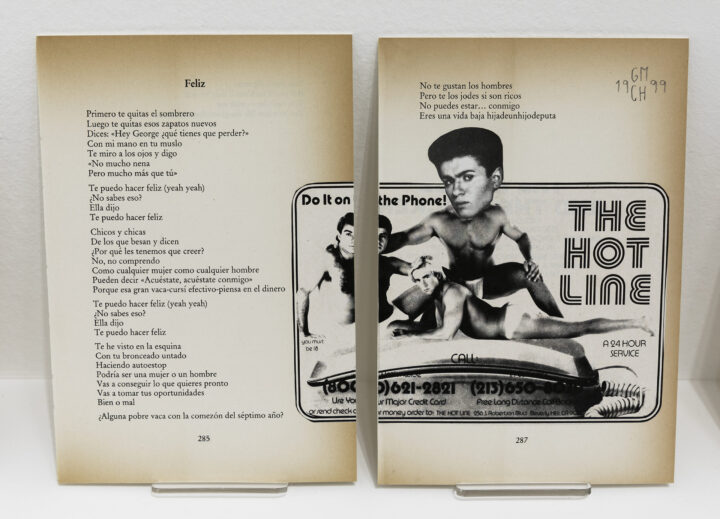
For the title, the artist also takes as a trigger the video Outside by the British singer George Michael, who in 1998 was arrested for cruising in a bathroom at Will Rogers Memorial Park in Beverly Hills. The incident was widely reported by the media and led him to publicly declare himself gay. This event was extremely significant for Carlos, not only because it involved an icon of his generation, but also because the event affected him intimately.
This kind of violence from the public sphere toward George Michael’s sexuality was the same that Carlos faced during his adolescence; after all, being a gay man from the countryside of a city in the Argentine interior, with an entire patriarchal colonial heritage, understanding his sexuality in the 1990s in the context of the HIV/AIDS pandemic was complex—there was a global social morality at that time in which the queer question was still entirely linked to disease.
This moral violence created bidirectional personal biographical processes according to each context. In some cases, being gay during the HIV/AIDS pandemic led to a true destruction of closets; that is, the silencing of some lives turned into a scream, or in other cases the opposite effect occurred, silencing even more.
This is what, for example, the researcher Michael P. Brown addresses in his book published in 2000, Closet Space: Geographies of Metaphor from the Body to the Globe, where he asks whether “coming out of the closet” is simply a metaphor or whether it can offer an analysis of different queer geographies where this process occurred in different ways.
Thus, in 1998, when the George Michael scandal broke, the HIV/AIDS pandemic had already passed through its first phase during the 1980s. However, for some researchers, its repercussions became evident in the 1990s, since by the mid-1990s the pandemic reached its peak, becoming the third leading cause of death worldwide.
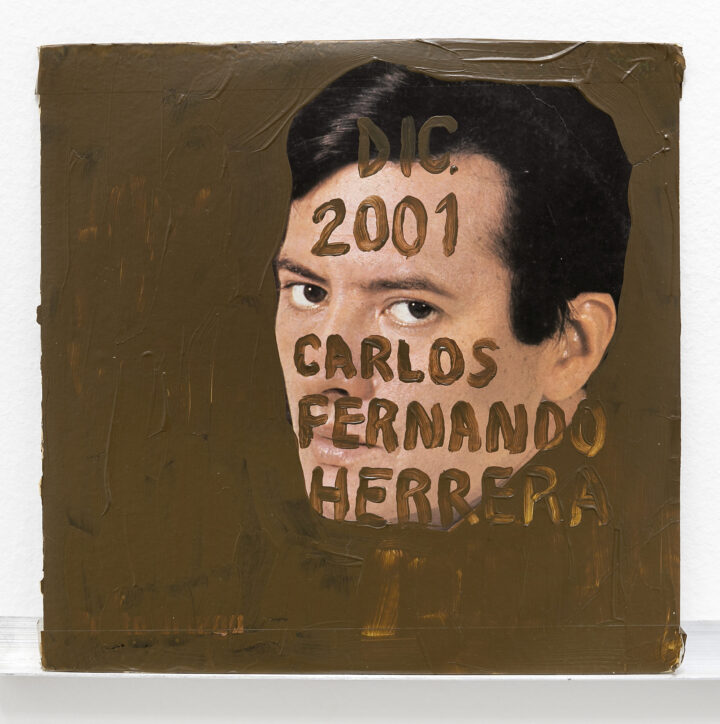
If we consider that the first works in this exhibition date precisely from 1996, they reflect this phase of struggles that Carlos experienced according to his personal geography.
What is terrifying in this sense is that this context of the 1990s reminds us of very similar situations that the LGBTQ+ community has faced in recent years, with the rise of the far right internationally.
Therefore, as mentioned at the beginning of the text, this exhibition brings with it a proposal to “stay with the trouble,” according to Donna Haraway—something somewhat cliché for the intellectual police of the moment, but it is exactly this! Reagans, Thatchers, Bushes, Trumps, Bolsonaros, Mileis…
In this backlash of the far right, we have witnessed legislative and institutional setbacks in recent years that have had a direct impact on the health of the LGBTQ+ population and also on policies regarding HIV/AIDS, which are still linked to the queer community. There has also been an increase in hate crimes, the loss of cultural and symbolic space—such as attempts to cancel Pride Marches in different parts of the world—as well as censorship of LGBTQ+ content through laws in some countries that restrict sexual diversity content in the media and on the internet.
These are just some examples.
“Staying with the trouble” in this sense means thinking that we are not free from this anthropo-phallic-ego-logocentric-colonial-capitalist system, as the philosopher Suely Rolnik says, beyond the progressive governments we had throughout the 2000s.
In all countries of Latin America there were no respites; in the case of Argentina specifically, the queer community was extremely violated during the last Military Dictatorship from 1976 to 1983, and shortly afterward it was struck by the HIV/AIDS pandemic.
After these two long and arduous processes experienced by the LGBTQ+ movement, but also by Argentine society as a whole, the country was affected by the national political, economic, social, and institutional crisis that became globally known as the 2001 Crisis, the same year in which the world experienced an extremely complex geopolitical moment with numerous wars, culminating in the terrorist attack on the Twin Towers in New York.
All of this would affect the artist biographically.
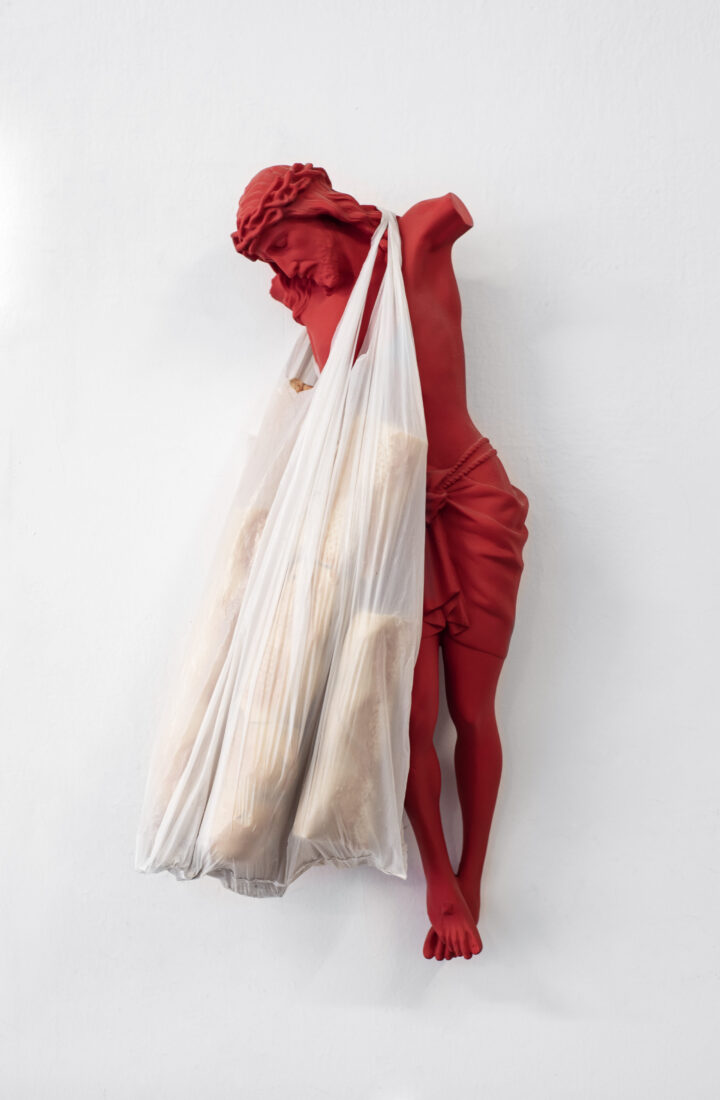
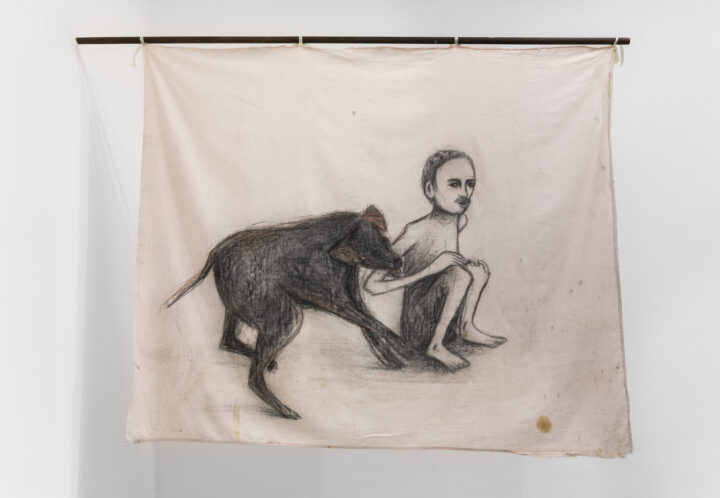
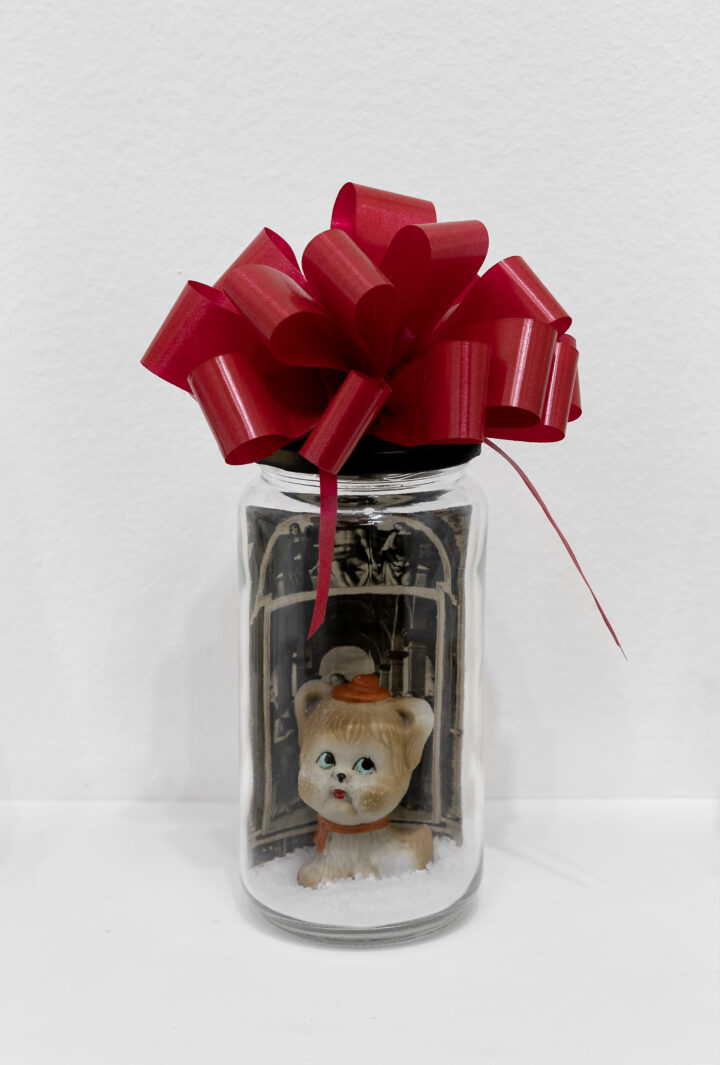
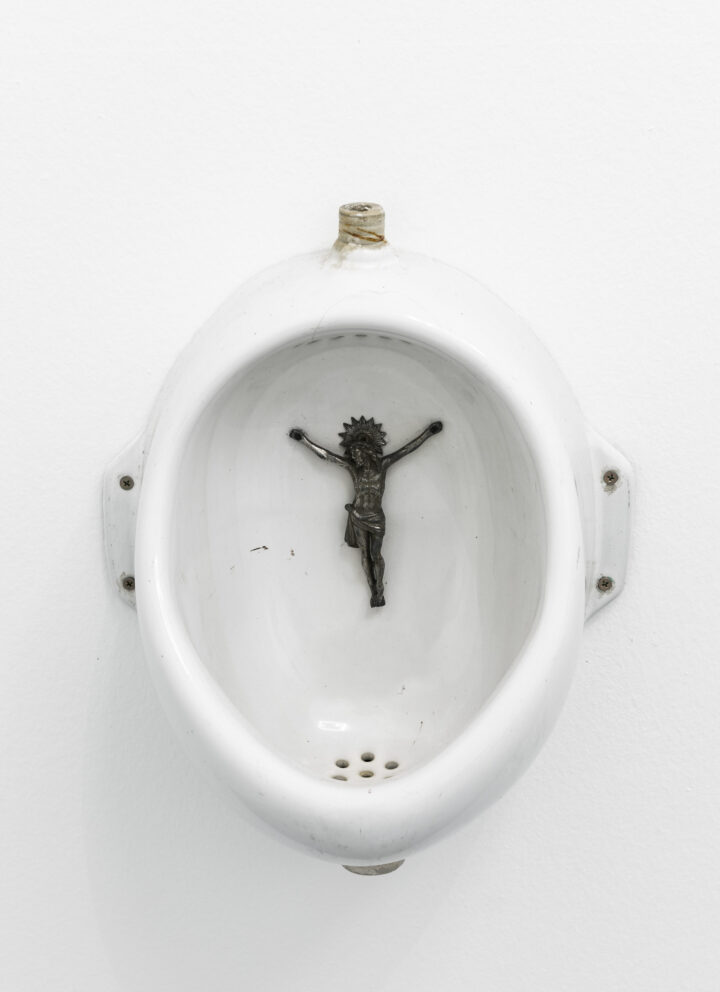
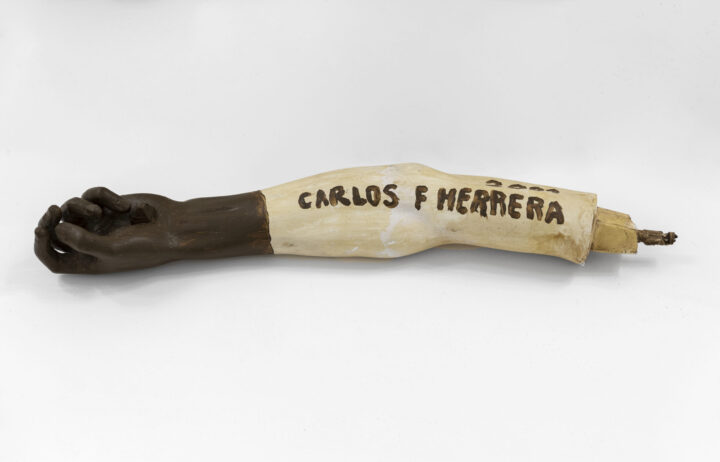
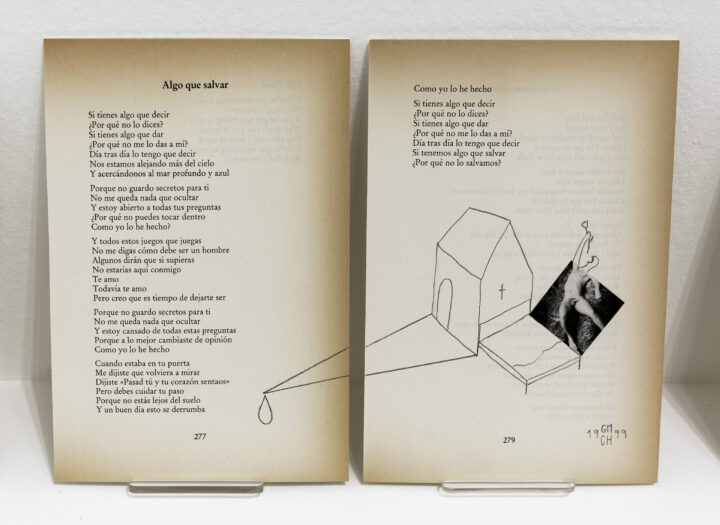
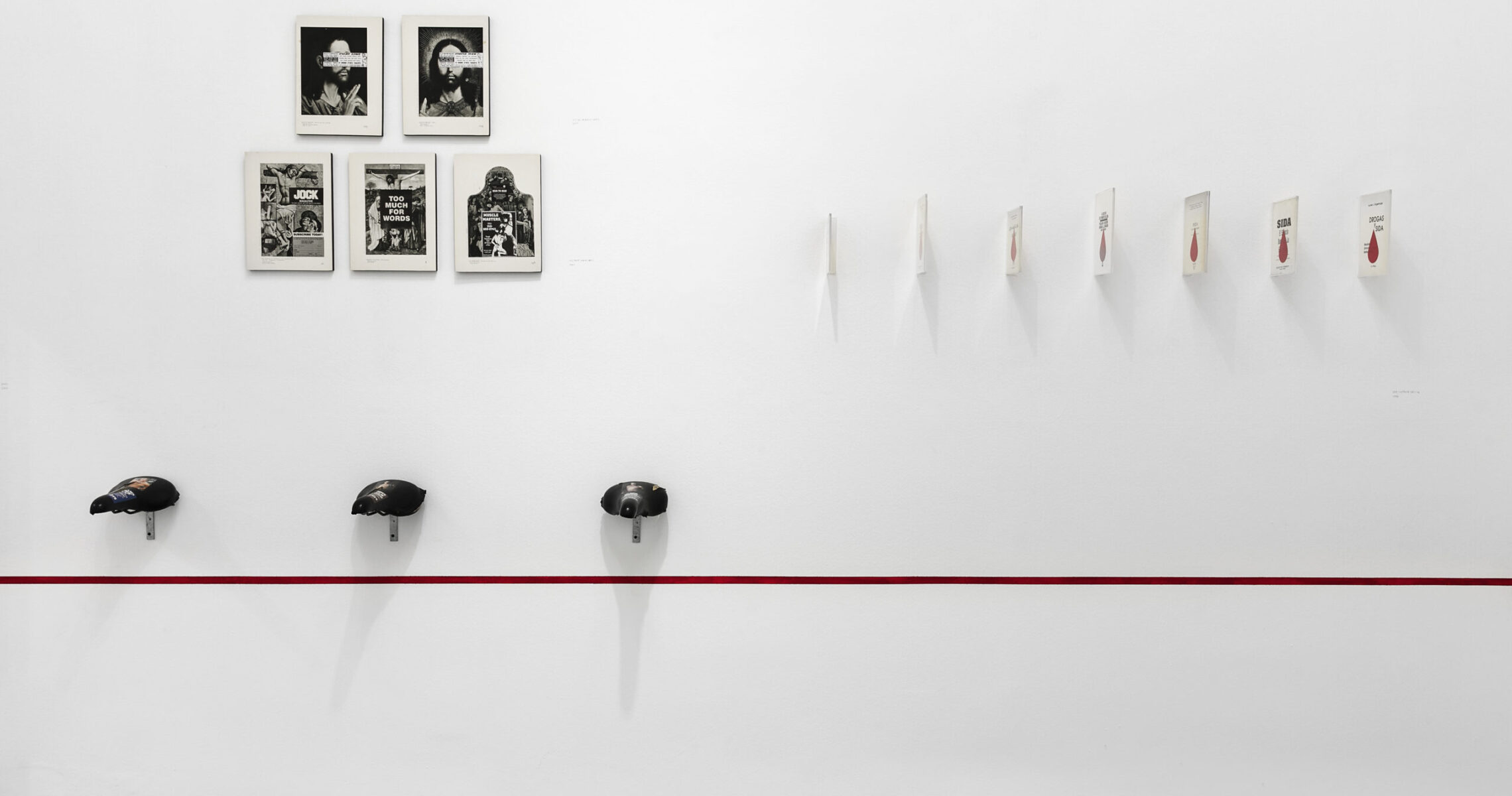
Thus, what we see in this excerpt of Carlos Herrera’s work, through collage as the predominant procedure, is a response to this entire context, through a practice that we will see reworked, developed, and refined throughout his career.
We could say that, for the artist, collage is a form of resignification of symbolic domain, making a citational deviation toward an expansion of meanings that considers different corpuses in the world.
Here we can think of corpus as an extensive and ordered collection of texts, data, documents, or materials selected according to criteria of power and norm, as well as the Latin term “body”; that is, it is about resignifying subjectivities that have been erased or even violated by the prevailing normative symbolic domain.
In her article “Too much Trouble? Negotiating Feminist and Queer Approaches in Religion,” the researcher Claudia Schippert cites Judith Butler, who proposes the notion of “radical resignification of the symbolic realm.”
For Schippert, this radicality occurs when this type of operation is carried out precisely in symbolic domains such as religion; that is, this profanation (as Agamben also suggests) is what will generate this dispute.
Carlos is interested in this dispute and will maintain it as his research throughout his career.
This research deals with this desire for symbolic resignification of this inside-to-outside that dominates us: tradition, family, property.
In his last solo exhibition at Galería Ruth Benzacar, “Imágenes de mi Pan,” this triangulation was also present.
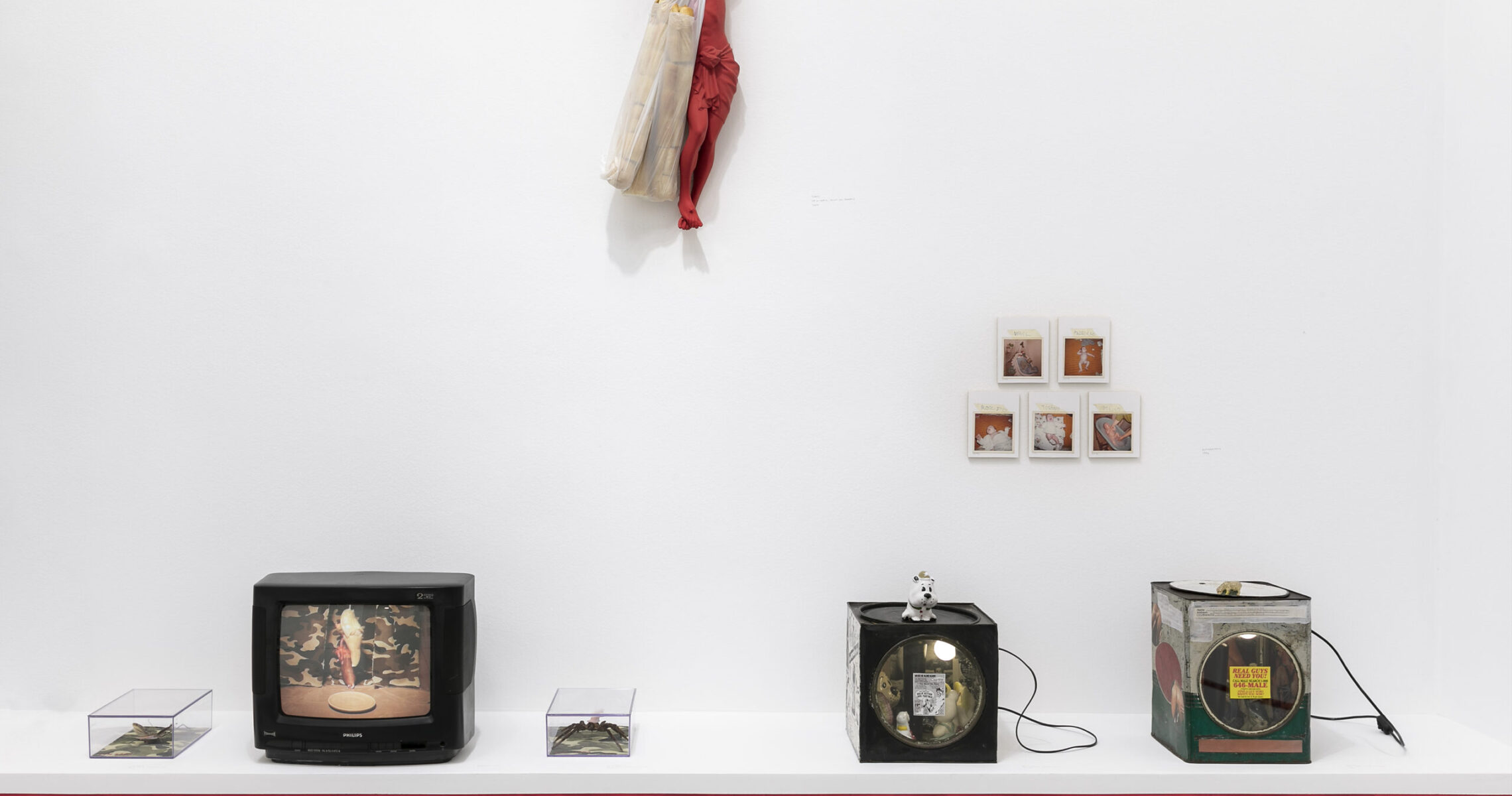
Here, bread reappears in a work from the beginning of his career, from the series “Ataditos,” in which Herrera uses a memory of how his poor European immigrant ancestors gave gifts on commemorative dates; basically, they tied several types of “little things” together into a single gift for the person, as an offering.
This memorabilia reappears juxtaposed with this entire personal and collective universe, in an attempt, as his fellow countrywoman Marcella Althaus-Reid points out in her book The Queer God, to challenge heterosexual orthodoxy, something that other artists belonging to this artistic genealogical tree inhabited by Charly have also done.
In the dedication of the book, Althaus-Reid writes:
“This book is dedicated to all my friends and loves and to all those who in life walk like me, ‘loose and unvaccinated,’ searching for God amid loves, love affairs, and so many solitudes.”
Bruno Mendonça