ALEJANDRA SEEBER

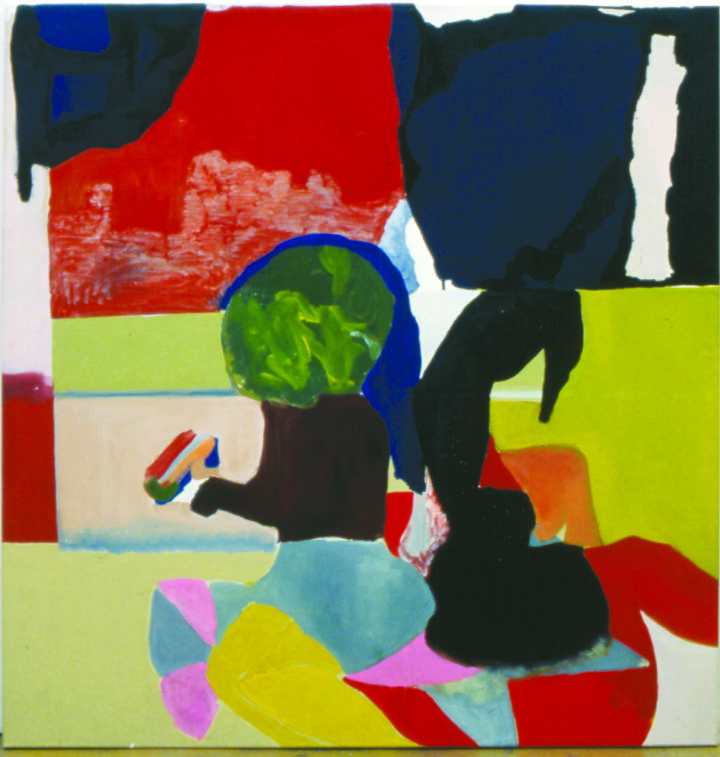
Seeber approaches painting as a medium capable of absorbing its surroundings. Interior landscapes are a central motif in his work, as is the role of painting within a given space. For this reason, his works are often large-scale and expand in various ways within the exhibition space. In his process, he continually questions what painting is, maintaining an irreverent relationship with the medium. He interweaves painting with installation, sculpture, and public programs to activate contexts where the boundaries between the personal and the political tend to collapse.

Themes such as the representation of sculptures in space function as devices for reflecting on the tension between representation and abstraction. They operate as open vessels, where painting can assume a leading role: structures flexible enough for the pictorial language itself to guide the work. These forms, akin to sculptures in space, emerge from both waiting and imagination.

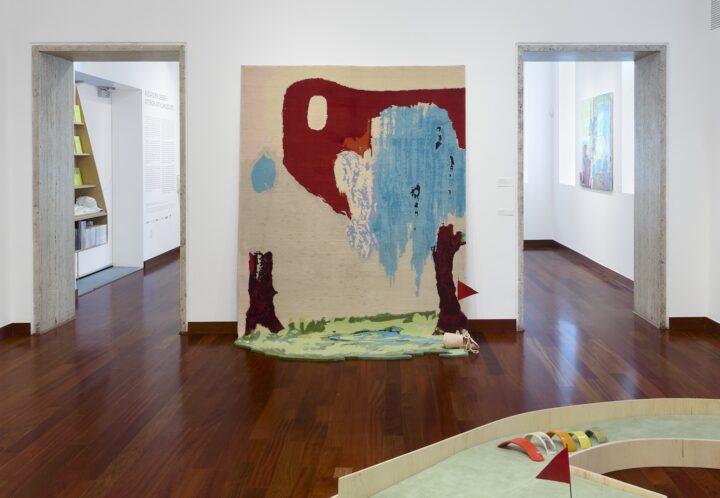
His spatial explorations often revolve around the tension between the domestic sphere and the landscape or nature. This can manifest, for example, in the creation of a playable mini-golf course that invites visitors to interact physically and playfully with the exhibition space. By inserting a “landscape” into the “interior” of the gallery, the work reflects on the relationships between interior and exterior, the built and the natural, as well as between the art object and audience participation.

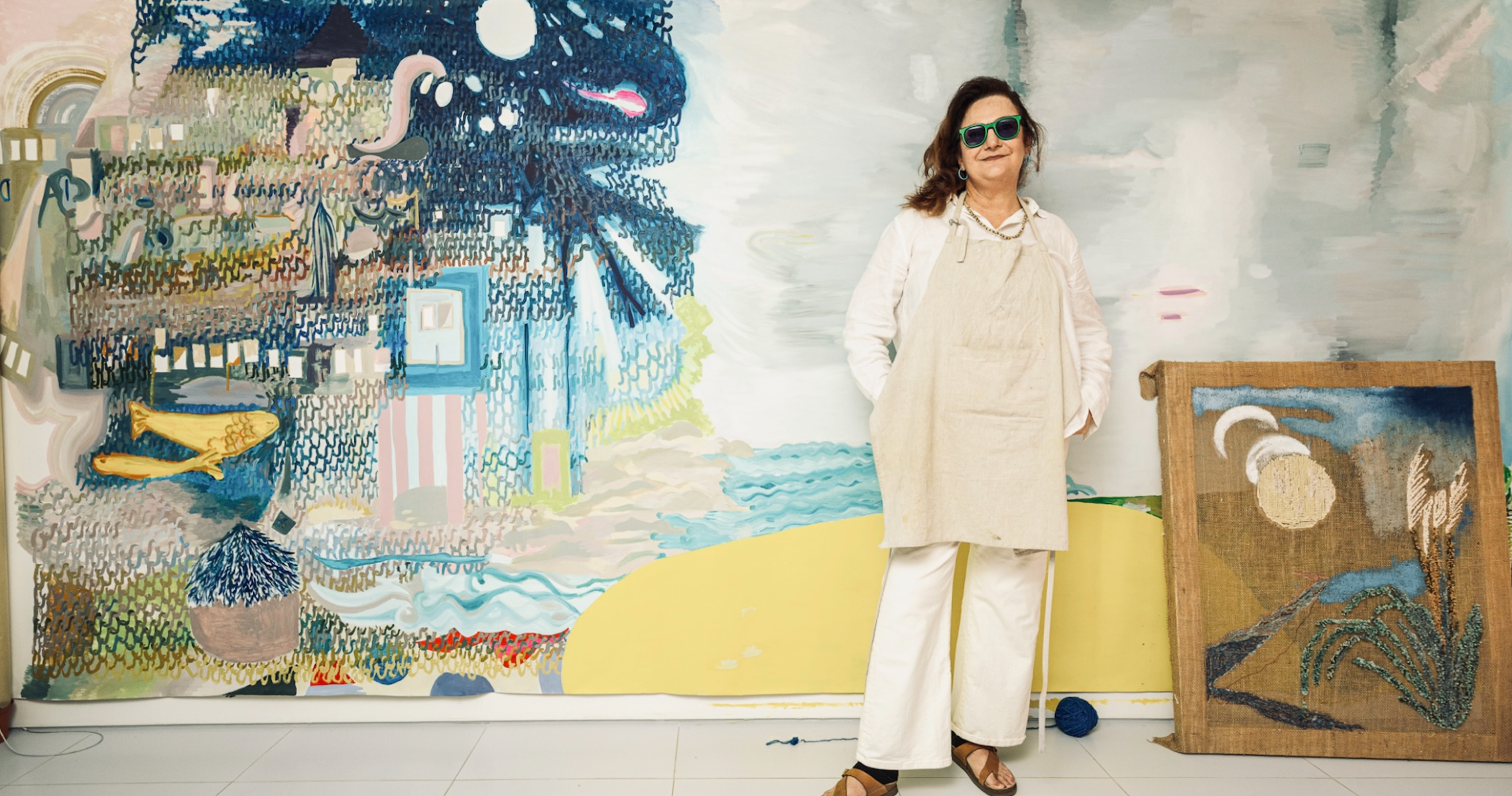
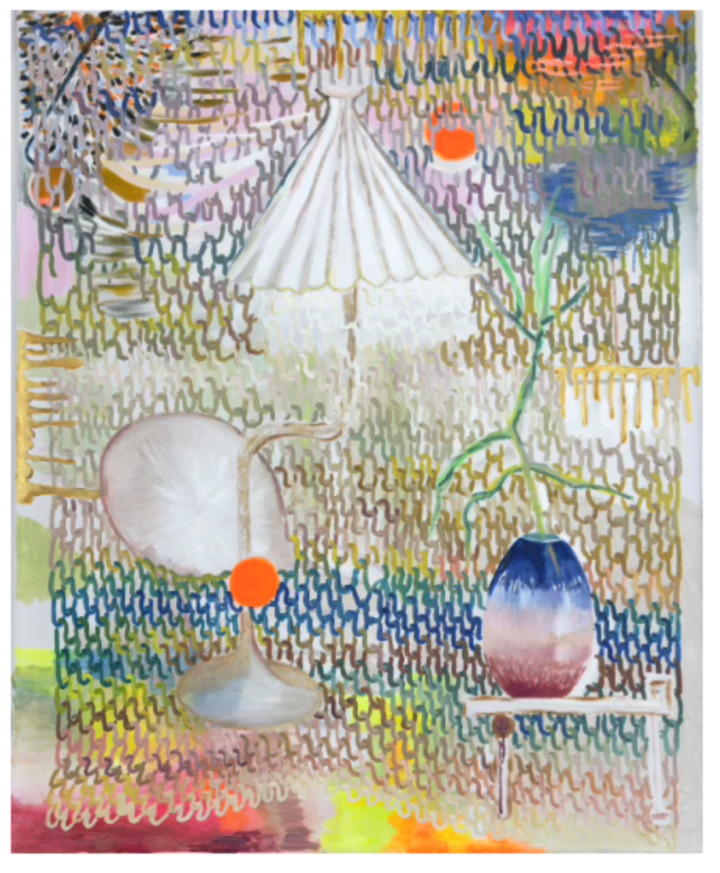
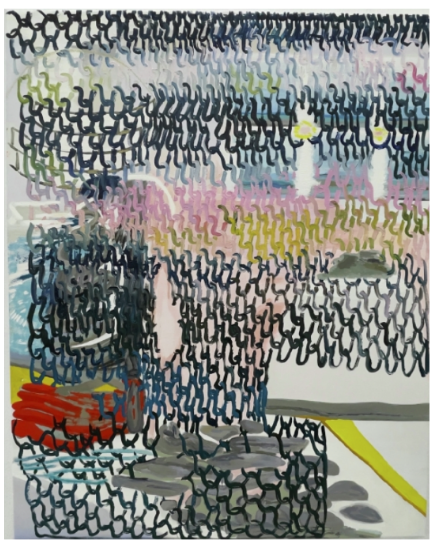
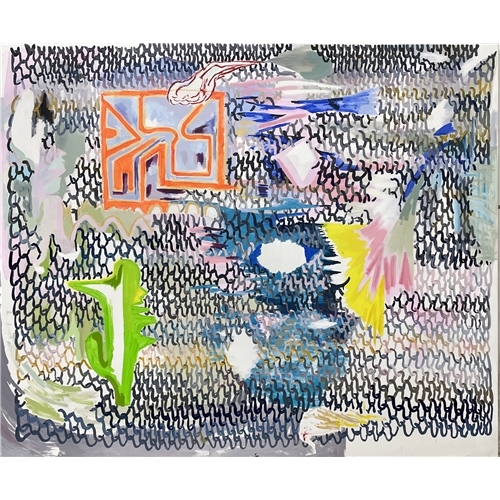
In other cases, discarded paintings are repurposed as the base for her woven paintings, resulting in works whose outcome cannot be anticipated. The superimposition of a regular weaving pattern renders the underlying motifs unrecognizable; they appear intermittently between the “stitches,” like fragmentary traces of narratives emerging from the unconscious or the past. The weave thus functions as a screen and a texture that allows the figurative or narrative to partially emerge, generating images that oscillate between the abstract and the legible, between image and object.

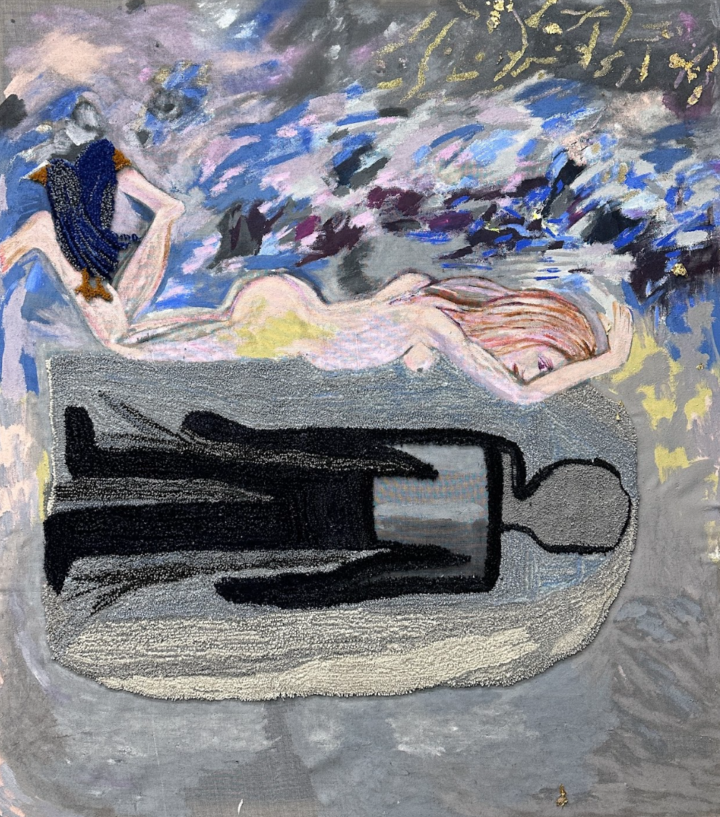
The artist has also developed a series of works centered on the loop as a gesture, in which she reflects on the recurrence of thought. More recently, she has been exploring figuration as a means of addressing the collective residual memory of political events in Argentina. In this context, the silhouette figures allude to the “siluetazo”—a street protest toward the end of the dictatorship—and take shape in a series she calls “carpet paintings.”

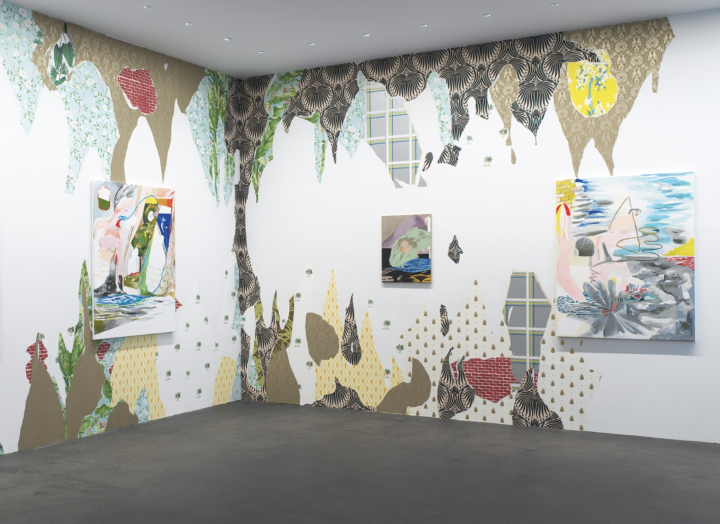
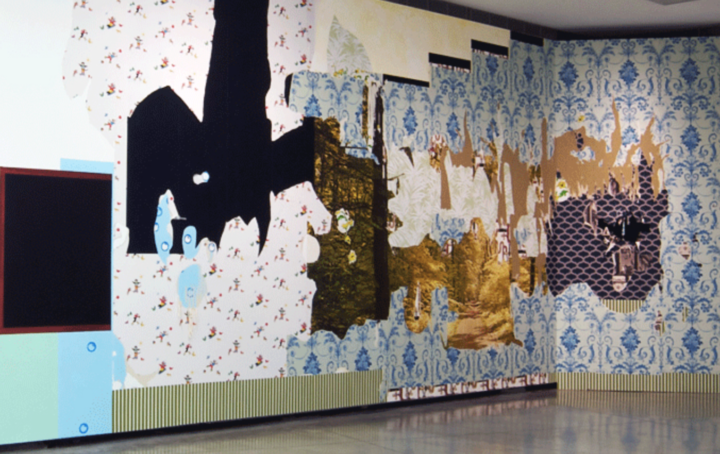
Wallpaper installations have been part of her practice since 2003, understood as an extension of her interest in space and language, and as a way to expand the gesture into the environment. Conceived as a domestic and architectural memory, in works such as “Rather Ripped” they evoke actions of tearing, ripping, and layering. Through this process, the artist constructs landscapes with pointed reliefs, similar to stalactites, transforming the white cube into an immersive environment, closer to a cave than to a mere support for the paintings. Over time, the wallpapers used have varied, reflecting both the material diversity and the aesthetics characteristic of each era.

Selected Works

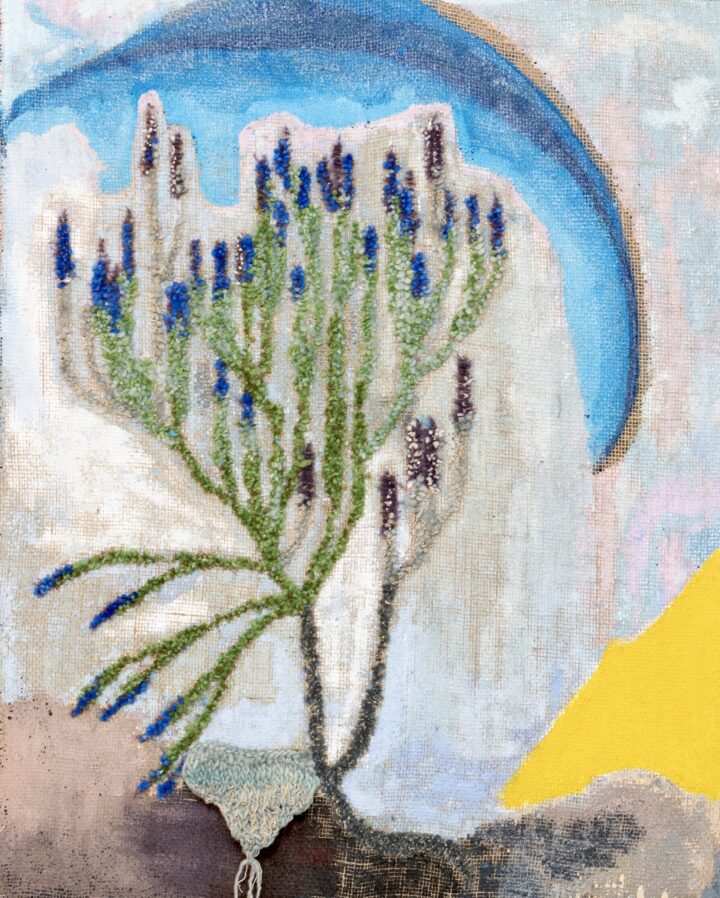
Lavanda Neptuna
2026 Carpet / paint on burlap 100 x 80 cm
CONSULTAR
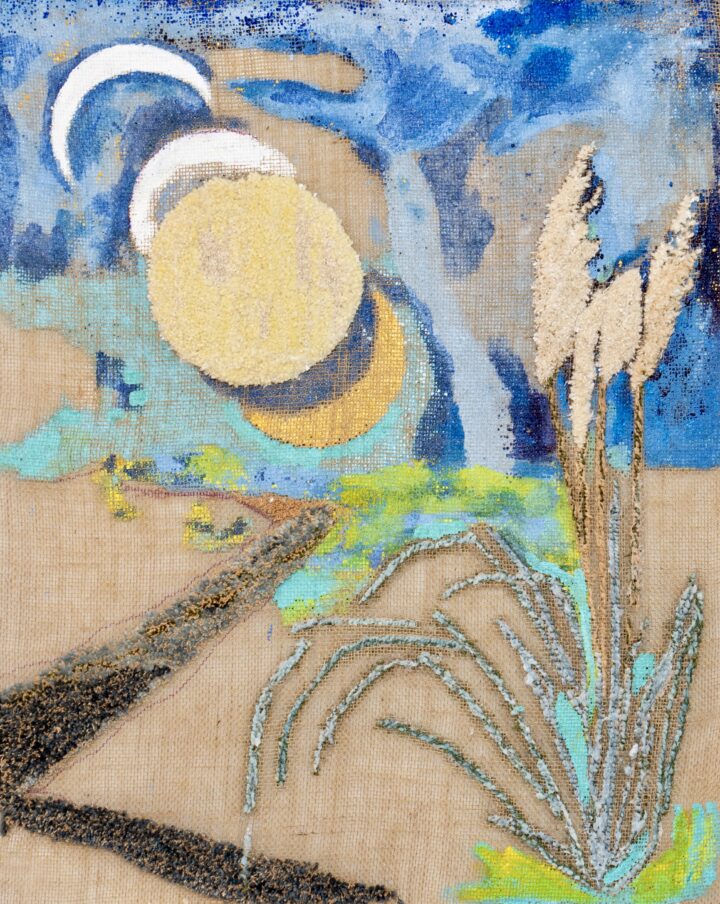
Full Moon and Pampas Grass JIg
2026 Carpet / paint on burlap 100 x 80 cm
CONSULTAR
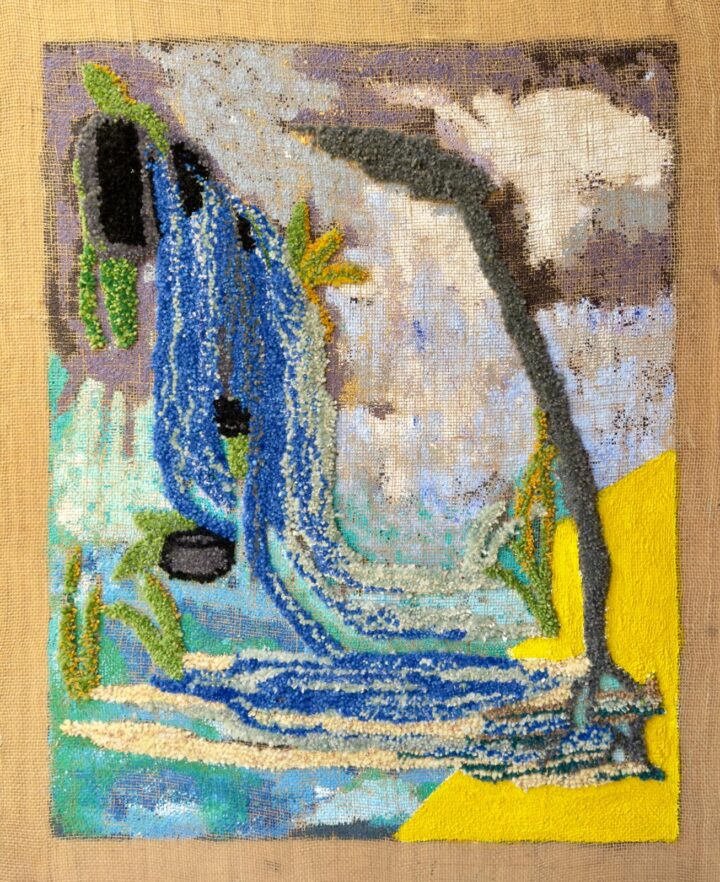
Waterfall
2026 Carpet / paint on burlap 100 x 80 cm
CONSULTAR
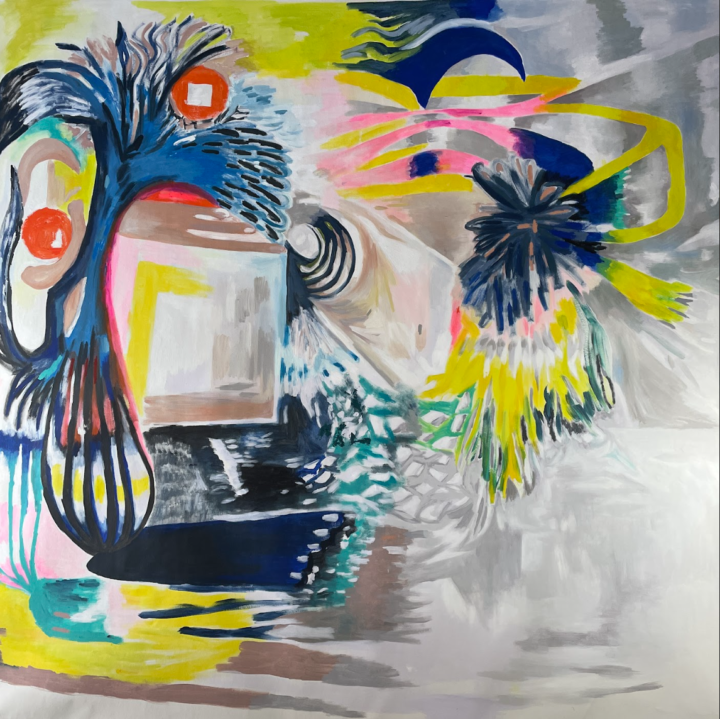
Because The Night
2023 Mixed media and oil on canvas 198 x 178 cm
Lamp Light Knitt
2025 Oil on canvas 150 x 120 cm
CONSULTAR
Interior with Landscapes
2024 Exhibition views at the Americas Society, New York.
Knitt Rachel
2022 Oil on canvas 203 x 218 cm
Knitt Candles
2021 Oil on canvas 150 x 120 cm
CONSULTAR
KNITT Verão
2021 Acrylic and oil on canvas 188 x 224 cm
CONSULTAR
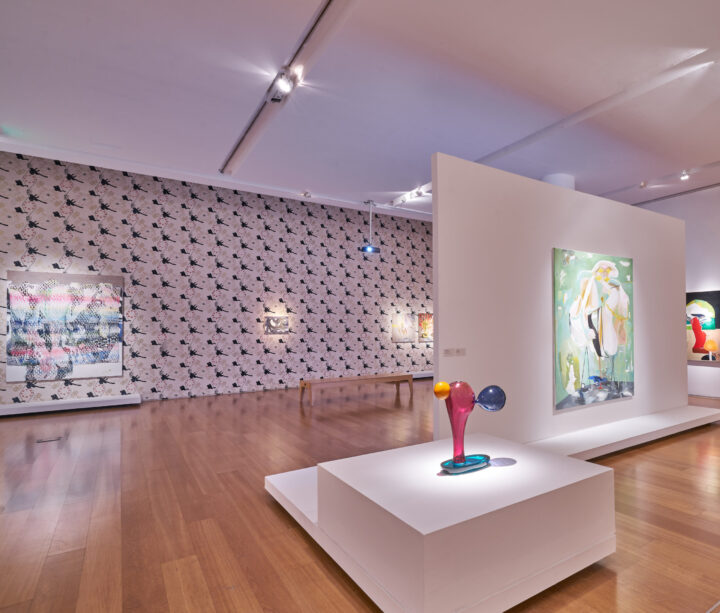
Fuera de Serie Alejandra Seeber/ Leda Catunda
2021 Views of the exhibition halls at the MALBA Museum, Buenos Aires, Argentina.
Rather Ripped
2018 Exhibition views from Haüsler Contemporary, Munich, Germany.
Woman Pancho
1999 Oil on canvas 144 x 140 cm
O’Reverie Wall
2009 Gallery views at Fundación Proa, Buenos Aires, Argentina

ALEJANDRA SEEBER CV

Alejandra Seeber

Alejandra Seeber (born 1969, Buenos Aires) is an Argentine painter based in New York. Her work explores the shifting boundaries between abstraction and representation, often through depictions of domestic and architectural interiors that dissolve into layered, vibrant compositions. Seeber’s paintings merge intuition and structure, embracing chance, fragmentation, and spatial ambiguity. Influenced by music, stage design, urban culture, and digital aesthetics, she constructs visual spaces that are both dynamic and unstable. She studied at Pridiliano Pueyrredón School of Fine Arts, participated in the Beca Kuitca program  for young artists, in Buenos Aires and attended  Skowhegan School of Painting and Sculpture in Maine. Her work has been shown internationally, including at Americas Society in New York, Museo de Arte Latinoamericano de Buenos Aires (MALBA),  Häusler Contemporary, and forms part of collections such as MALBA, the Zabludowicz Collection, and the Staatliche Graphische Sammlung in Munich.she lives in NY since 1999.

Individual exhibitions

2025

Loop Hole, Situations Gallery, New York

2024

Interior with Landscapes, Americas Society, New York

2023

Danza Perfumi , Barro, Buenos Aires, Argentina

2022

Vantage Point, Southern Vermont Art Center, Manchester, Vermont, curated by Alison Crites

2021

A oJO, Barro, Buenos Aires, Argentina
Fuera de Serie: Alejandra Seeber-Leda Catunda, Malba, Buenos Aires, Argentina, curated by Francisco Lemus

2018

Getaways, Häusler Contemporary, Lustenau, Austria Rather Ripped, Häusler Contemporary, Munich, Germany

2015

Autoamerican, Barro, Buenos Aires, Argentina
Links and Loops, Häusler Contemporary, Munich, Germany

2012

Pas de deux, Maria Casado Home Gallery, Buenos Aires, Argentina 2011 Yves y yo, Galeria Vasari, Buenos Aires, Argentina

Yes Yes, Häusler Contemporary, Munich, Germany

2010

La Bourgeoisie, Virgil de Voldere Gallery, New York Tutti-Frutti, Häusler Contemporary, Zurich, Switzerland Muro O’reverie, Fundación Proa, Buenos Aires, Argentina

2009

Speech bubbles, Caterina Tognon Arte Contemporanea, Venice, Italy

2008

Pinturalia, Galeria Fernando Pradilla, Madrid, Spain

2007

The Pregnant Painter, Virgil de Voldere Gallery, New York

2003

Entra,accomodati, Girondini Arte Contemporanea, Verona, Italy Duos, Sperone Westwater Gallery, New York

2002

Living rum, Dabbah Torrejón Arte Contemporáneo, Buenos Aires, Argentina 2001 This Room: Painting as a Second Language, Parlor Projects, Brooklyn 2000 Seeberhood, Galería Diana Lowenstein, Buenos Aires, Argentina

1999

Serendipia, Galerie de L’Alliance Française, Buenos Aires, Argentina

1997

Instituto de Cooperación Iberoamericano (ICI), Buenos Aires, Argentina, curated by Laura Buccelato

1996

Centro Cultural Ricardo Rojas, Buenos Aires, Argentina

1992

Alejandra Seeber / Richard Etkin, Espacio Giesso, Buenos Aires, Argentina

1991

Lindísima Amapola, Espacio Giesso, Buenos Aires, Argentina

Group exhibitions

2025

Latinoamericano, curated by María Amalia García & Issa Al Shirawi, National Museum of Qatar, Doha, Qatar.

2024

Glitch, curated by Chiara Bertola, Building Gallery, Milano Blue: A Spatial Dialogue,The Barn Project, East Harbor, Maine. The world in my hands, Alexander Tutsek-Stiftung, Munich

2023

Gathering, The Corner Gallery, Andes, curated by Anne Couillaud
Summer–Insert: Brigitte Kowanz, Alejandra Seeber, Häusler Contemporary, Zürich, Switzerland

2022

Un lento venir viniendo, Museu de Arte Contemporânea de Niterói, Rio Janeiro, Brazil, curated by Mariano Mayer

Futurity, Barro, New York, curated by Syd Krochmalny
Pattern Recognition, Sperone Westwater Gallery, New York, curated by Amy Lincoln Giochi di sponda. Una collezione di vetro contemporaneo, Caterina Tognon Arte Contemporanea, Venice, Italy

2021

Arte en juego. Una aproximación lúdica al arte argentino, Fundación Proa, Buenos Aires, Argentina, curated by Rodrigo Alonso
Latinoamérica al sur del Sur: Folklore urbano en imágenes, Malba, Buenos Aires, Argentina

2020

Crear mundos, Fundación Proa, Buenos Aires, Argentina, curated by Cecilia Jaime and Manuela Otero

Inédita, Barro, Buenos Aires, Argentina

2019

Bardo, Barro, Buenos Aires, Argentina

2018

Mirá el reloj, se derritió. Cuando las obras preguntan qué hora es, Barro, Buenos Aires, Argentina, curated by Sonia Becce

2017

La forma de la Boca, Usina del Arte, Buenos Aires, Argentina, curated by Florencia Malbrán

Yves y yo, part of Yves Klein Retrospective, Fundación Proa Espacio Contemporáneo, Buenos Aires, Argentina
Ultramar: Fontana, Kuitca, Seeber, Tessi, Museo Nacional Thyssen-Bornemisza, Madrid, Spain, curated by Sonia Becce

Colección, Espacio Cruce, Madrid, Spain, curated by Aimé Iglesias Lukin and Carmen Ferreyra
Barro POP UP NY, Alejandra Seeber and Friends, Future Lips, and Centolla Society and Matías Duville

2016

The Neighbors: Caza, Bronx Museum of the Arts, Bronx, curated by Sofía Hernández Chong Cuy

Latin America Calling, Häusler Contemporary, Zürich, Switzerland

2015

V, Artemisa Gallery, New York, curated by Carmen Ferreyra

2013

Topodendrophilia, Pilar Corrias Gallery, London, Great Britain, curated by Pablo León de la Barra

5 años, Fundación Proa, Buenos Aires, Argentina
Encuentros / Tensiones. Arte latinoamericano contemporáneo, Malba, Buenos Aires, Argentina
Sweet Home (reloaded), Häusler Contemporary, Munich, Germany

2012

New York Paintings, Häusler Contemporary, Munich, Germany
Abstracta Tú, Galería Miau Miau, Buenos Aires, Argentina, curated by Alejandra Seeber

2011

Narrativas Inciertas, Museo de Arte Moderno de Buenos Aires, Buenos Aires, Argentina Adquisiciones, Malba, Buenos Aires, Argentina

2010

Ambigu, Kunstmuseum, Saint Gallen, Switzerland, curated by Konrad Bitterli
Museé Apartament, Hausler Contemporary, Zurich, Switzerland, curated by Prof. Dr. Jens Drolshammer
Escuelismo, Malba, Buenos Aires, Argentina
Sintonías, Fundación Proa, Buenos Aires, Argentina, curated by Cintia Mezza

2009

Grito e escuta, part of 7 ̊ Bienal do Mercosul, Porto Alegre, Brazil, curated by Victoria Noorthoorn and Camilo Yañez

Absurdo, part of 7 ̊ Bienal do Mercosul, Porto Alegre, Brazil, curated by Laura Lima Vamos, Galería Nueveochenta, Bogotá, Colombia
Frente Cálido, Galería Fernando Pradilla, Madrid, Spain

2008

Temperament auf papier, Häusler Contemporary, Zürich, Switzerland
The Private eye, Häusler Contemporary, Munich, Germany
Ve, véte y vuelve, Alianza Francesa de Buenos Aires, curated by Victoria Noorthoorn

2007

Red Badge of Courage, Newark Art Council, New Jersey, curated by Omar Lopez Chahoud An Archaeology, Zabludowicz Collection, London, Great Britain
Summer, Dabbah-Torrejon Arte Contemporáneo, Buenos Aires, Argentina

2006

Global New York, The Lobby Gallery, New York
Guess who’s coming for lunch?, David Reed Studio, New York, curated by Dean Daderko Argentine pour toujours, Knokke, Belgium
Latest acquisitions of Malba Collection, Malba, Buenos Aires, Argentina

2005

Anniversary show, Dabbah-Torrejón Arte Contemporáneo, Buenos Aires, Argentina

2003

24/7, Center for Contemporary Art, Vilnius, Lithuania

Projeto Arte Ônibus, Belo Horizonte, Brazil, curated by Genial Projetos de Arte

2002

The [S]-Files: The Selected Files, El Museo del Barrio, New York, curated by Deborah Cullen and Victoria Noorthoorn

BK, Galería Fernando Pradilla, Madrid, Spain, curated by Sonia Becce

2001

Inn, Dabbah Torrejón Arte Contemporáneo, Buenos Aires, Argentina

2000

Diana Lowenstein Gallery, Miami, Florida
Collector’s Choice, Exit Art, New York
Snapshots, Contemporary Art Museum, Baltimore, Maryland
Premio Prodaltec de Arte Digital, Museo Nacional de Bellas Artes, Buenos Aires, Argentina Architecture and Memory, Rubin-Greenberg-Van Doren Fine Art, New York

1999

Pinto y Coso, collaboration with Andrés Baño, Fundación Proa, Buenos Aires, Argentina

1998

Premio Villa de Madrid, Villa de Madrid Centro Cultural, Madrid, Spain
Siglo XXI: Festival de Artes Electrónicas, Centro Cultural Recoleta, Buenos Aires, Argentina
Sopa, Centro Cultural Borges, Buenos Aires, Argentina

1997

Premio Braque, Fundación Banco Patricios, Buenos Aires, Argentina
Premio Prodaltec de Arte Digital, Museo Nacional de Bellas Artes, Buenos Aires, Argentina

1993

Kit Kat Club, Buenos Aires, Argentina

1991

Fotos y Cuadros, Espacio Giesso, Buenos Aires, Argentina

1989

Hebraica Argentina, Buenos Aires, Argentina
Primera Bienal de Arte Joven, Palais de Glace, Buenos Aires, Argentina

Awards

2022

Nominated for Women to Watch, National Museum of Women in the Arts 2010 Nominated for Cisneros Fontanals Art Foundation (CIFO) Awards

2009

Nominated for Louis Comfort Tiffany Foundation

2008

Start, Associazione Culturale Arte Contemporanea, invited to develop a series of Murano Glass sculpture, Ariccia, Italy

2006

Atlantic Center for the Arts, residency program, granted by the Joan Mitchell Foundation, New Smyrna Beach, Florida

2003

Les Ateliers de la Ville Marseille, selected to develop a project with Le Corbusier’s Building: La Cité radieuse, Marseille, France

2000

Skowhegan School of Painting and Sculpture, Skowhegan, Maine Premio Prodaltec, Buenos Aires, Argentina

1998

Premio Villa de Madrid, Madrid, Spain

1997

Premio Braque, Buenos Aires, Argentina
Premio Prodaltec, Buenos Aires, Argentina
Programa para Artistas Jóvenes, Buenos Aires, Argentina

1994

Studio Program for Young Artists, directed by Guillermo Kuitca, Buenos Aires, Argentina

Collections

Agnes Gund Collection, New York, USA

Alexander Tutsek-Stiftung Collection, Munich, Germany

Banco Supervielle Contemporary Art Collection, Buenos Aires,

Argentina Carolina Pincirolli Collection, Buenos Aires, Argentina

David Reed Collection, New York, USA

Eduardo Costantini Collection, Buenos Aires, Argentina

Esteban Tedesco, Buenos Aires, Argentina

Fondation Proa, Buenos Aires, Argentina

Gabriel Guilligan, Buenos Aires, Argentina

Gaviria Collection, Bogotá, Colombia

Institute on Studies on Latin American Art (ISLAA), New York,

USA Isabelle de Montalivet, Paris

Museo de Arte Latinoamericano de Buenos Aires (MALBA),

Argentina Marie-Pierre Cariet Agárdy, Buenos Aires, Argentina

Museo de Arte Moderno de Buenos Aires (MAMBA), Argentina

National Graphic Arts Collection, Munich, Germany

Norman Dubrow Collection, New York, USA

Oxenford Collection, Buenos Aires, Argentina

Rolf Ricke Collection, Frankfurt, Germany

Zabludowicz Collection, London, UK

Texts

En un lugar de la mancha: pinturas de Alejandra Seeber, Pablo Chiuminatto

Luego del reconocimiento que ha vivido el psicoanálisis durante el siglo XX, intentar una lectura de esta serie de pinturas de Alejandra Seeber se vuelve intimidante. A pesar de haber vivido la experiencia del psicoanálisis con total devoción, no puedo dejar de pensar que, al presentar una lectura de sus pinturas, de estas manchas plegadas, quedaré en evidencia por medio de los contenidos asociados más íntimos y, tal como observó Herman Rorschach, develaré todo el arsenal figurativo que mi inconsciente proyecta en las imágenes. Tal vez, por esta razón, más que presentar una lectura directa de cada una de estas obras, buscaré ofrecer algunos antecedentes históricos e iconográficos que se me vienen a la mente al verlas, siguiendo uno de los preceptos del mismo test, ya que lo que cada una de ellas pueda guardar como secreto enuncia lo perdurable del trabajo de Seeber y queda como invitación al propio lector.

Rorschach, psiquiatra suizo, desarrolló en los años veinte el test que popularmente amedrenta con sus imágenes a quienes lo prueban y sitúa en un lugar de autoridad a quienes lo aplican, los que, desde su secreto, escrutan lo que vemos en las láminas y lo comparan estadísticamente, por medio de normas de interpretación de la personalidad, la inteligencia y la sexualidad. Incluso llega a tanto su prestigio que varias veces he presenciado conversaciones en las que personas que buscan un empleo se recomiendan qué ver para no ser identificados con un psicópata en potencia o reflejar rasgos esquizoides, sólo por el hecho de decir con cierta ingenuidad lo que las láminas figuran en su mente. Quizá, con esto que digo no hago más que hacer evidente mi resistencia, la que también puede ser leída reprimiendo algo, o incluso todo.

Pero, ¿qué son estas manchas que Seeber despliega? Pintura, sin duda, pintura pintada. La noción de mancha atraviesa la historia del arte por más de dos milenios y posee varios mitos originarios, entre los que tomaremos sólo uno como guía. Filóstrato menciona, en su Vida de Apolonio de Tiana, la conversación que éste habría tenido con su discípulo, al interrogarlo acerca de si existe la pintura y en qué consiste este arte. Damis responde que radica en mezclar colores, a lo que sucede una discusión acerca de la mimesis, la lectura de formas en las nubes y de cómo habría un doble juego de asociaciones implicado en la representación visual. Este doble juego, por una parte, es logrado por las manos y la mente al producir imitaciones y, por otra, por la facultad de quien las observa al establecer parecidos y comparaciones de forma mental. Sin duda, es a este último rasgo al que apela Rorschach cuando mueve la tradición de la producción de manchas plegadas hacia un sistema científico de proyección psicológica de la personalidad. No obstante, me parece importante mencionar algunos antecedentes entre el mundo clásico y nuestro psiquiatra suizo.

∗ Pablo Chiuminatto. Artista visual, Magíster en Artes Visuales y candidato a Doctor en Filosofía con mención en Estética, Universidad de Chile.
Durante el siglo XIX, Victor Hugo, el célebre escritor francés, trabajó durante su intensa vida en varias series de pinturas con tinta a las que se dedicaba con pasión, ya que le permitían, desde una experiencia gráfica, componer las imágenes de sus libros y coleccionar las de sus viajes. En esa colección, que se encuentra en la Biblioteca Nacional de Francia, podemos encontrar muchos trabajos de manchas plegadas de las que hacía surgir figuras o simplemente dejaba así, por su carga sugerente de romanticismo fantástico, de castillos y monstruos marinos. Por esa misma época, tal como indica Ernst Gombrich en su libro Arte e Ilusión, el poeta romántico alemán Justinus Kerner usaba manchas de tinta en papeles doblados para motivar su imaginación y la de sus camaradas, a partir de la fantasmagóricas apariciones de murciélagos y aves demoníacas que surgían de estos juegos visuales. En el siglo XX, en 1984, Andy Warhol, motivado por la ironía que le encantaba prodigar y por la oratoria de la cita visual emplazada por los movimientos de vanguardia de principios de siglo, presentó su serie de Rorschach Paintings, las que no tan sólo dialogan con las láminas del psiquiatra sino también, agudamente, con la tradición del expresionismo abstracto americano. El propio Warhol planteó la idea de leer en ellas un contenido cifrado, aunque no conocía íntegramente los preceptos del test y llegó a decir que su idea era contratar a alguien suponiendo que las imágenes hablarían de él, a pesar de que, tal como indicó, no buscaba ver en ellas más que la cara de un perro, un árbol o un pájaro.

La simetría natural que provoca el plegado, el doblez que revela la imagen, determina la simetría ornamental que resulta de este ejercicio casi infantil. Pero esta sucesión de lo natural y ornamental de la simetría en las imágenes es alterada por Seeber, resultando otra forma de figuración, la que es posible de resumir en tensión con la simetría mental que la lógica y el sentido exigen. Alejandra Seeber trabaja con estos elementos, conoce la tradición, deslizada y articulada por su obra hacia un sitio distinto. Eso es lo que desde la primera vez que vi una de sus obras no deja de presentárseme. Ella mancha, pliega y despliega, sin embargo, posteriormente, su trabajo, es decir con la pintura, maniobra la ruptura de los códigos aprendidos de figuración, llegando incluso a borrar la mancha “rorschach” de base, volviendo infigurable la masa de color resultante. Las pinturas y los objetos escultóricos de Seeber, en vez de interrogarnos por lo primero que vemos, como hacen los psicólogos en el test, nos dejan sin palabras, incluso sin preguntas, desarmando la articulación narrativa de las imágenes al elaborarlas. ¿Qué puede decir la psicología a partir de lo que veo allí, si lo que veo está vaciado de ilustración, sin ni siquiera establecerse como fragmentos narrativos en los objetos breves que asoman? ¿Qué nos dicen las pinturas en su diálogo referencial con la historia de la imagen derivada de la mancha, fruto de la evocación visual y la deducción mental que remite a la pintura de paisaje y a la abstracción? Estos son los enigmas que nos ofrece Seeber, sus trabajos. Sin buscar autoridad ni autorizar lo que vemos, dislocan las prácticas aprendidas de la semiología y la retórica de la abstracción en las artes visuales, las que como disciplinas, a pesar de haber parecido inclasificables cuando afloraron al mundo del arte al inicio del siglo XX, ya poseen sus lugares comunes y resumen, a su vez, la historia de la expresión y del voluntarismo que la imagen puede sobrellevar como carga. Seeber con este modo sutil de cuestionar la
abstracción y cierta inocencia al trabajar los referentes de las artes visuales, nos deja en el asombro de una variedad ornamental compleja, desplegando simétricamente lo que nos insinúa el sentido como impulso hacia la búsqueda de cierta lógica en lo que vemos y, por otra parte, evidencia la multiplicidad ingobernable de la imagen y su significación. En un caso se hace necesario la presencia de un psicólogo, en el otro, de un semiólogo. Ambos especialistas residen en uno mismo, que las mira. Sin embargo, el problema es que a veces no llegan oportunamente a la cita y nos encontramos solos ante el fantasma de nuestra propia falta de lógica, escarbando entre los colores chorreados, persiguiendo algo que nos permita reconstruir el relato infinito que lo explica todo.

Santiago de Chile, octubre 2006.

Inhabiting the image, Chiara Bertola

What charaterises living in a world in which being attached to a particular place seems to have less and less sense? For thousands of years our model of living has built up on ideas of stability and the possibility of establishing roots. Today the house is a ‘place’, a space but one that is less physical than mental. And living- something difficult to think of as a definitive choice-has become above all the need for a ‘mental passage’ in which to exist. Perhaps it has always been like this, and yet the knowledge that the house of our childhood will not be that of our old age is a recent strong conviction. So there will be many layers of living built up in the memory: many houses, many spaces, many objects are our companions in an unstable daily life. This is, then, the image of toda’s living, a mobile and changing image, deriving from an aesthetic of ‘perishablility’ that upturns  the ideas of tradition, repertoire and standards.

In one way or another the idea of living runs through the most recent work by Alejandra Seeber, an Argentinean artist who lives in Buenos Aires and New York and who is now showing her work in Italy for the first time. Since 1991 she has passionately painted the disarticulated and broken up spaces of interiors: houses , apartments, hotel rooms , fragments. We belong to things and places we live with; even if we are far and we left,when these houses and things follow us within our memory. It is as though places are responsible for our lives.

Alejandra Seeber experiences the rooms she paints with this conviction and tries each time to imagine the person living in them by constructing an identikit around them. She always paints empty rooms where the marks of the armchairs and the disorderly placing of the objects makes us imagine that someone has  just left. And so it seems that the artist invites us to enter and make ourselves comfortable in her interiors, allows us to snoop around and take over these things. We wander around searching for signs of some character or habit. We are


Publications

VILLA CRESPO
Juan Ramirez de Velasco 1287
(1414) Buenos Aires, Argentina

Tuesday to Saturday from 14 a 19hs.
Phone: +54 11 4857-3322
PUERTO MADERO
Juana Manso 1549
Buenos Aires, Argentina

Monday to Friday from 12 a 19hs.