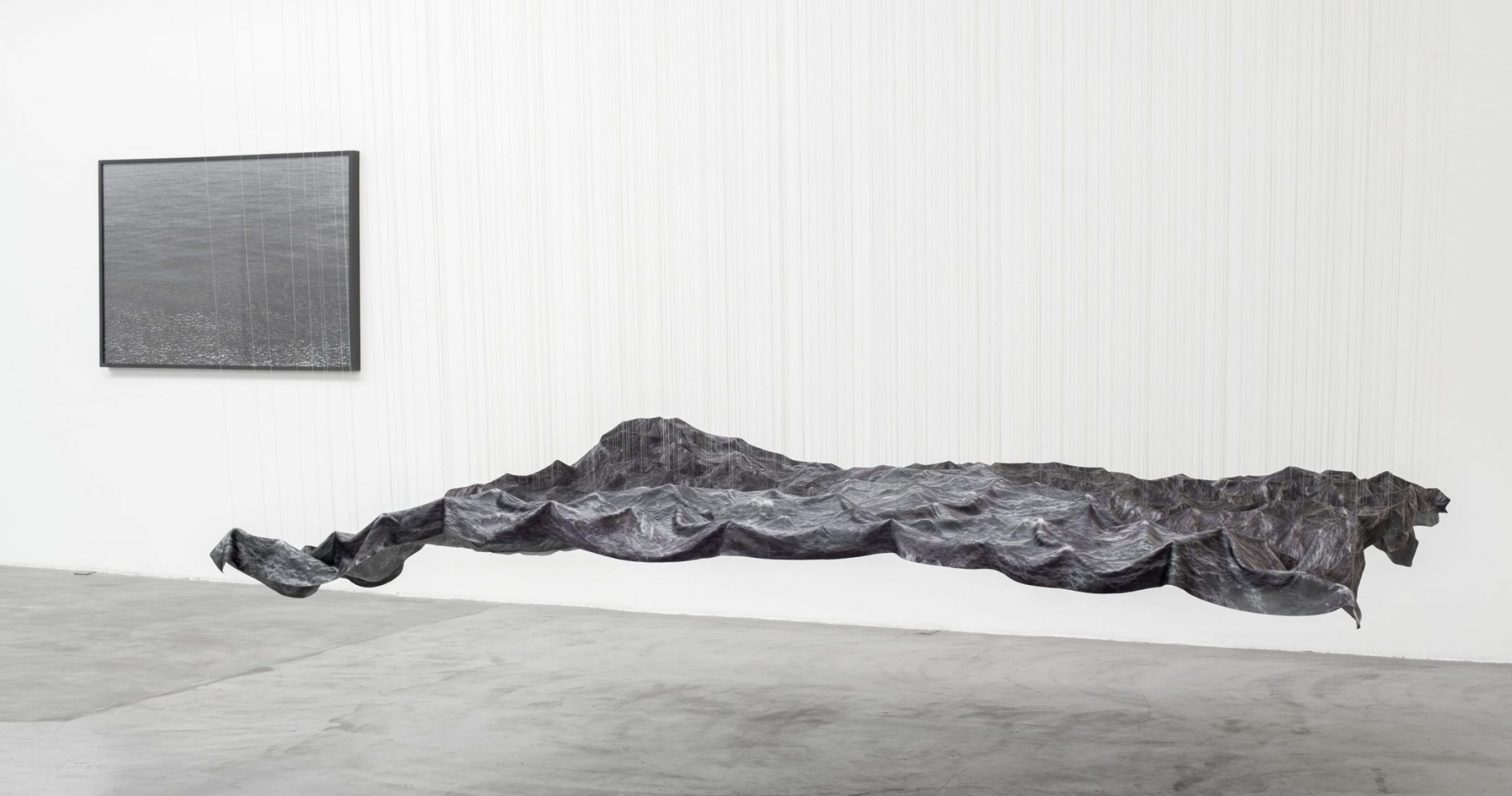
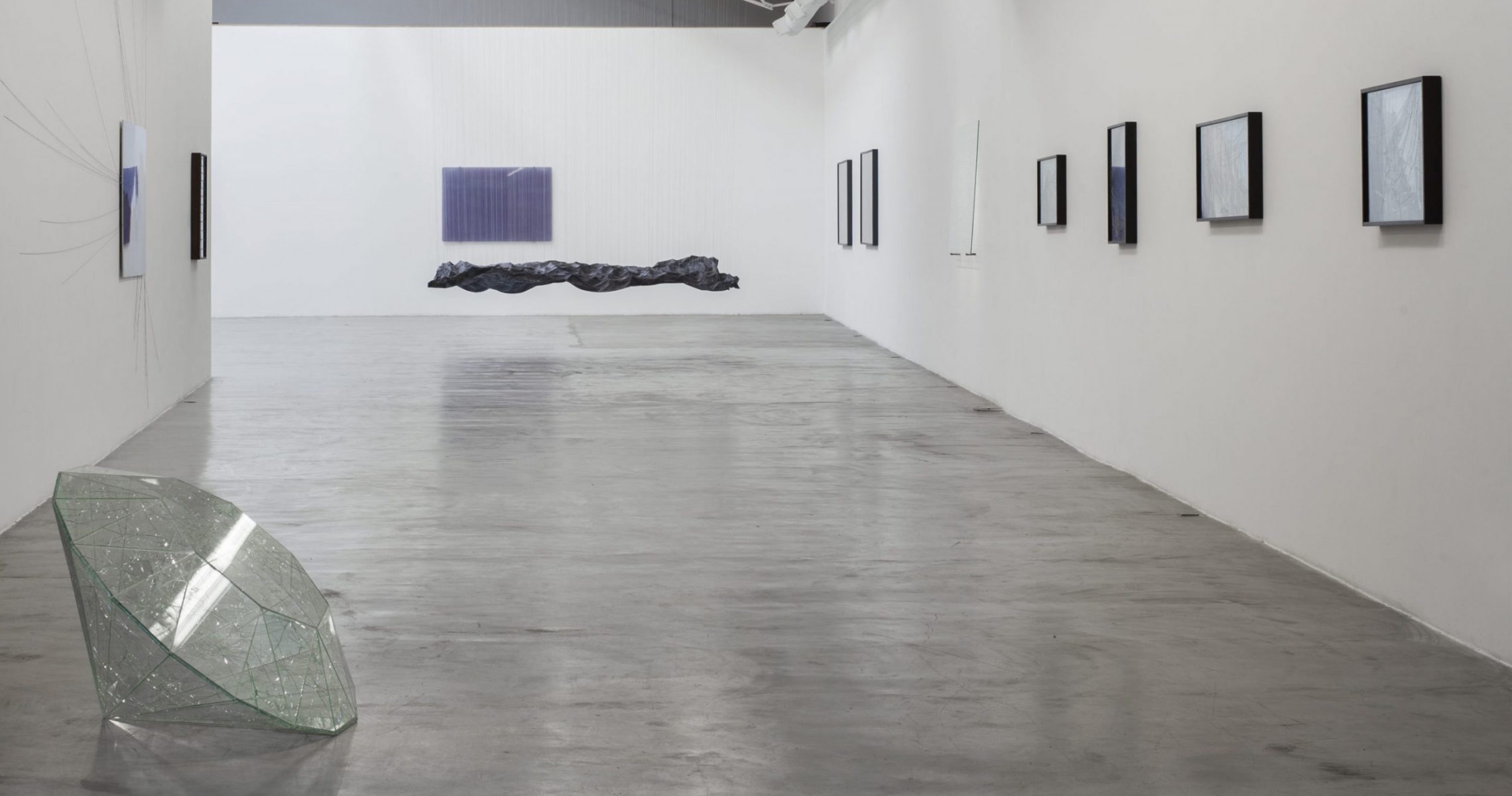
The Bible tells that the Great Flood lasted forty days and forty nights. This two-act metaphor of tragedy forms the core around which Miguel Rothschild’s exhibition at Ruth Benzacar Galería de Arte revolves.
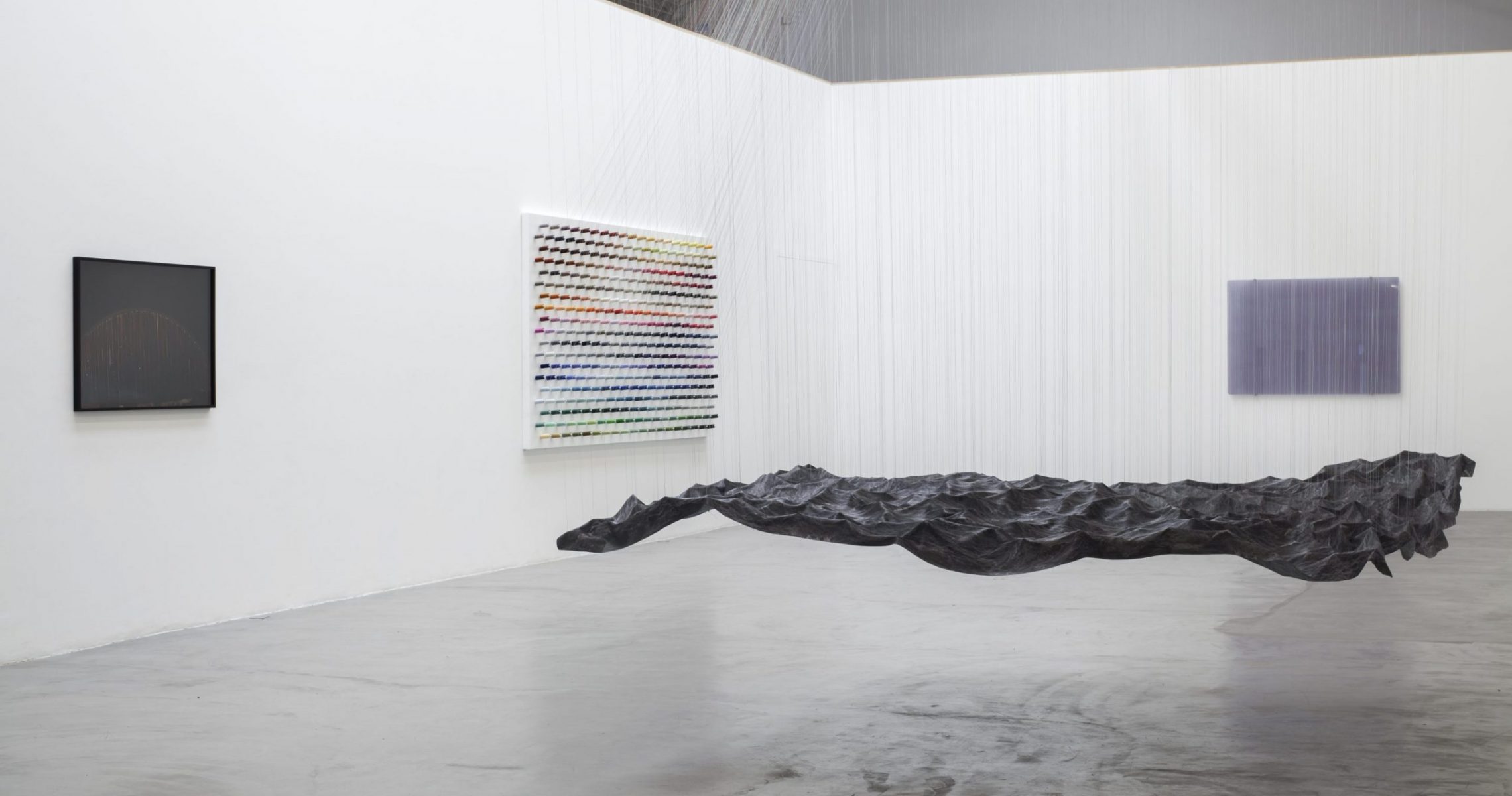
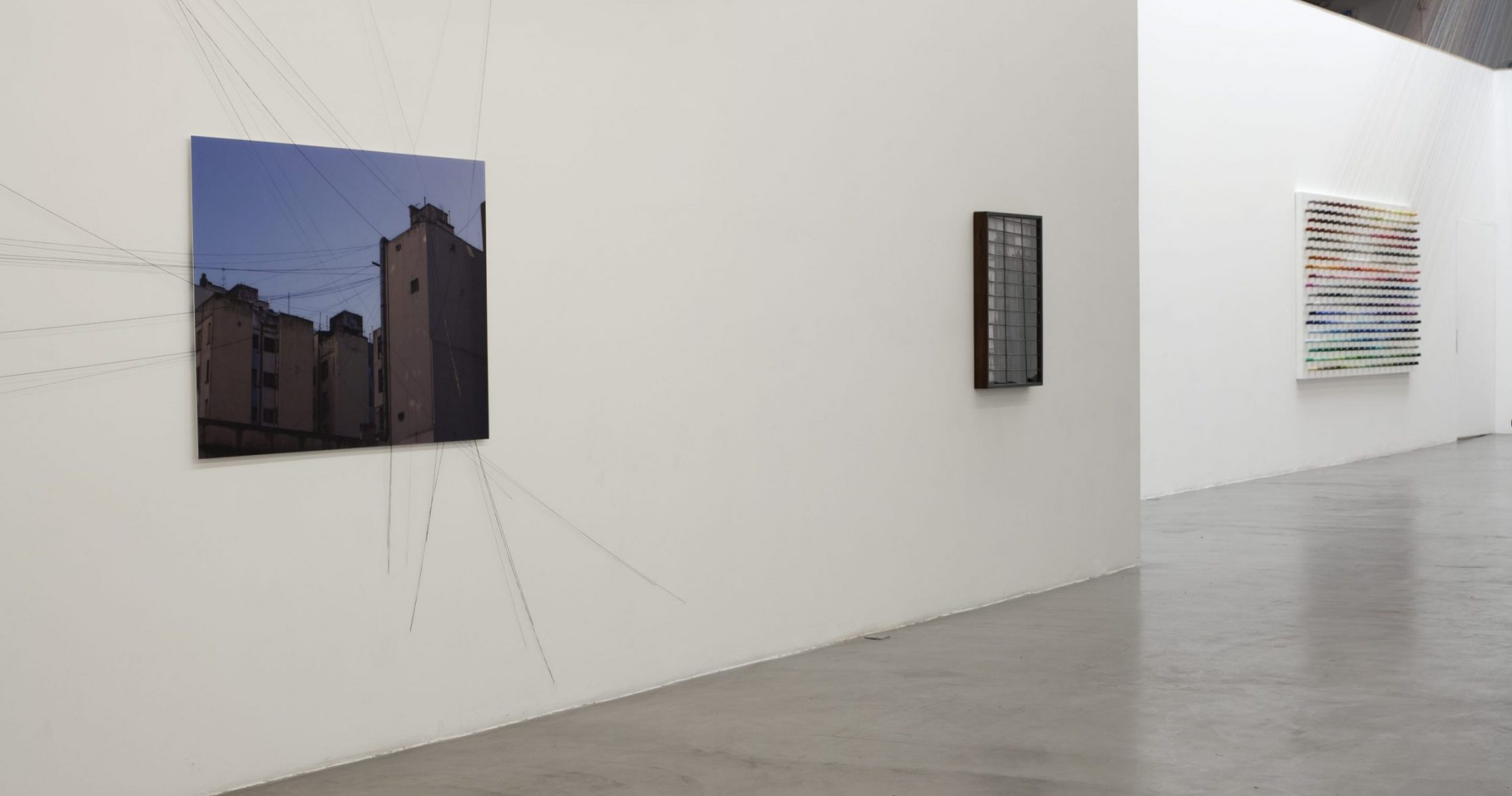
The first part of the exhibition places us in the city, at the threshold of catastrophe. As reflected in the Atrapasueños series, misfortune is always the guiding thread. In mythology, it is the Fates who spin the thread of life for each mortal, measure its length, and finally cut it. According to Rothschild, these fearsome spinners cast their nets over Buenos Aires to determine the destiny of the city and its inhabitants. The same deities seem to burst into the gallery from above, breaking through the skylight and forming a supernatural rainbow composed of 370 different colors. Monochrome bleu de Rothschild is a citation of Yves Klein and his emblematic blue. The back of the glass is painted with the material used for homemade weather forecasters—those souvenirs that change color depending on the weather. Pink means rain, violet means cloudy, and blue means fair weather.
During the forty days and forty nights invoked by the exhibition, the sea is tormented and a rain of chlorine floods the city. Rothschild could be considered a disciple of Juan Baigorri Velar, the Argentine who in 1939 made headlines for having invented a machine that could make it rain—an invention the artist claims to honor in one of his works. He is, ultimately, the one who creates the storms. His works are melancholic machines, generators of the impossible, paintings that react to climatic changes, devices capable of trapping the viewer who wanders into these rooms and allows themselves to be carried away—only to find, now under a roof, that they have been placed at the center of an unprecedented deluge.
María Cecilia Barbetta