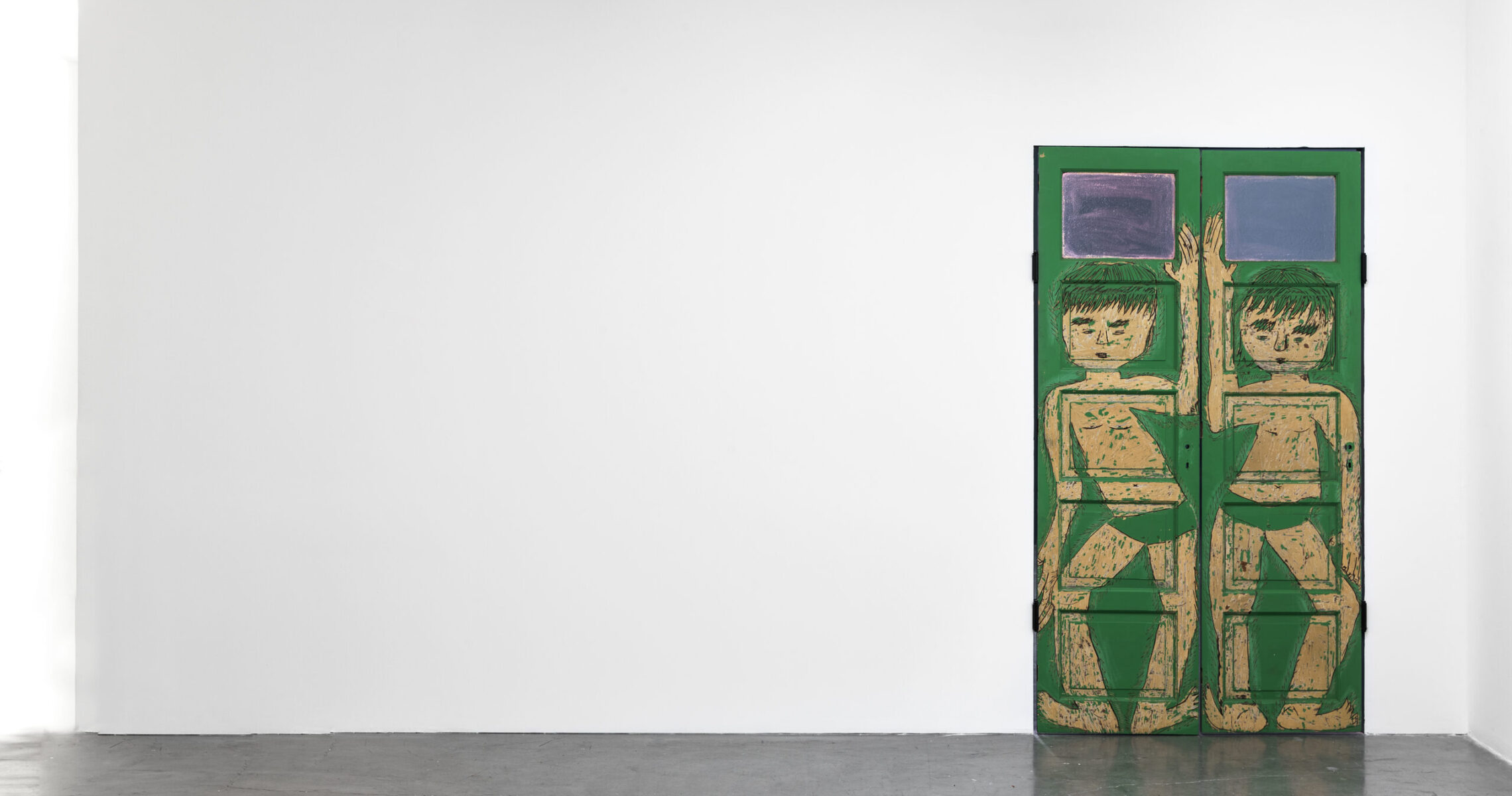
Ulises Mazzucca always insists. He insists on writing that is not
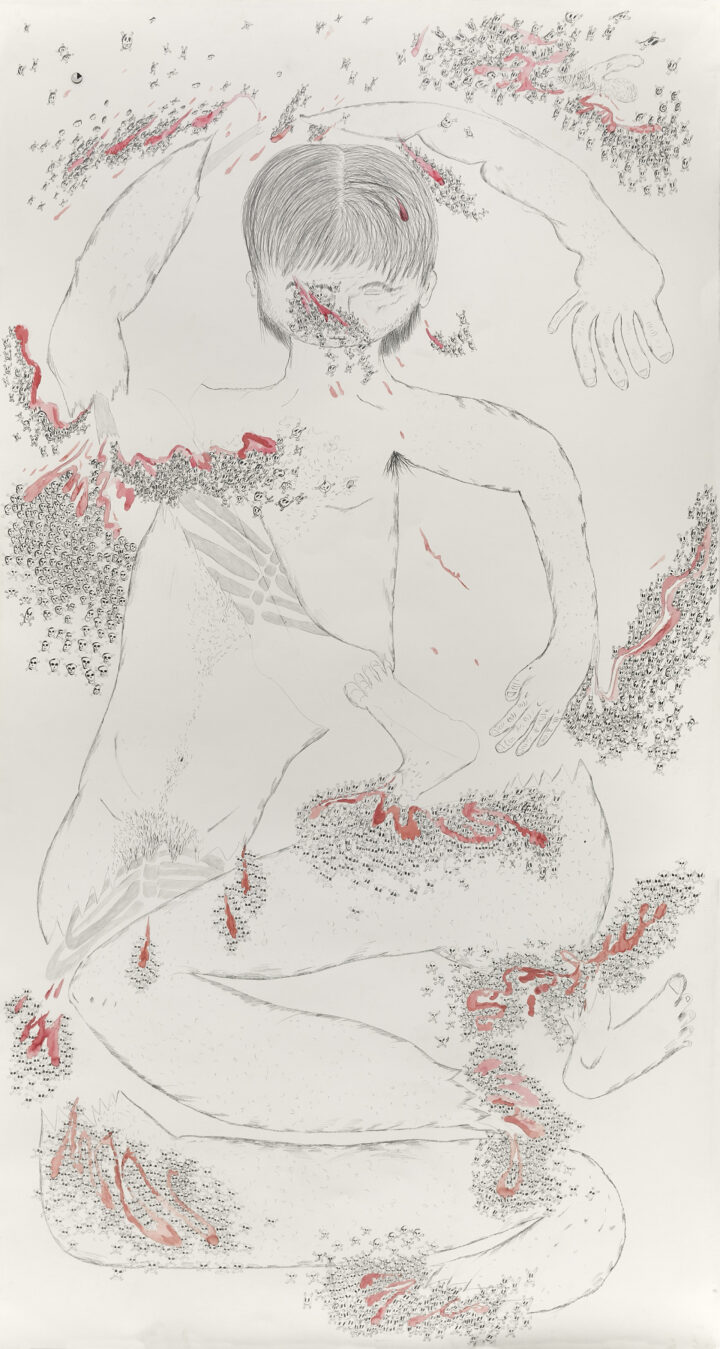
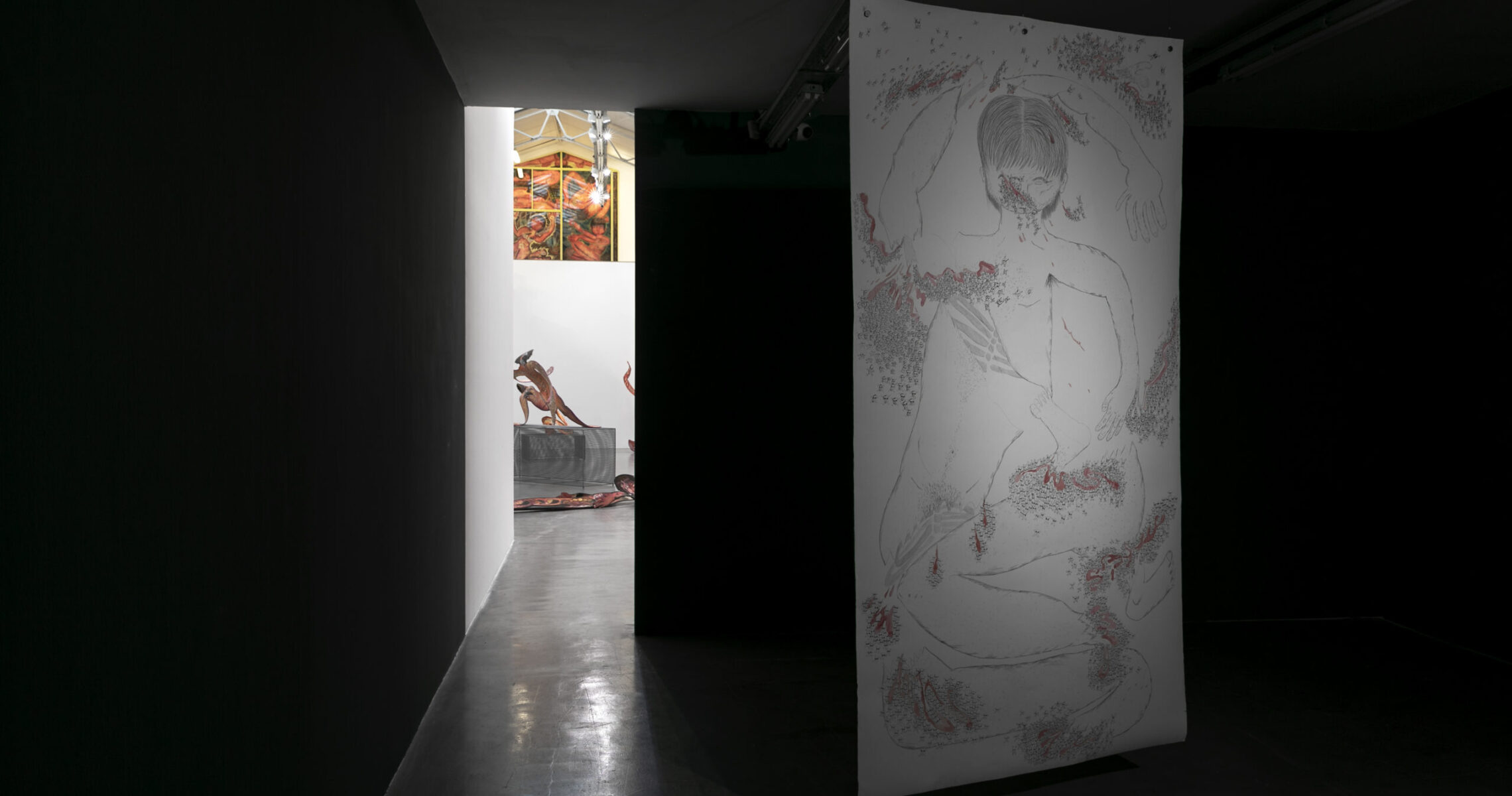
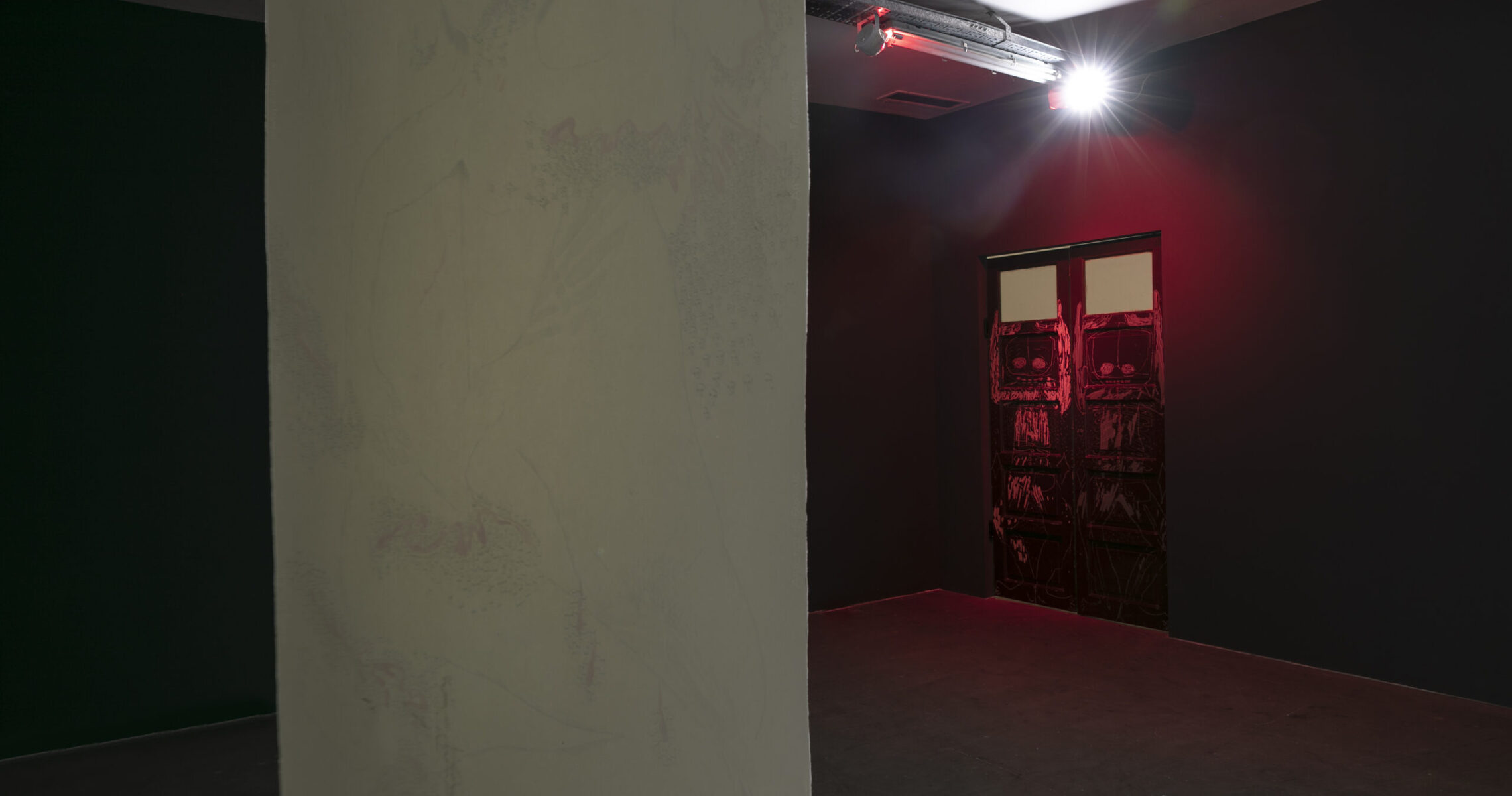
a line but an incision, a slit on the surface that vandalizes the plane and
multiplies the scenarios. Scenes of fear, nightmare, fantasy, a thousand stories some vices, magic in the room, darkness in the attic, heartbreak,
loneliness, and companionship. Mazzucca insists on his own body, but it is him and it is not him. If I had to find a twist to express it accurately,
I would say it’s the boys. Although I could also say it’s the girls.
Or those who resist gender or exchange it. And I would close the sentence
with a verse by the queer poet Miguel Ángel Lens: moved by the “sweet
urgency to enjoy.”
Mazzucca’s writing never stops, always seeking new surfaces to desecrate, unable to do otherwise. That is why this
exhibition revisits what actually runs through all his work. The
insistence of the stroke, which can be writing or drawing, moves passing breath, beating, falling silent, and launching itself again. At the center
are the bodies, which are also his body. And all the accidents
that occur in contact with the world. Many of these accidents are the vicissitudes of love and sex. Which are celebration,
but also wound. It seems contradictory that, having so many things
to deal with, he also thinks about this. Here he agrees again with
Lens: “I recover the feast of your eyes and return to myself sadder
than ever.”
In this final moment of his work, the commotion of that body, of those bodies, advances, twisting the wood even more, finding more holes, tearing the cake, blurring the grain of the tree with
soft transparencies, piercing iridescent intestines, multiplying the surfaces on which to tear again. That plebeian writing,
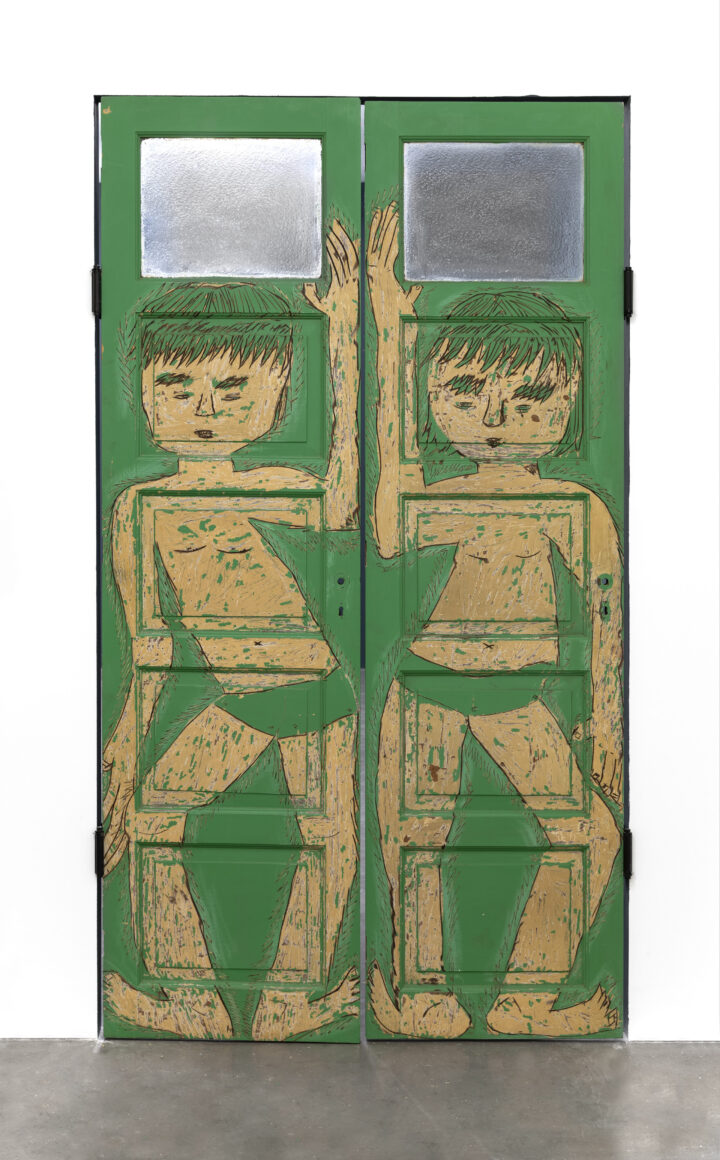
which was born on a bathroom door, built a universe that
now folds over its own skin. And it does so without skimping on contrasts,
richness, brilliance. A luxury that, paradoxically, stems from rawness.
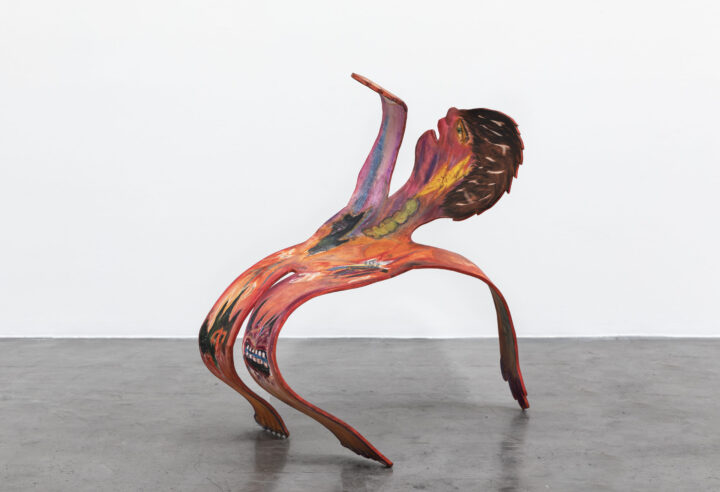
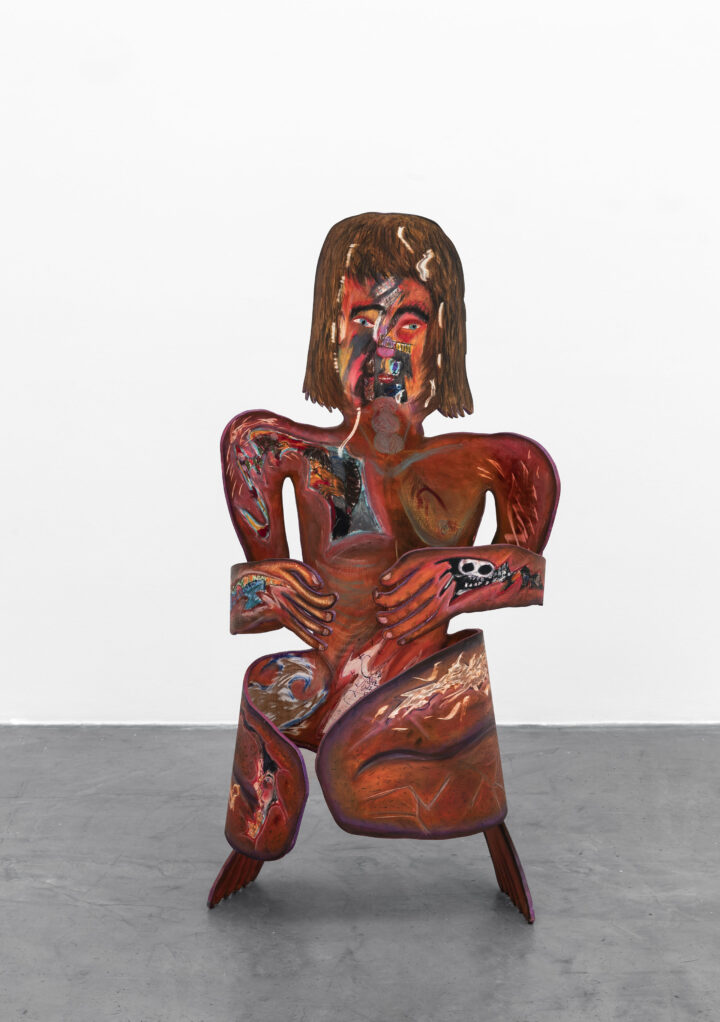
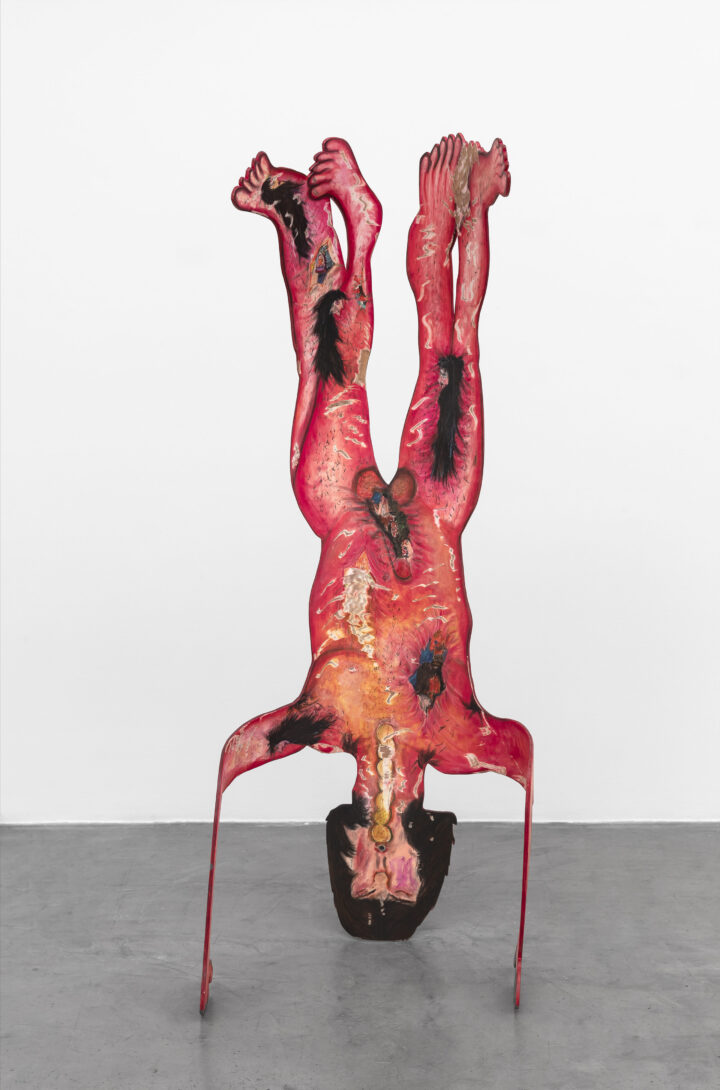
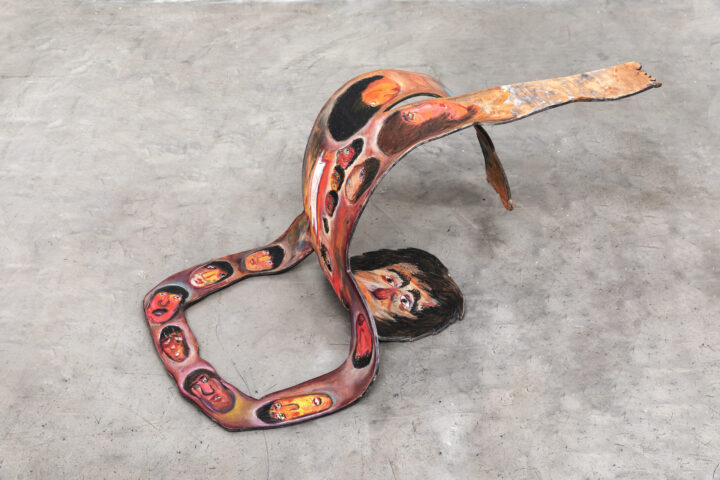
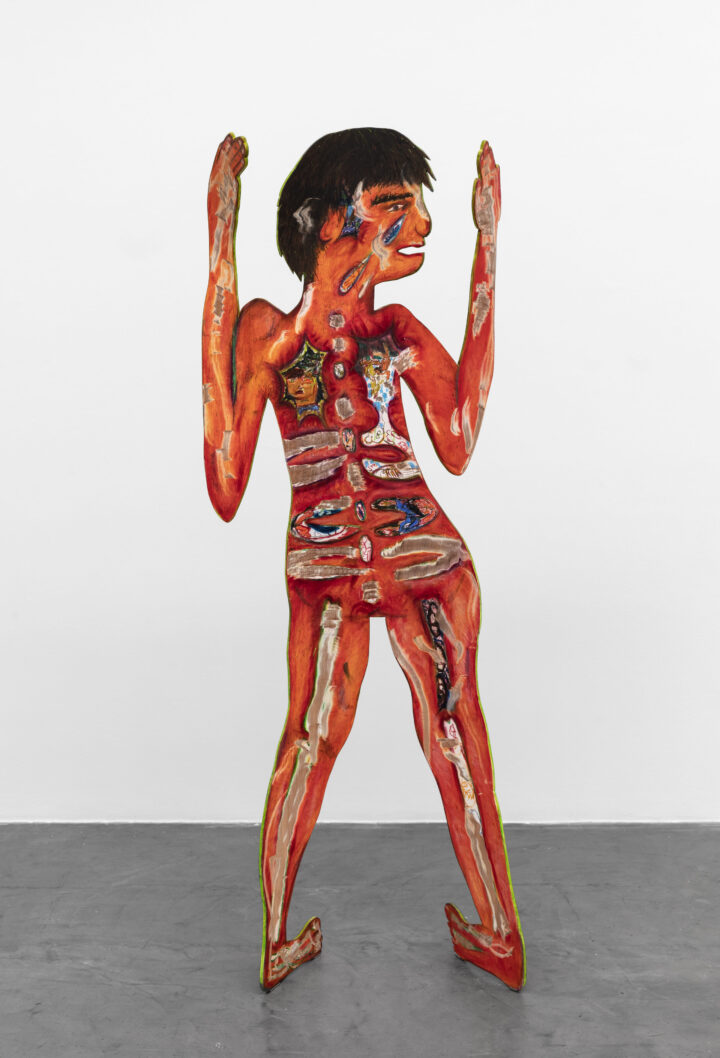
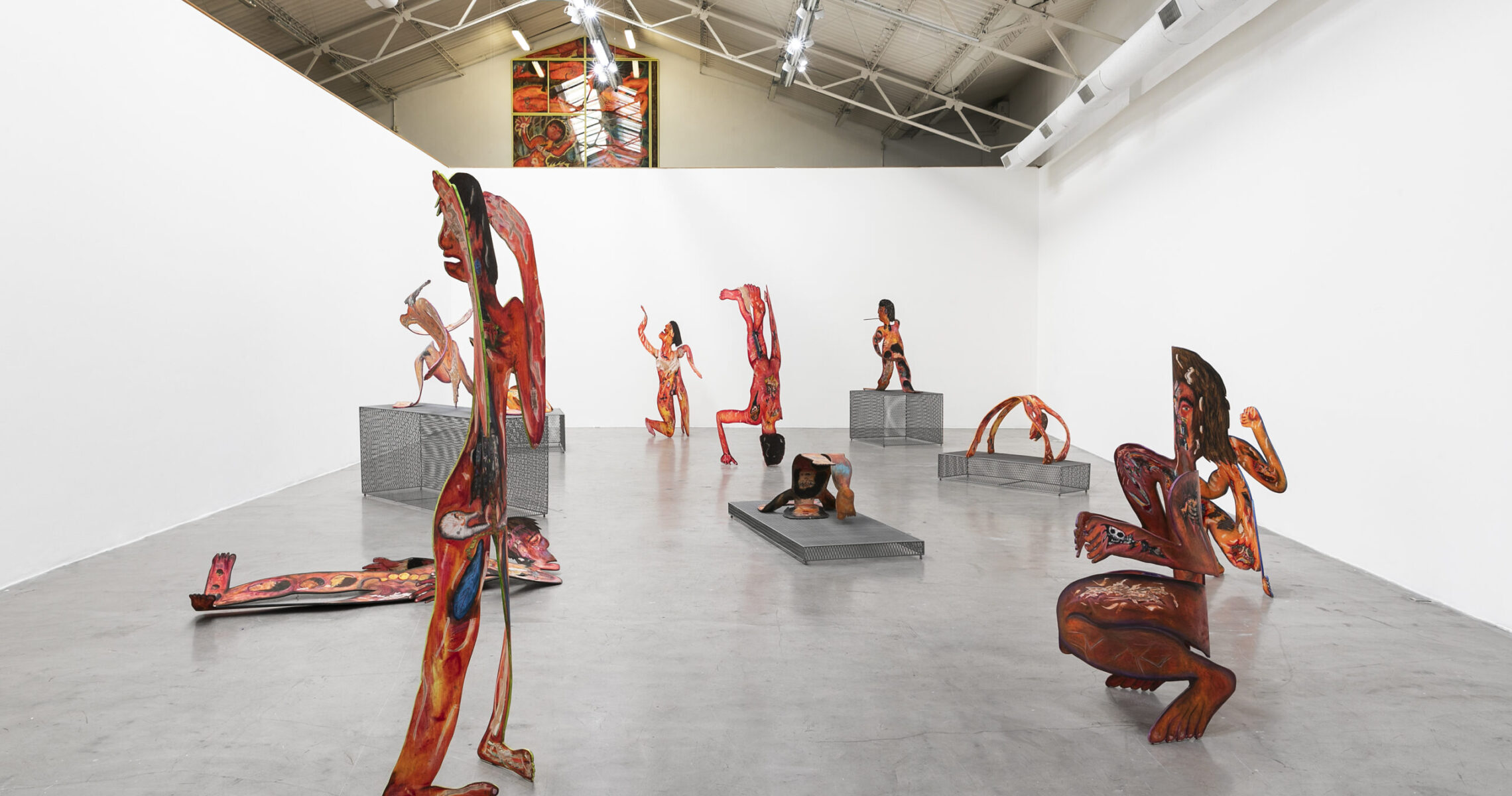
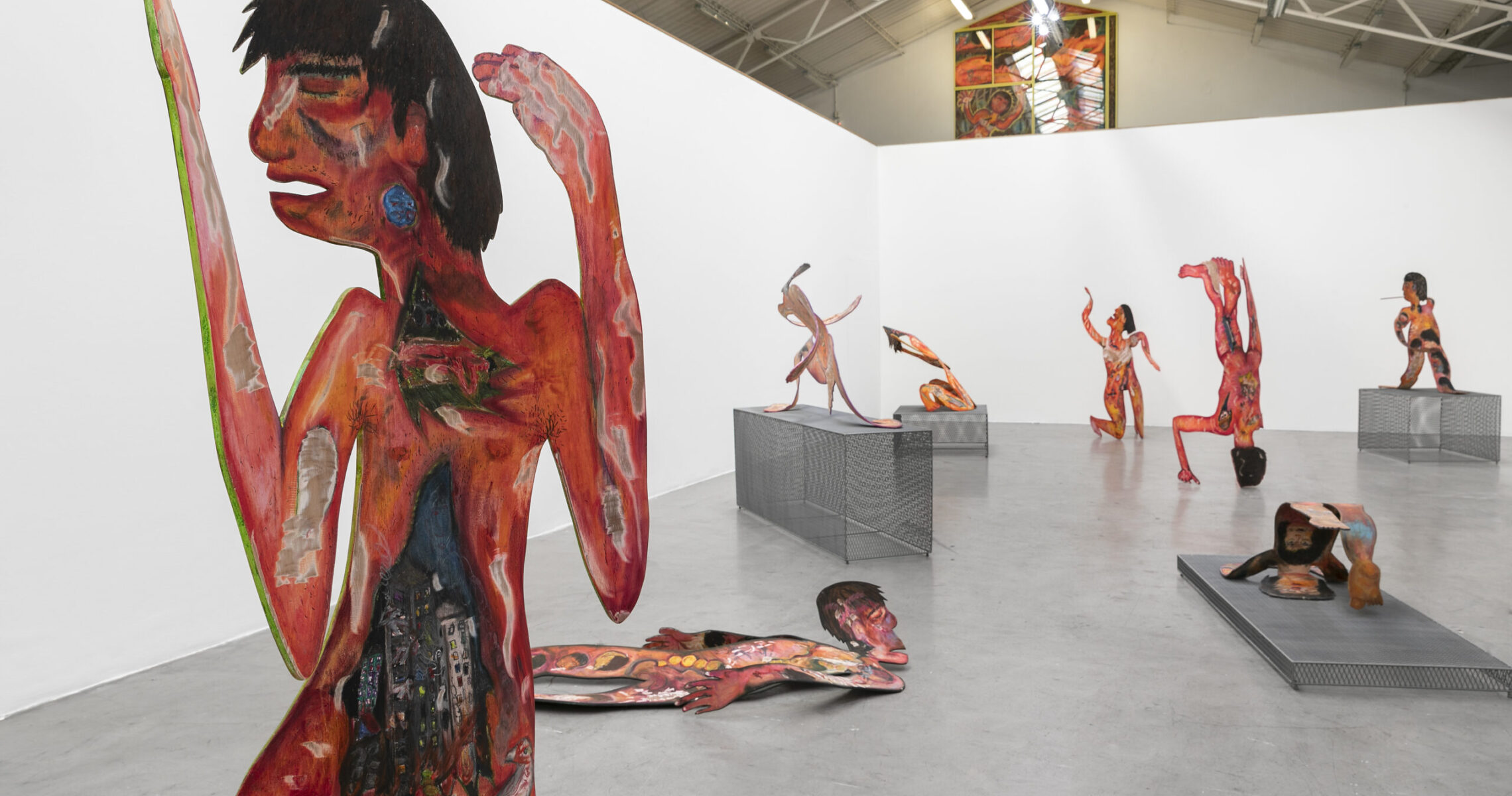
Now in the room we can see all these figures writhing, doing handstands, jumping, running, kneeling, squatting, shouting, playing. It was necessary to contort the pictorial plane to make room for their commotions, their weight and their lightness. They slide until they rub shoulders with the sculptural status. I would like you to pause in front of the spectacle of the lines that draw their contours in the air. Observe how this writing has once again taken over the space on a larger scale. Then, come closer to them and look at them closely. Approach their skin.
Skin that is a memory of pleasure and faults. Mazzucca recently titled a work: The torment of those who lost everything. In it, she evoked something
of her history. It is fault in terms of lack and need, not only material,
but also of protection, support, of being needed, the sociological sadness of
kids. Lack that is also failure to comply, disappointing the expectation
that, subtly, had been pointed out as the only possible path. That is why
lack can be disobedience and disagreement. Or a little trick, an ambush by the weak to enjoy where they are not allowed, a simple misbehavior at school.
Ulises is Ulises, but he is not just him. He is the example of that kaleidoscopic beauty, of that infinite capacity to tell stories, of that pain and
mischief of all those kids we need. It is the beauty that appears where it was not expected, where everything was done to extinguish it, to lacerate it. And yet, despite everything, it is there. It is driven by that lack that so often marked the guts, but it is also driven by a desire that defies the weight of the world.
Federica Baeza