I receive almost every day on my phone an image, a text, an audio message, or a video from Guillermo Iuso. It is not a question, nor the development of an idea or problem within his work; Iuso sends me “updates,” certain matters to discuss, always under the sign of discretion.
With Iuso, being a curator becomes something else entirely. I do not need to devise a hypothesis or distance myself from his work in order to formulate a clever, new, or singular idea. Rather, I need to remain there, hovering at close range — the distance his work requires. It is clear that what drives Iuso is a desire for brief, necessary theory. What he states always seems eager, if it is not already so, to become a question.
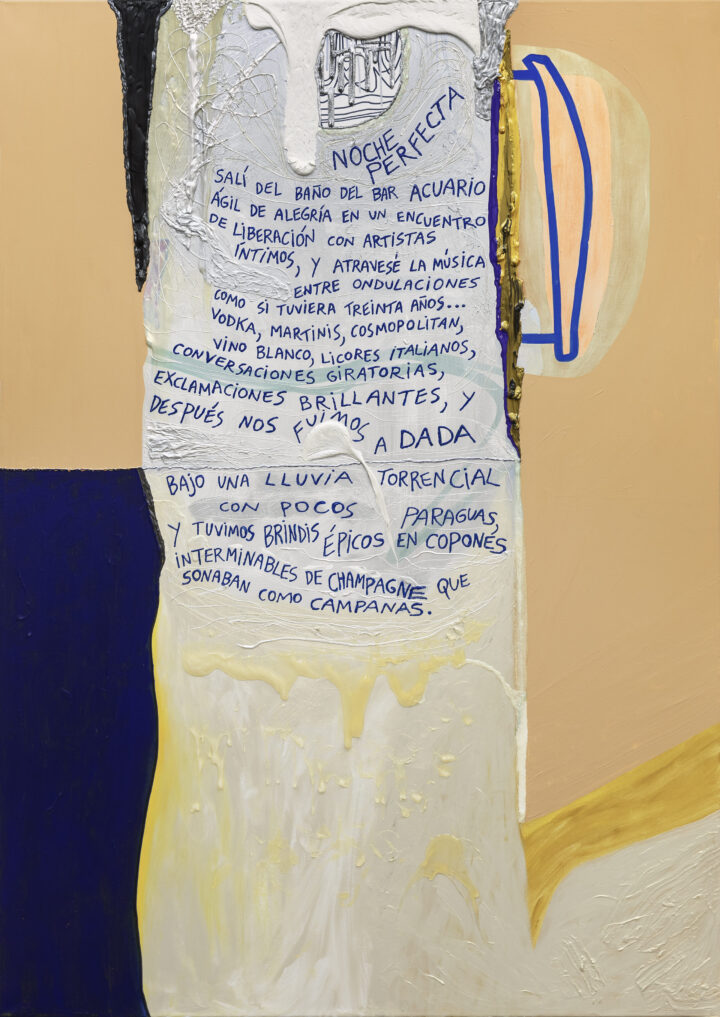
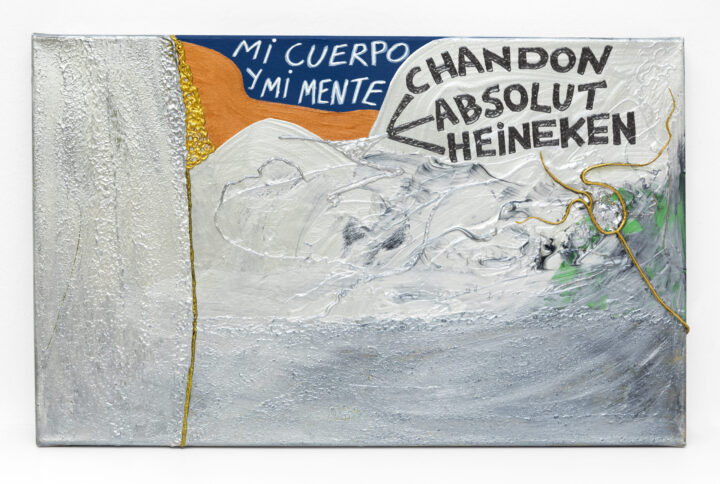
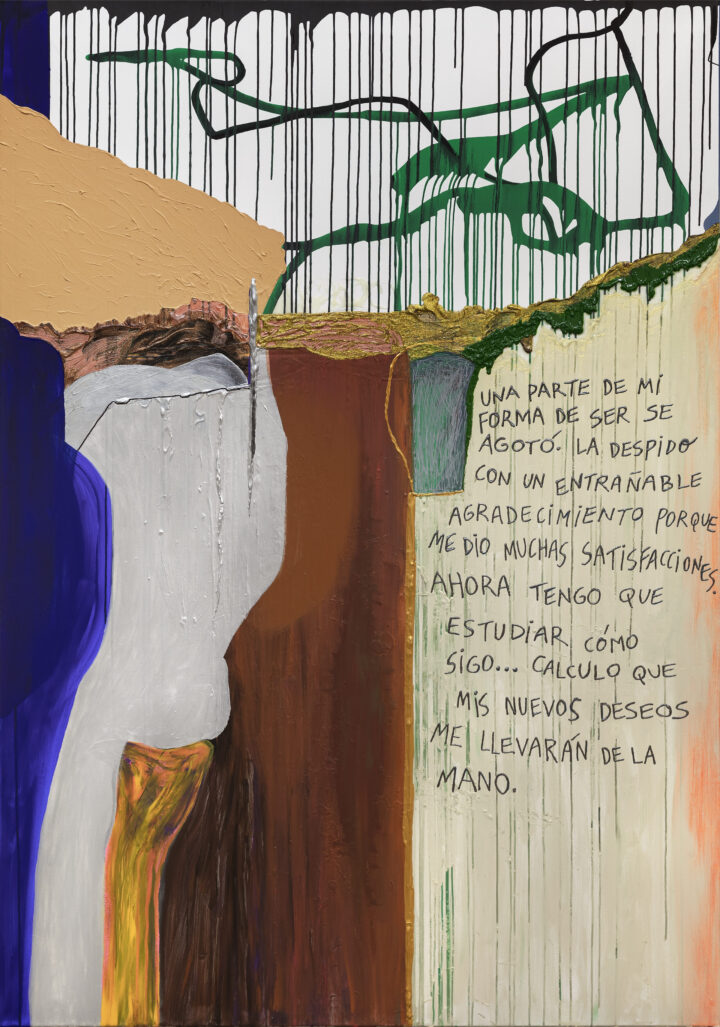
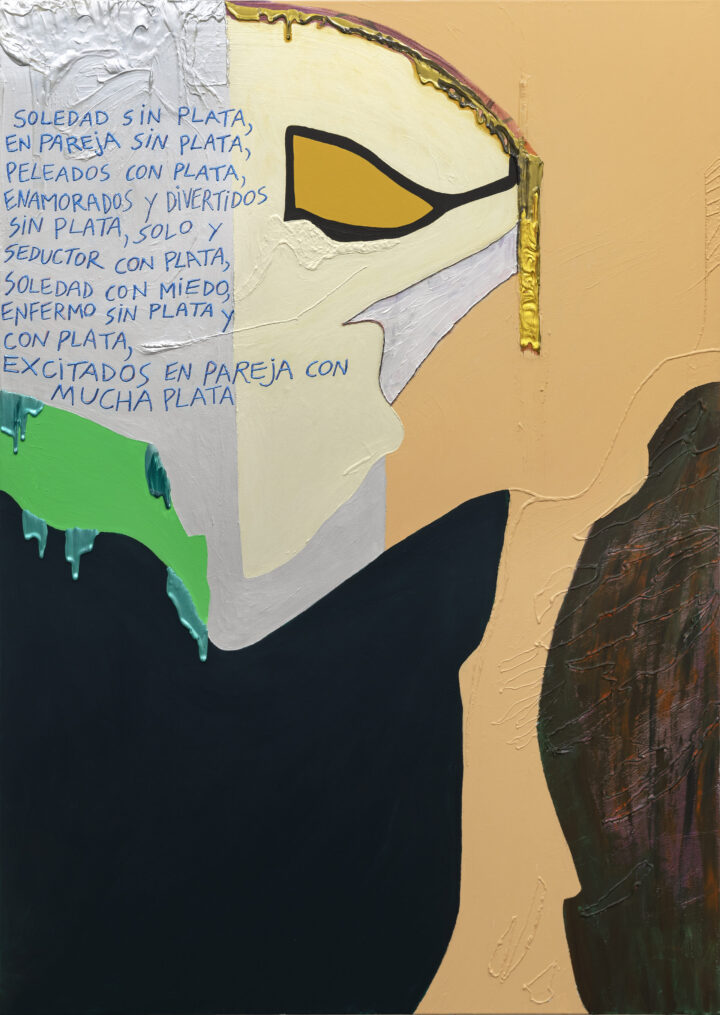
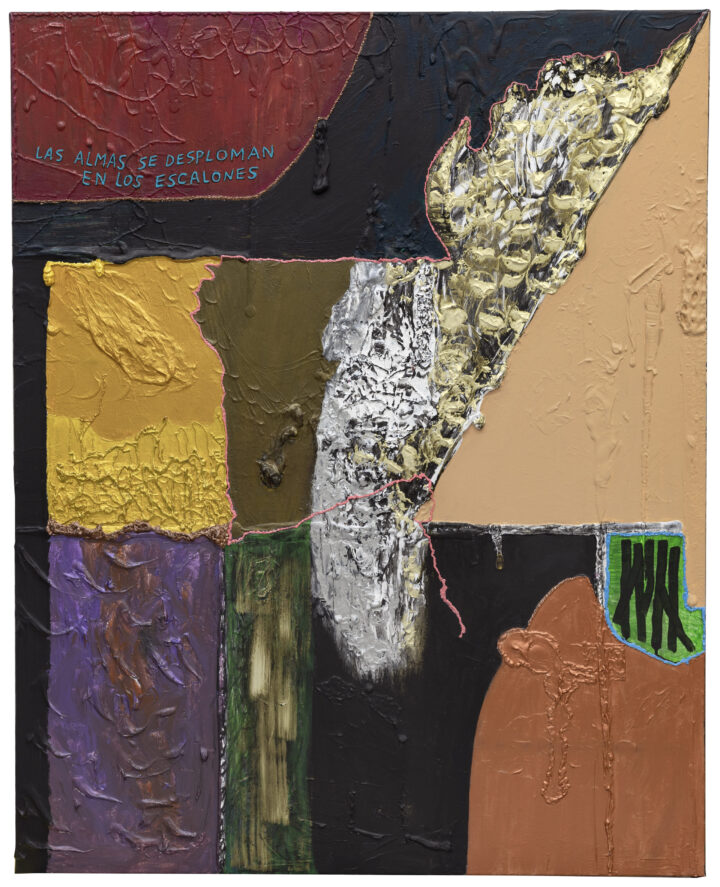
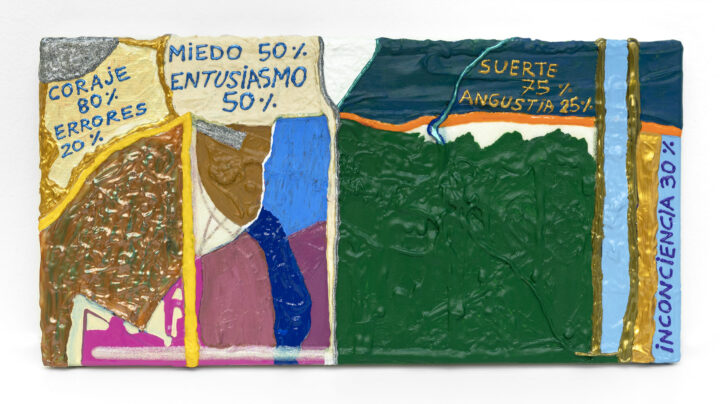
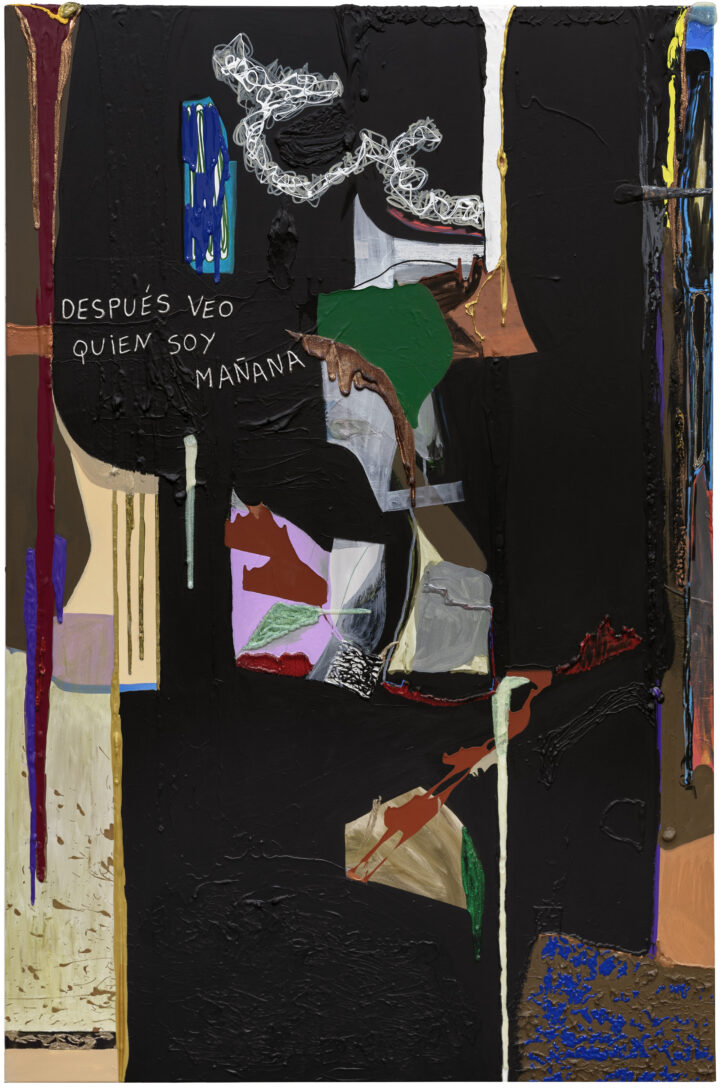
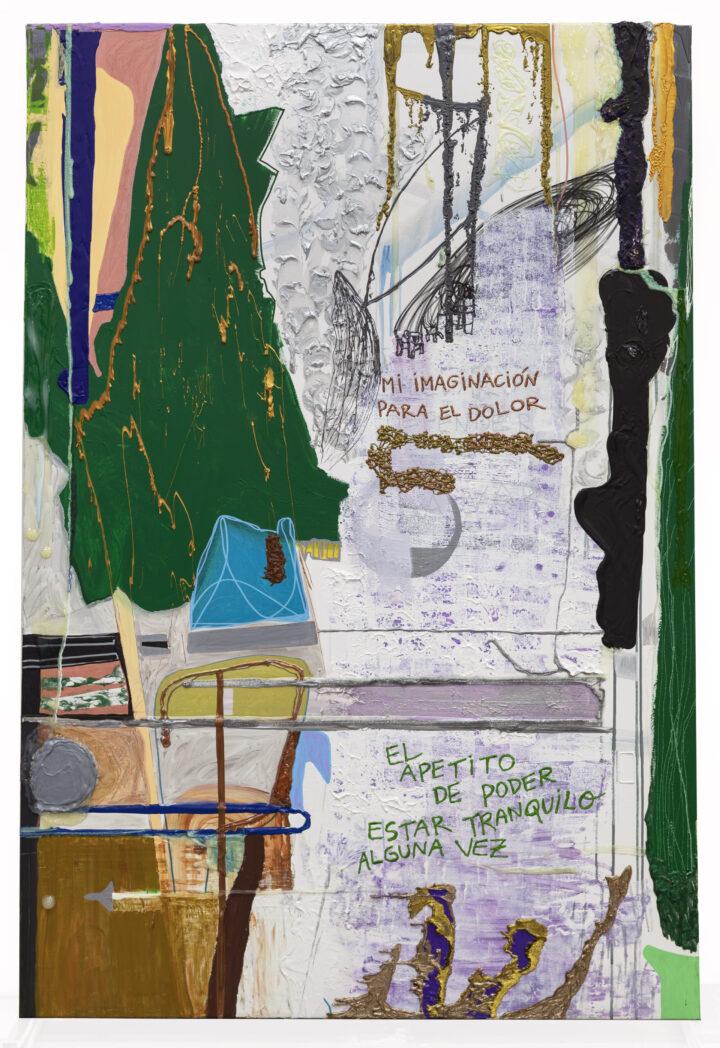
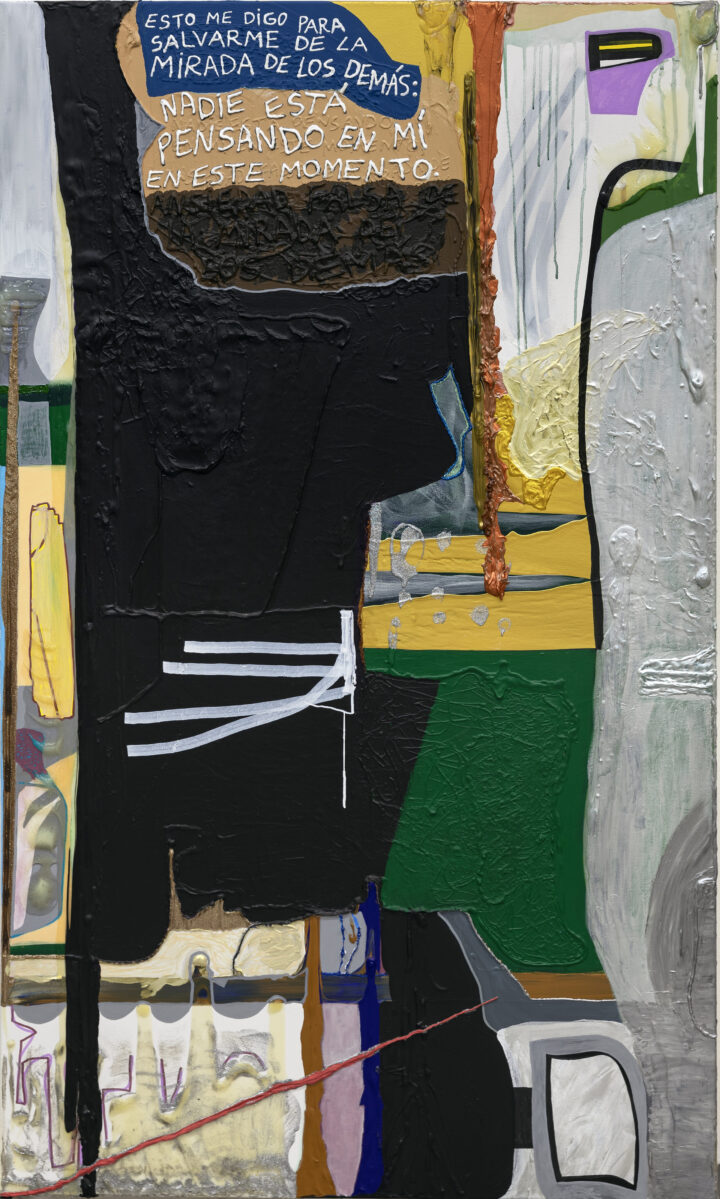
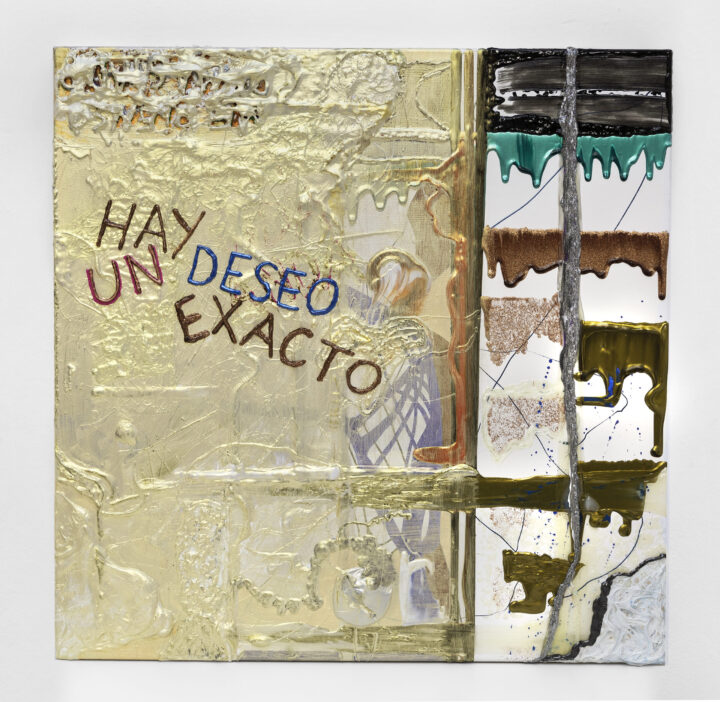
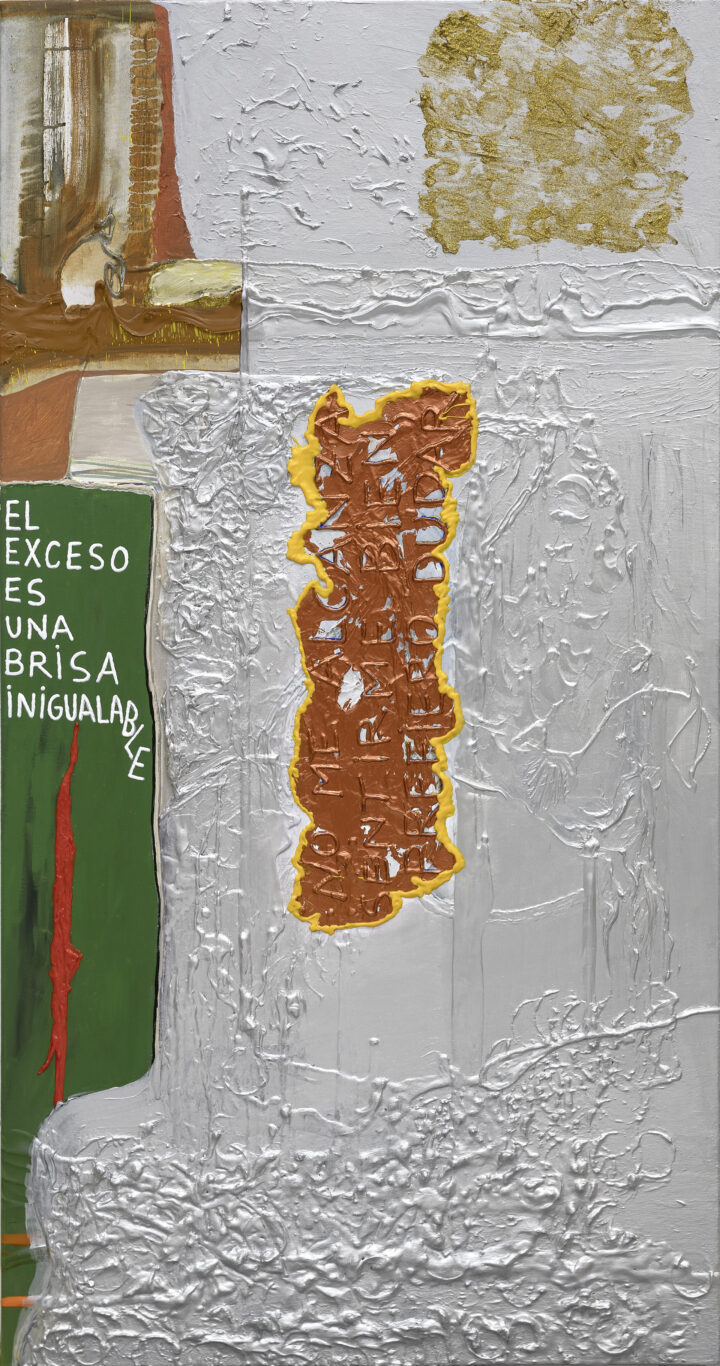
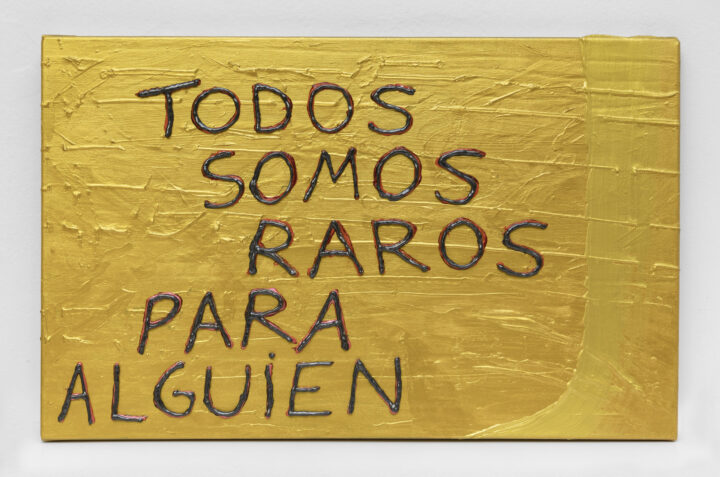
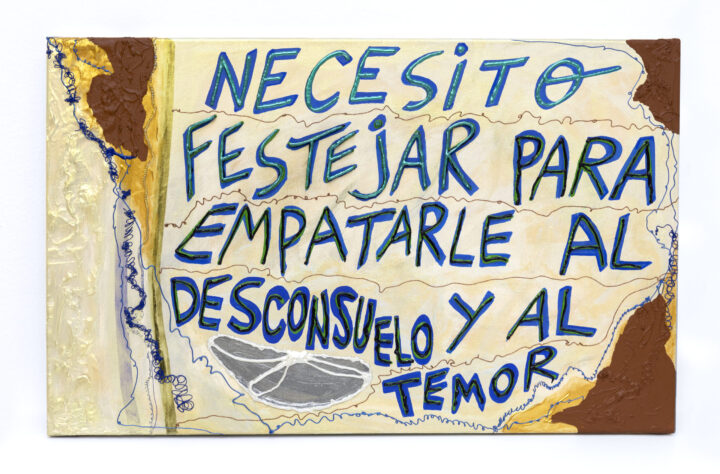
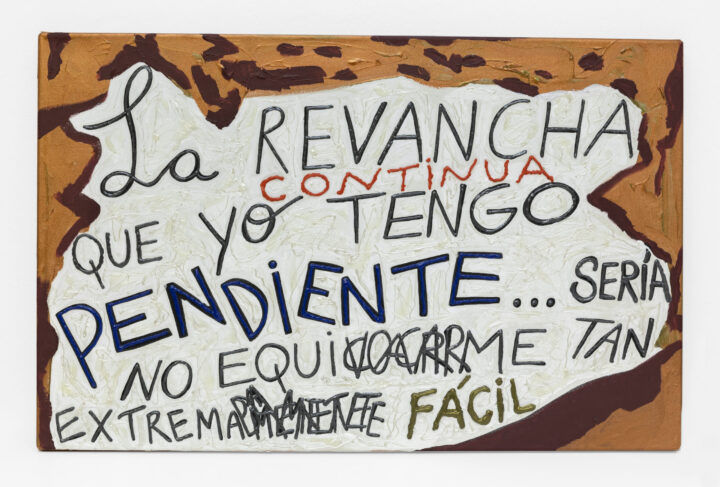
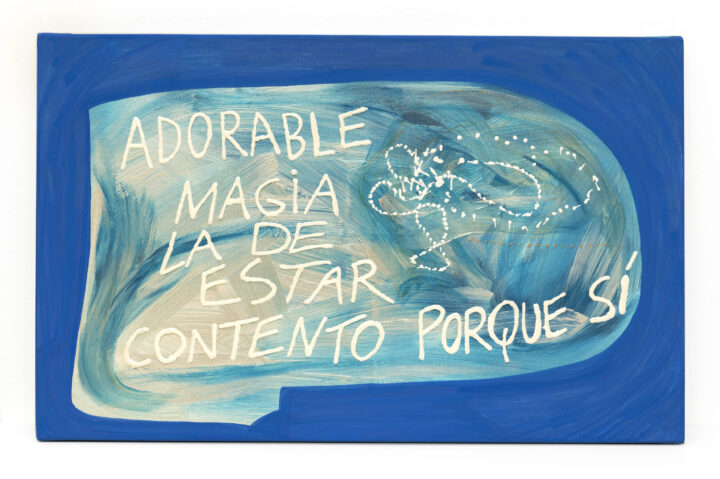
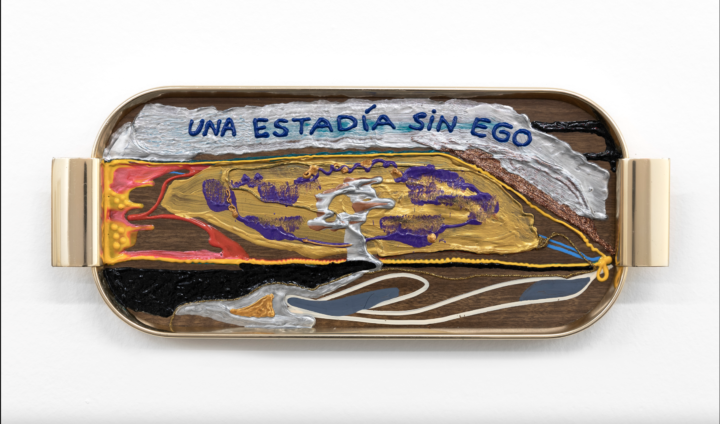
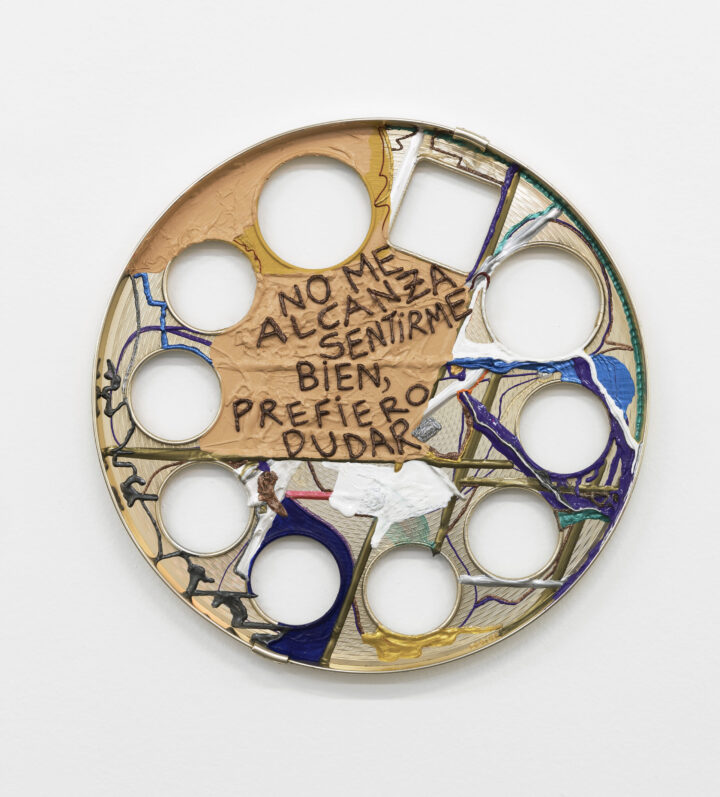
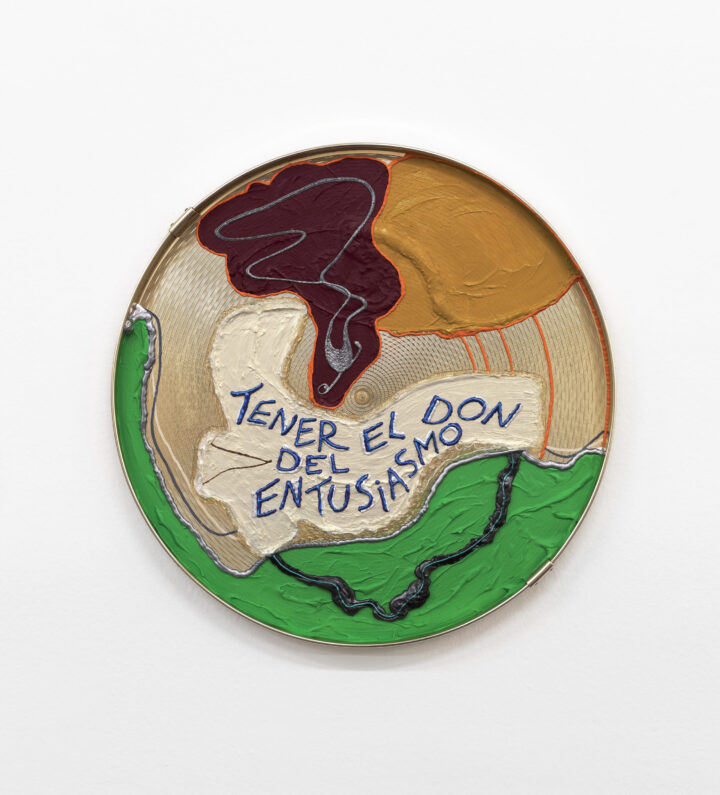
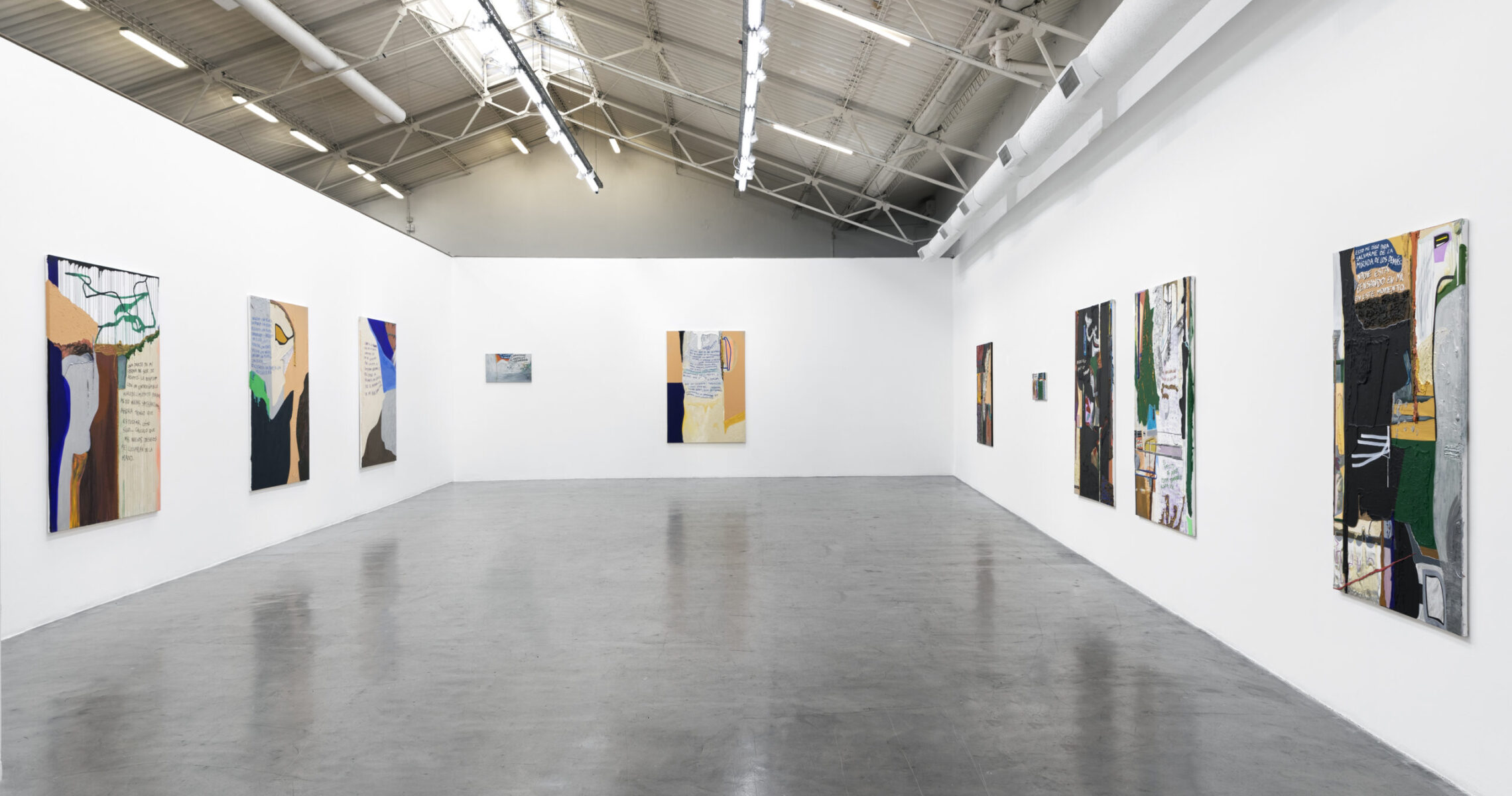
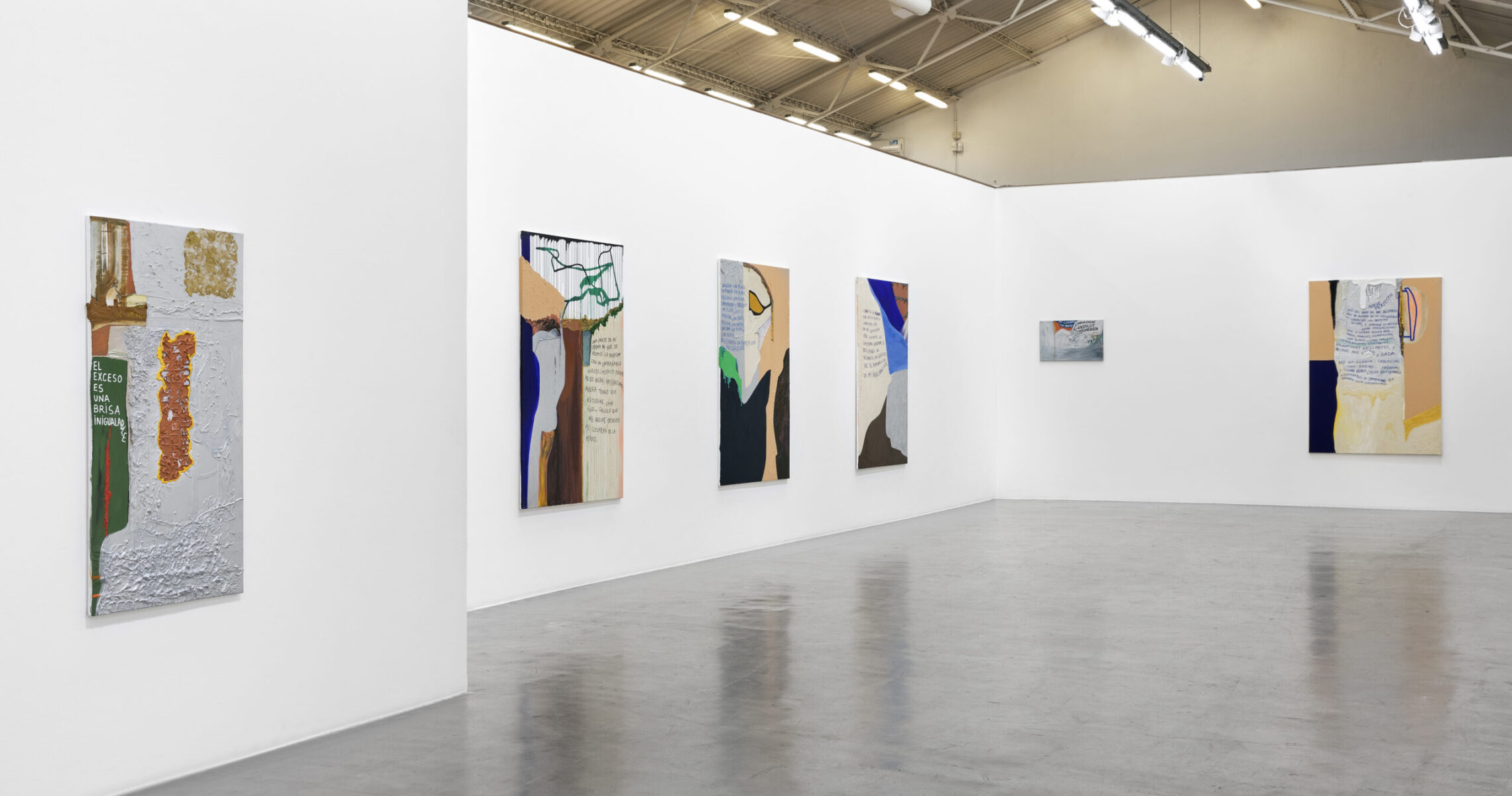
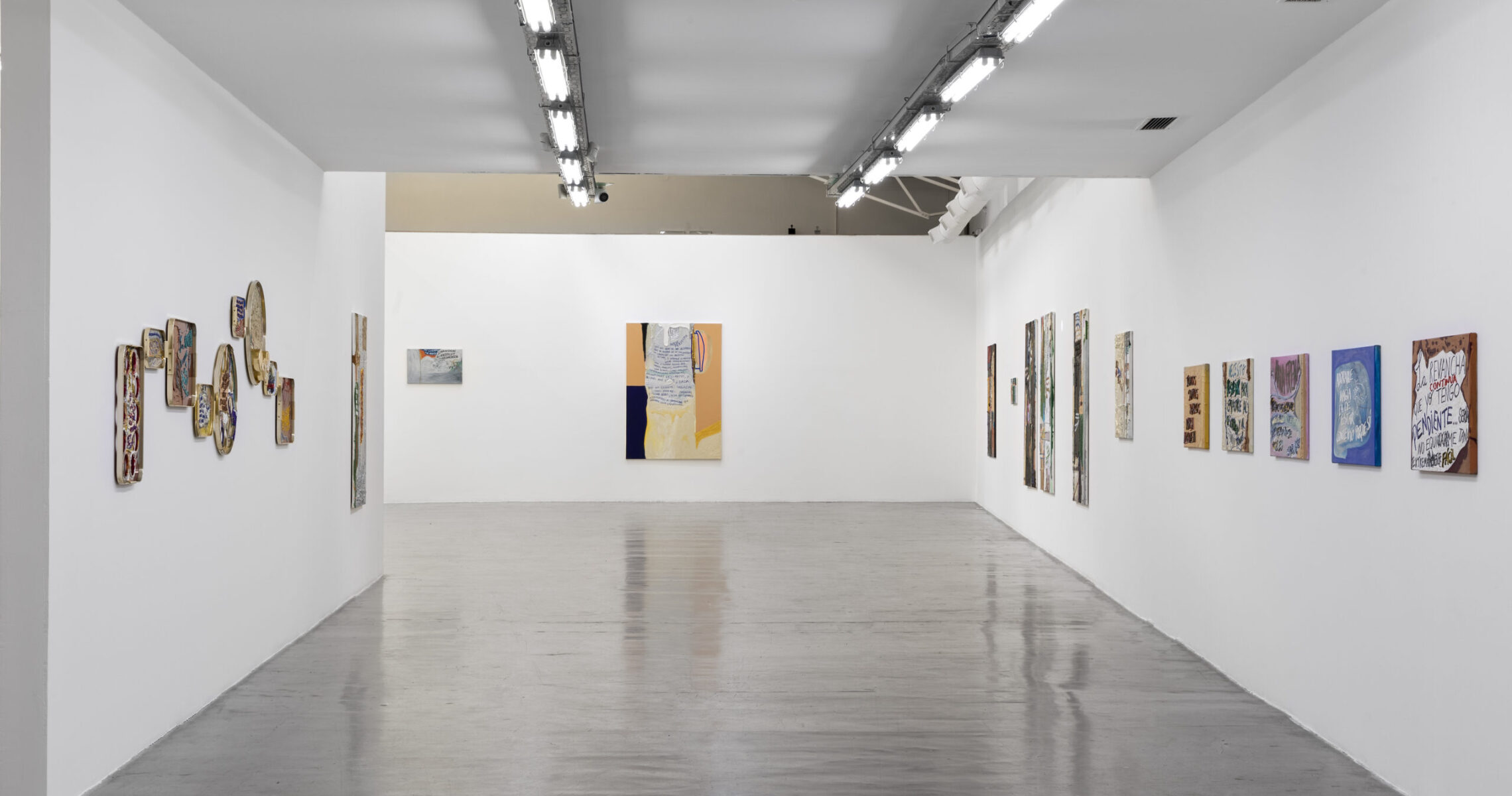
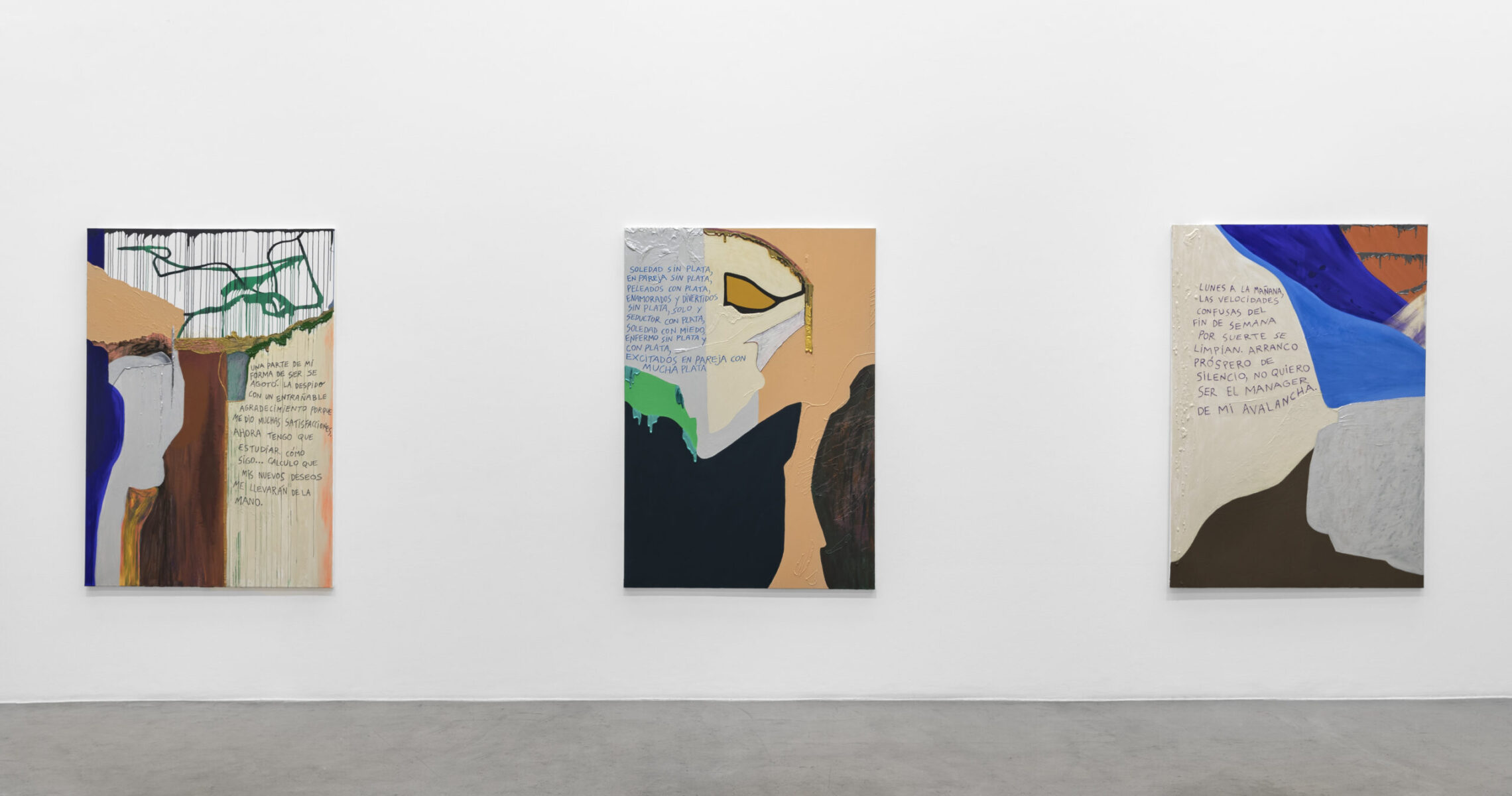
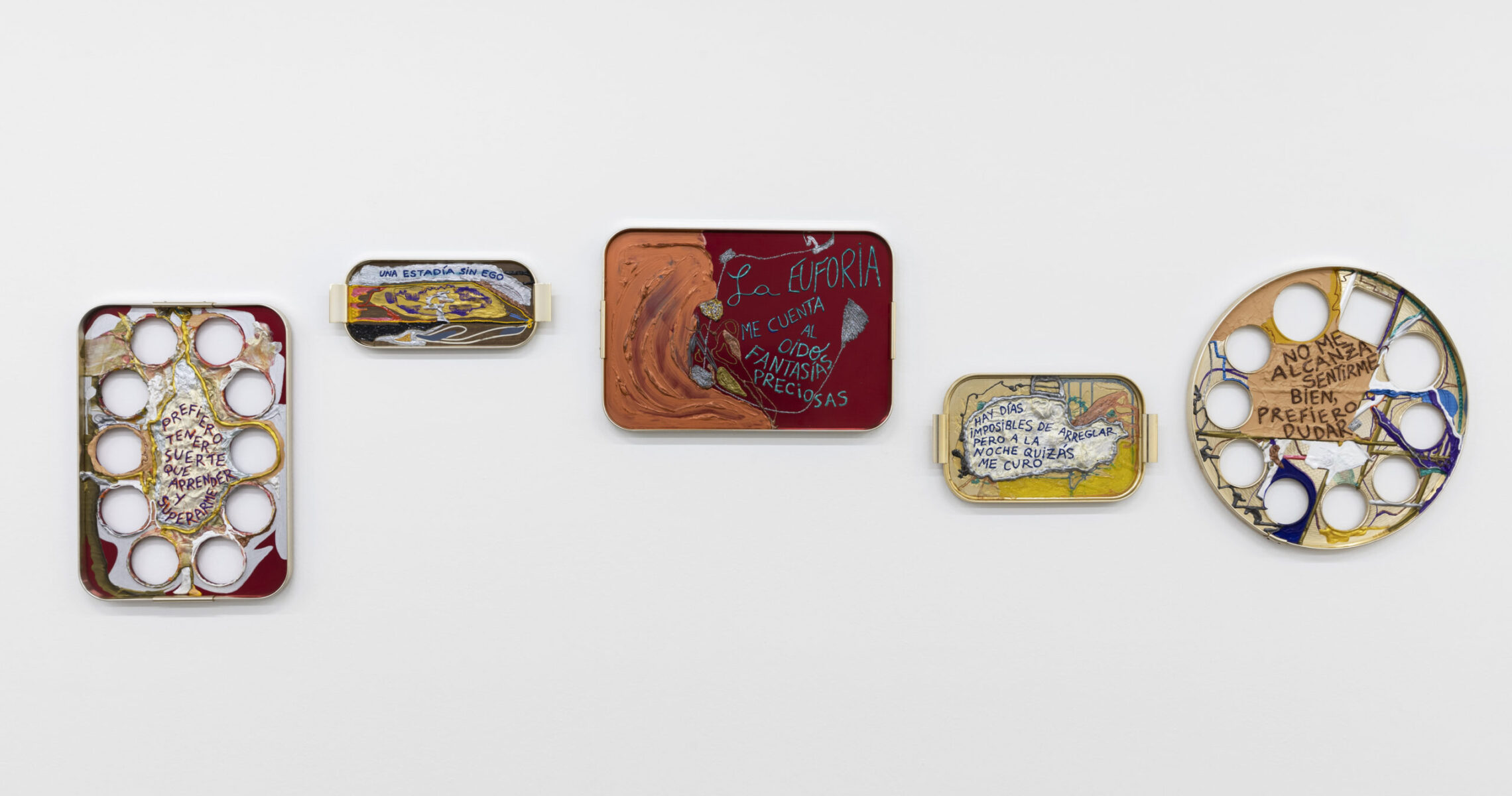
How does he synchronize text and material in this series of works? Here he moves between the meticulous control he can exert over words and the delegated lack of control granted by matter, matter with which he has nonetheless worked for decades. The proportions of the canvases, the encounter between one color and another, the sheen, and the extension of the text.
He is one of the few artists of his generation who reaches variation through repetition. His work seeks, requires, and finds continuity without constructing narrative, without storytelling. That is his miracle. It depends upon the illusion of being an artist, and unlike his past works, where the project was a “life project,” here he finds illuminated moments that, although they may come from far away, appear new.
This exhibition, more than any other in his trajectory, finds him at the moment when a way of being adapts itself to the work. I no longer have any doubt that his work represents better than anything or anyone else what it is like, for some people, to live in this city and to build it within oneself.
Santiago Villanueva