By Larisa Zmud
“To free the Earthlings from futile struggles, to free the Earthlings from excessive ambition, to teach them to love more and better. To teach them to be astonished, to marvel at the beauty that surrounds us, to teach them to understand the miracle of Art.”
Raquel Forner, 1979.
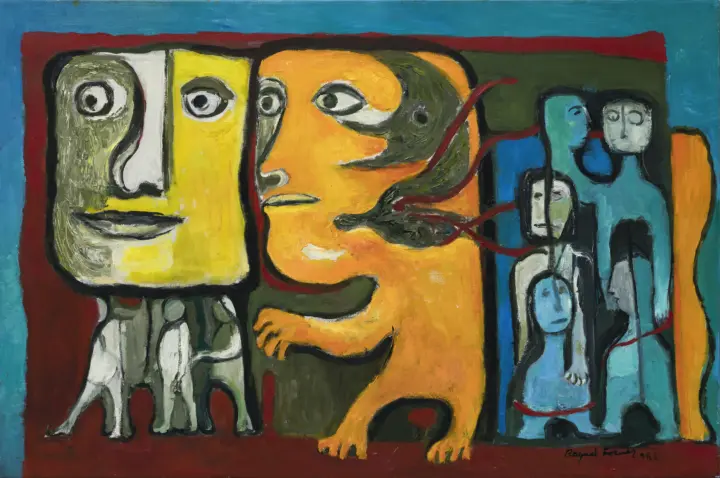
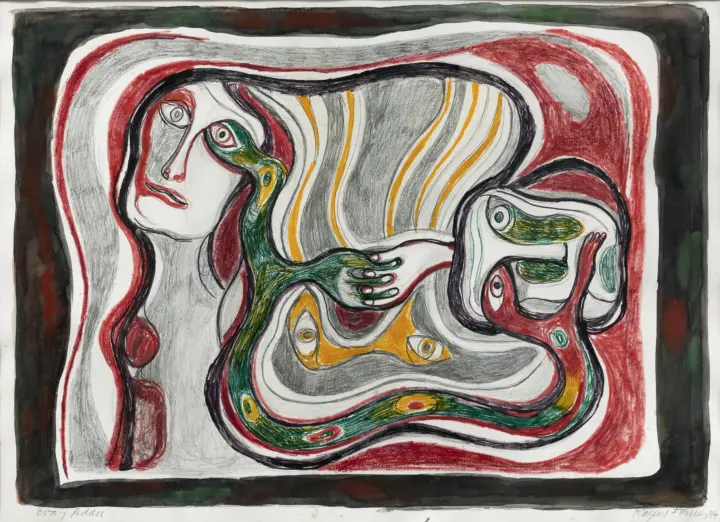
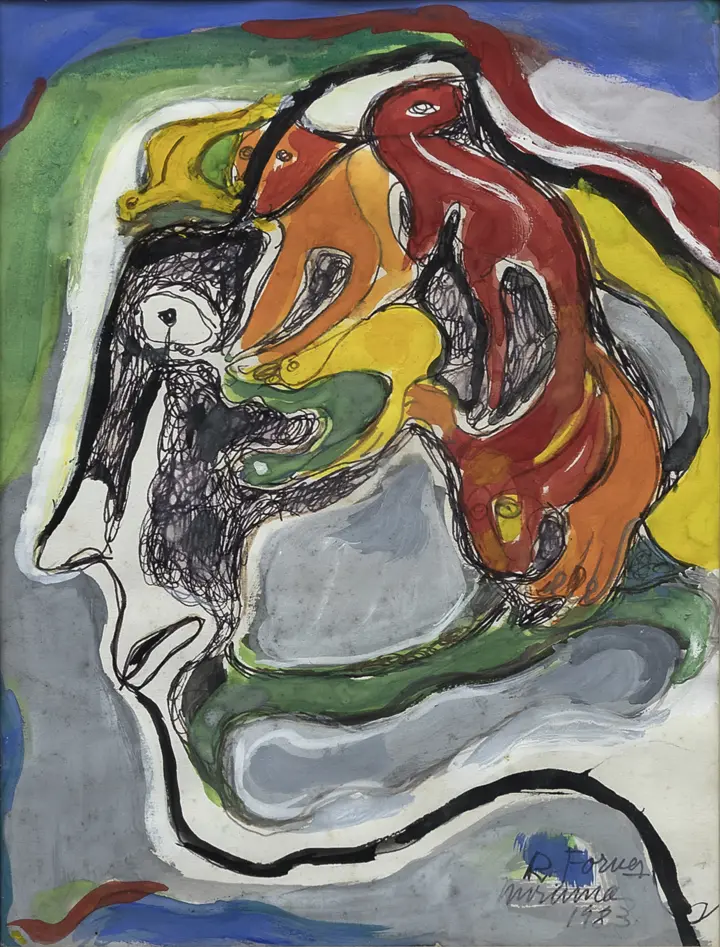
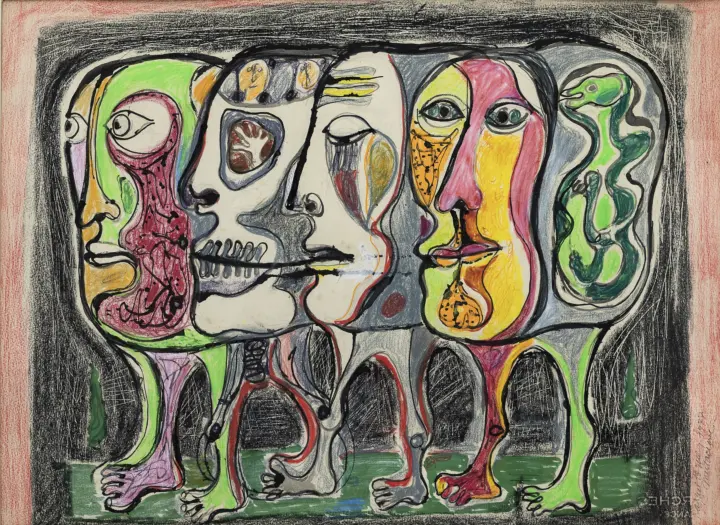
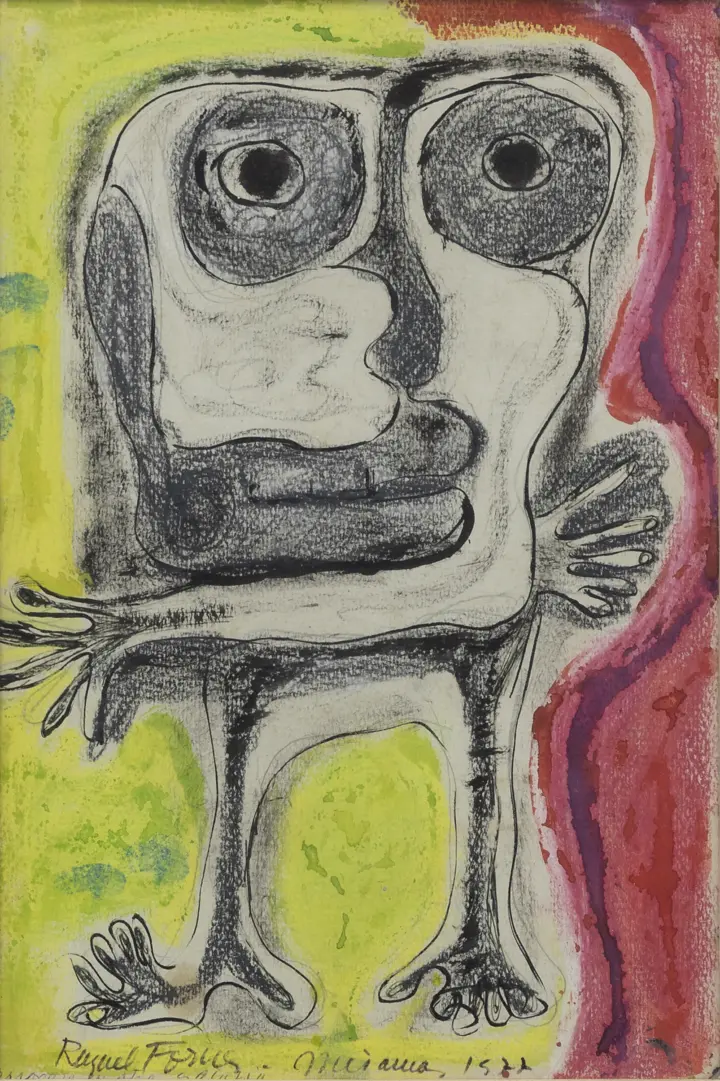
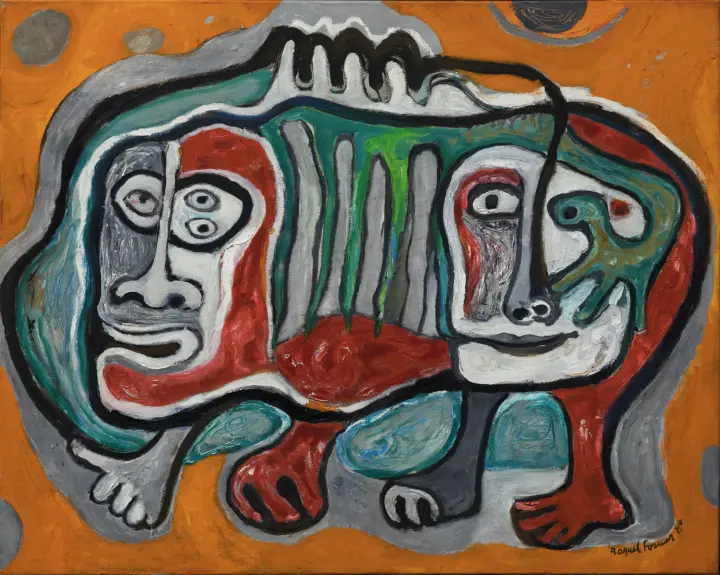
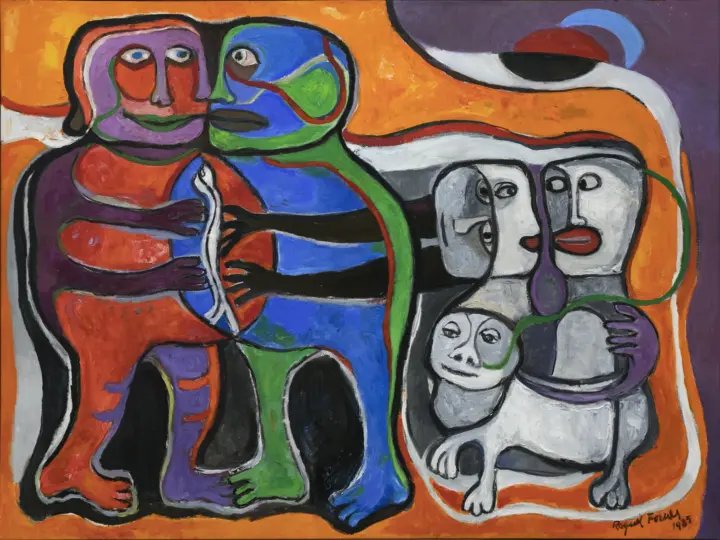
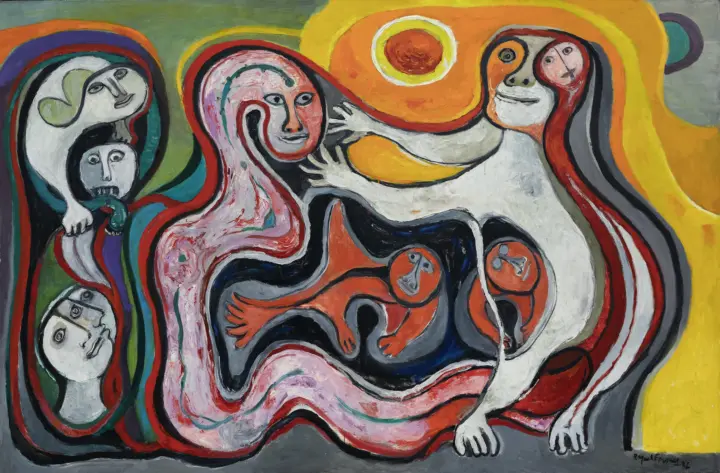
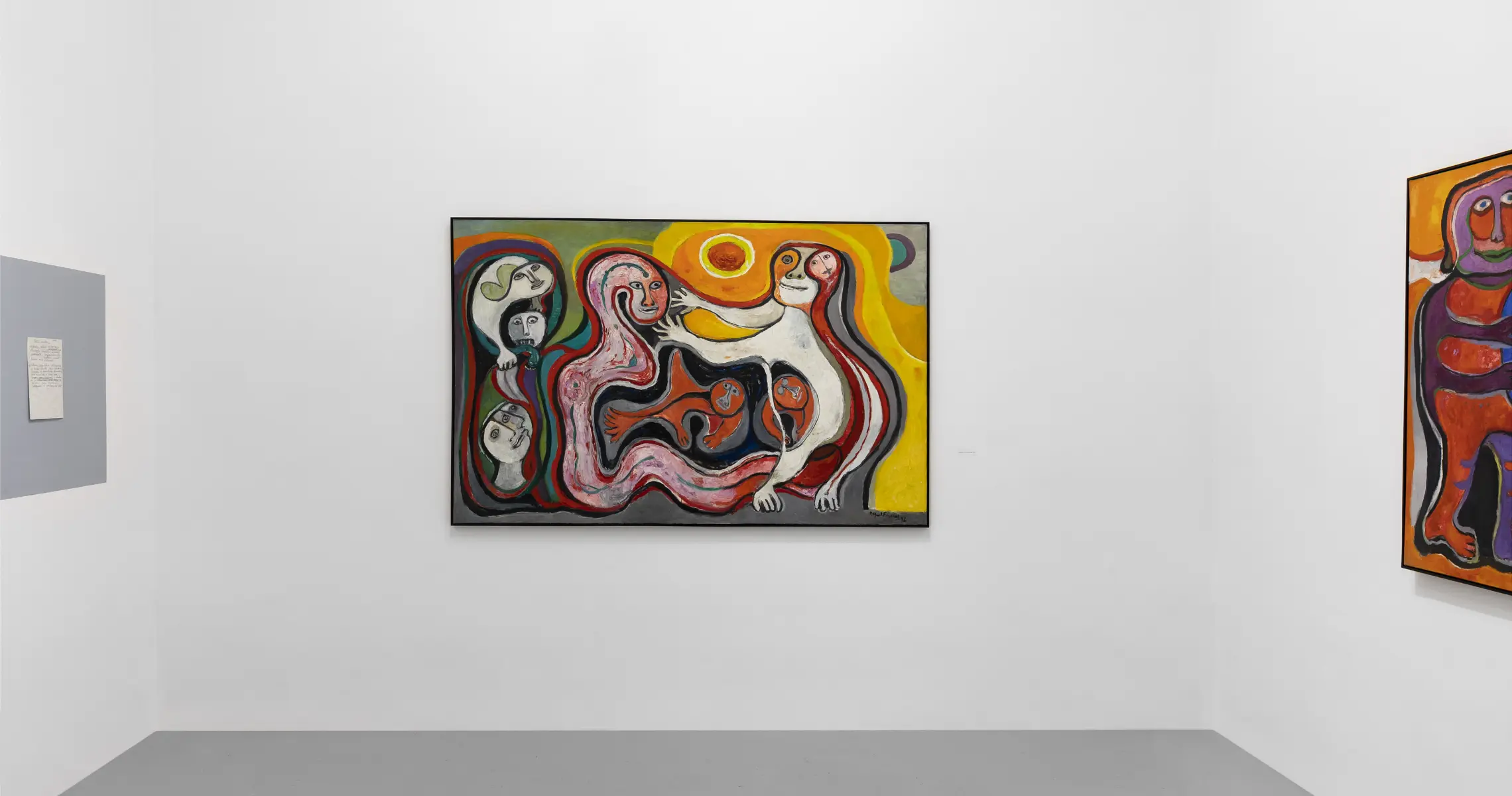
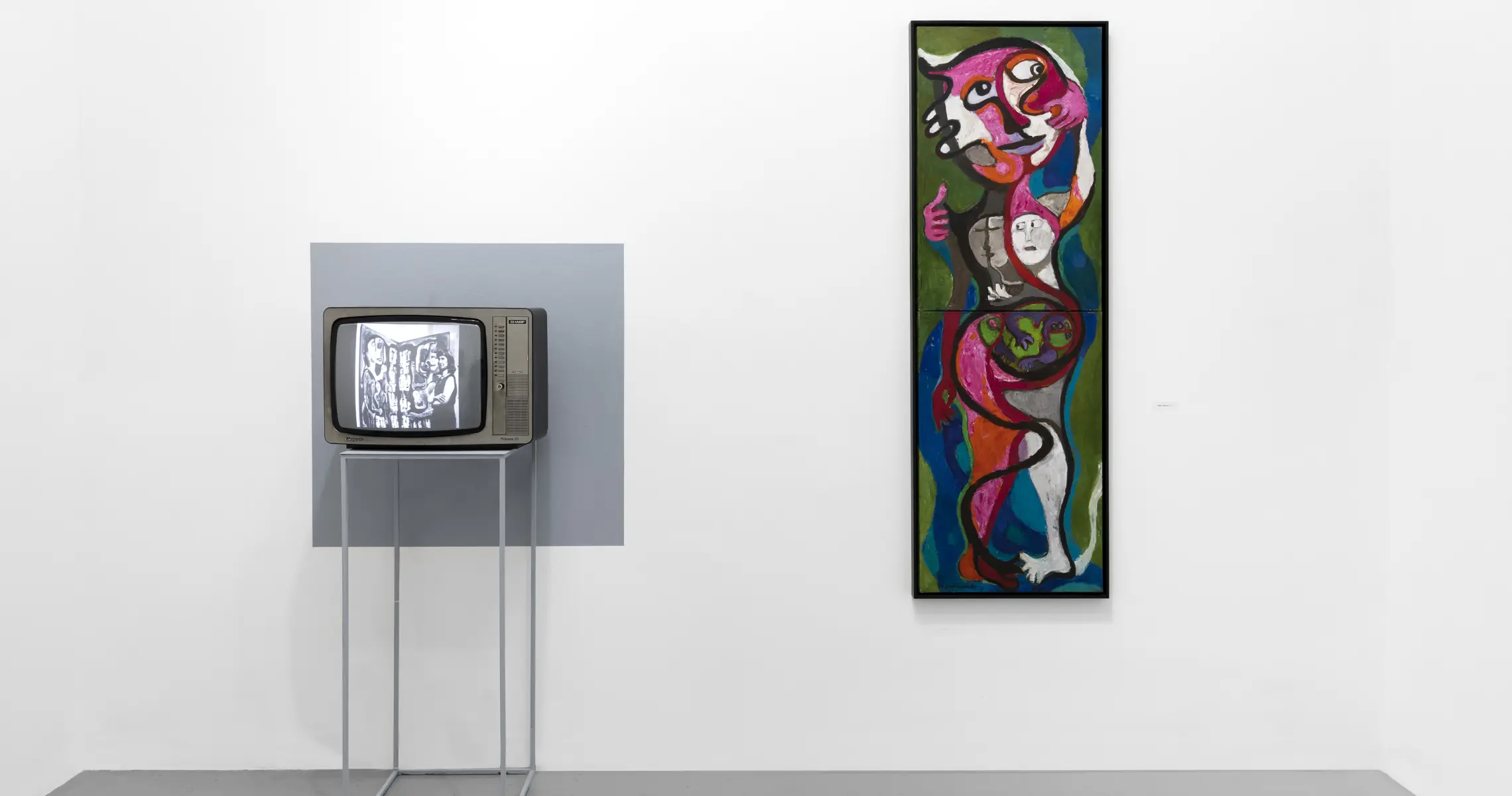
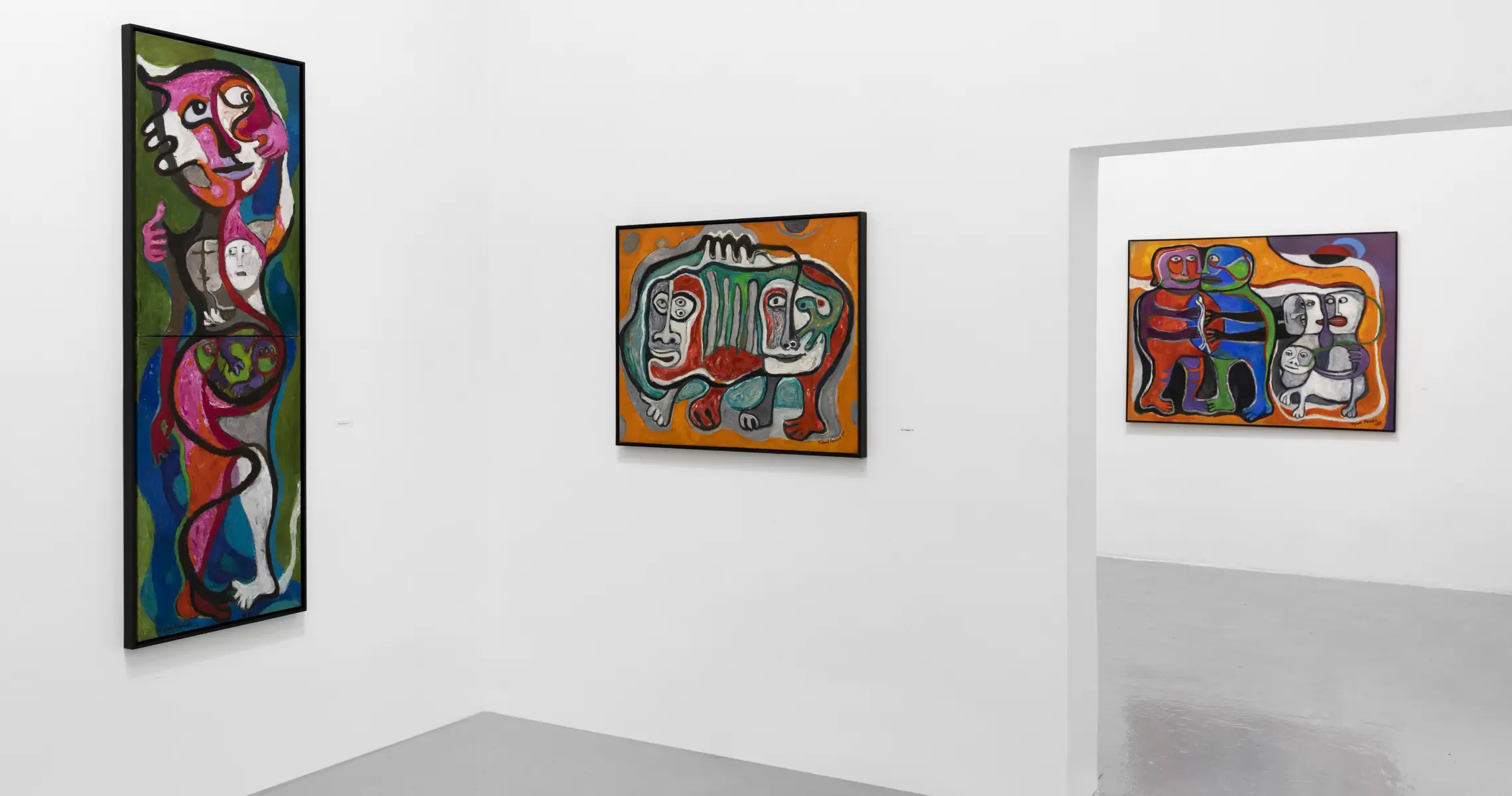
One could write an entire paper using only the titles of Raquel Forner’s paintings. From Another Galaxy. Invitation to Knowledge. Question Without an Answer. Premonition. Fossil of an Astronaut on Mars. Earthlings on the Move. Space Monster with a Televised Witness. Hybrid Being of the Year 3900. They tell stories that belong to a different register. They seem to suggest that the available categories—Surrealism, Figuration, Abstraction—are not enough to name what Forner was doing during this period. That one must look elsewhere.
In the very years when she was imagining her Mutants and Astro-Beings in connection with the Earthlings, Ursula K. Le Guin was publishing The Dispossessed, Octavia Butler was beginning to write about beings that traverse the boundaries of species and time, and Donna Haraway was theorizing organisms that could no longer separate the human from the technological. What we now call (Anglophone) feminist science fiction was taking shape in parallel to what Forner was producing in Buenos Aires.
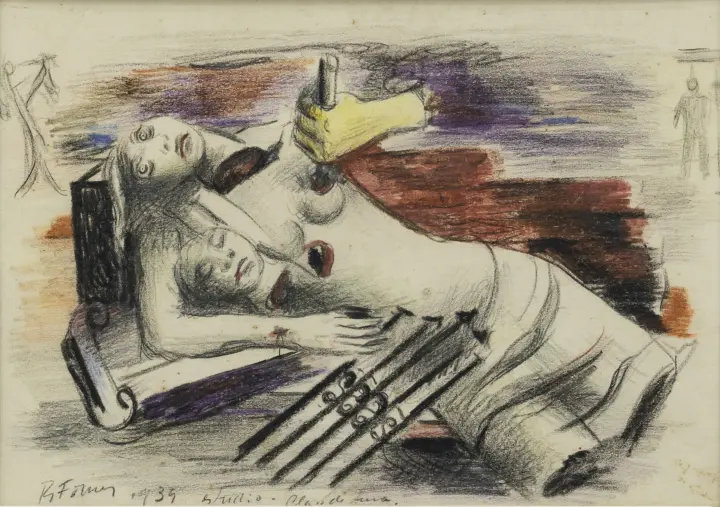
There are several threads connecting them. Forner painted her previous series under the weight of the Second World War and the Spanish Civil War. The conquest of space in the 1960s and 1970s reactivated the same question that war had left unanswered: what is the human being capable of doing with its power? Le Guin, Butler, and Haraway, shaped by the same catastrophes and hopes, developed similar questions. And their answers all imagined similar visions—more difficult and more necessary than apocalyptic dystopias: futures of struggle with love, of lives still possible.
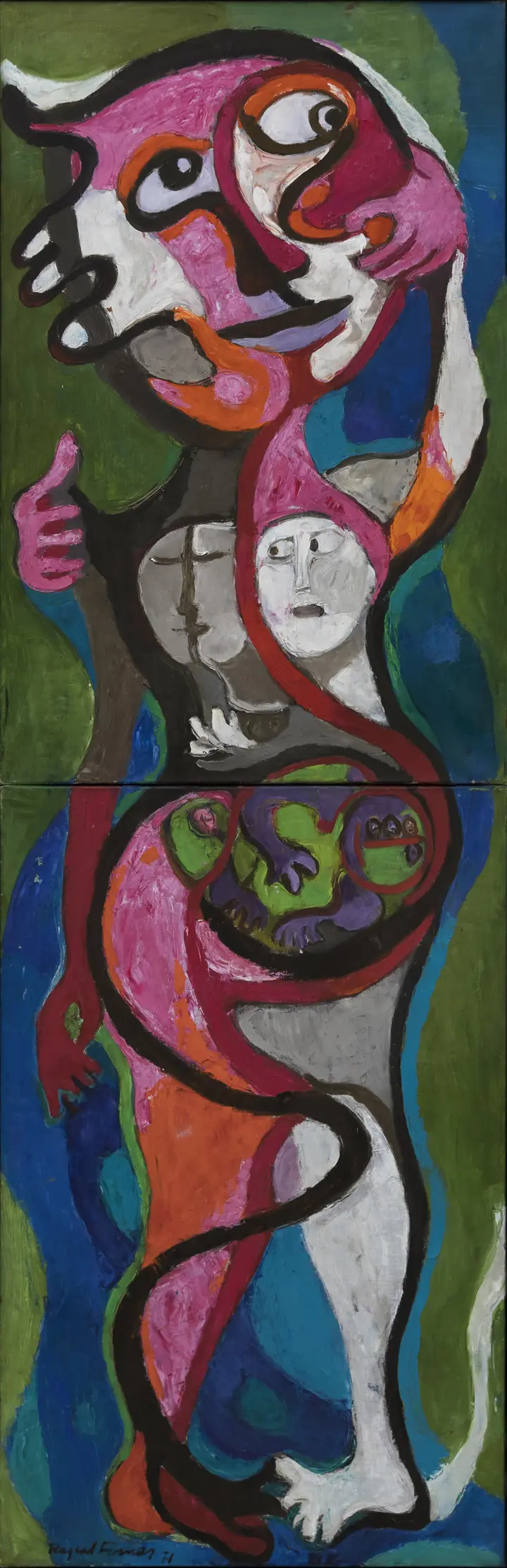
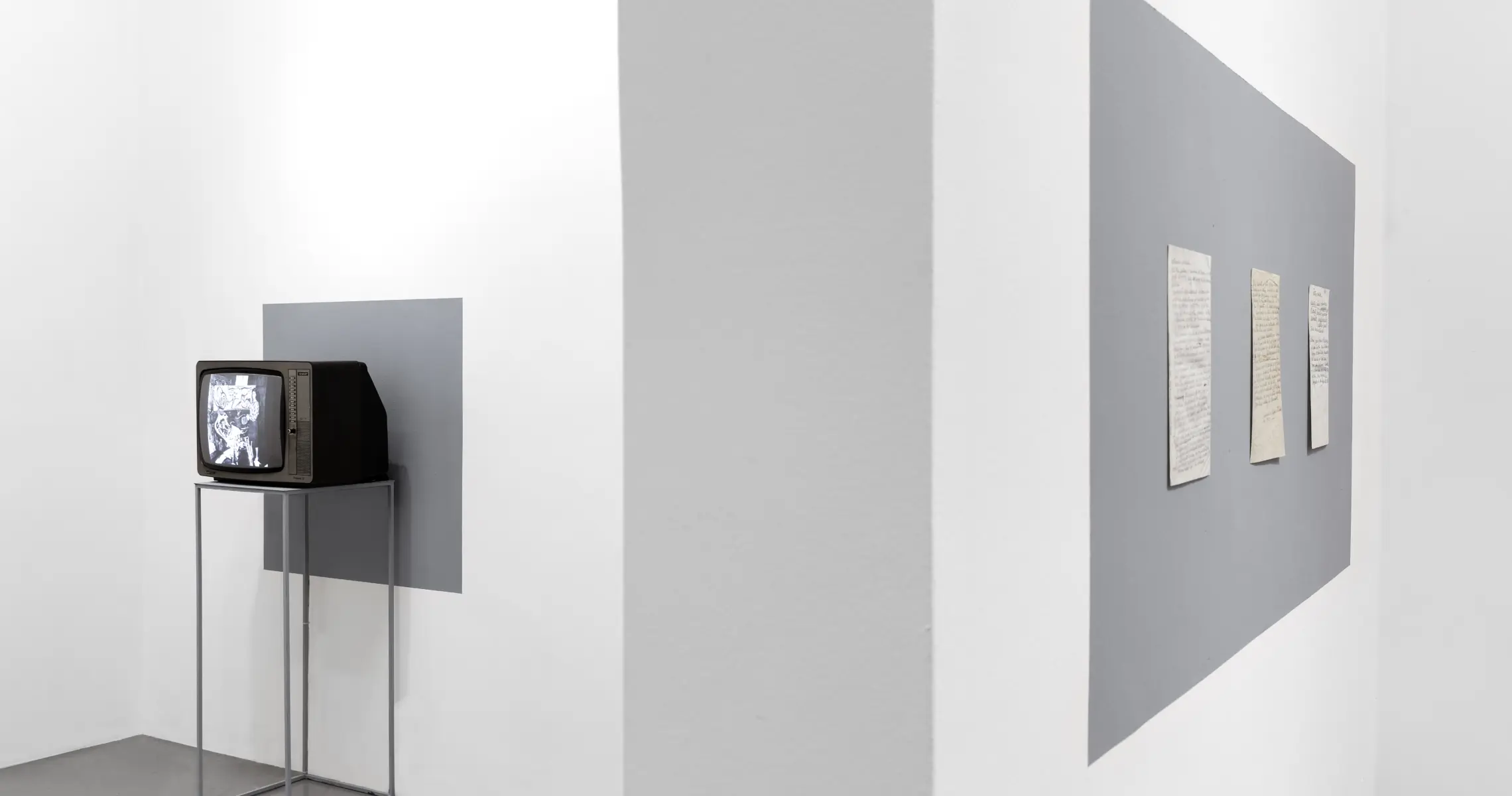
In her manuscripts from 1975, Forner writes that the Earthling who travels into space carries with them “their technology, their knowledge, their weaknesses, their strength, their frailties,” and that, through this encounter with the unknown, they create a new human being—a being who will have seen their planet “tiny, lost in the immensity,” and who will understand that everyone who inhabits it is a sibling. It is the wager of Butler’s Oankali: beings who hybridize rather than conquer, because they know that their survival depends on radical interdependence with other species. It is also Haraway’s cyborg becoming: a being that can no longer distinguish where the body ends and the machine begins, inhabiting the border as a permanent condition. Forner painted this figure: the astronaut with the television, the technological umbilical cord connecting them to Earth as they travel toward the unknown. A being that is simultaneously human, technological, and cosmic.
What this series proposes is a border figure. The Astro-Beings—intuited, glimpsed, awaited (as Forner herself describes them)—are beings that reveal that the most compelling form of life, the one that opens up the future, takes place where classifications break down. Forner resolves this visually as well through her palette: black and white for the Earthlings, color for the new human. Always in contact, always intertwined. Transformation begins here, in this body, in this world. “Anguish transformed into creation,” Forner writes before making these works. The phrase precisely names a position that feminist science fiction of the 1970s also embraced: disaster is not denied but endured and transformed into material. There is something profoundly political in that gesture, even if Forner herself would not have called it feminism, and even if Le Guin and Butler did not always embrace that label either. What unites them precedes these categories: the conviction that imagining futures in which life remains possible is already a way of resisting the present.
Future Becoming. The title of this exhibition belongs to Forner. It points toward something that is yet to come, something that can already be sensed, already be painted, already be read between the lines of a body of work that does not close off any questions. Instead, it opens them toward the future.