By Juan Cruz Pedroni
1.
After the flower of distance opens, the voice speaking in “The Possessed Among the Lilies”—the piece that closes Alejandra Pizarnik’s The Musical Hell—asks what has been done with the gift of sight. In the scene of observation that unfolds, “illusory objects” and “failed forms” collide. The dialogue with the visual arts already emerges in the title of the book, which recovers the usual name for the right panel of The Garden of Earthly Delights, and returns, more forcefully, at this point. In reality, it is an echo of the connection established with local Surrealists, beginning with his time in Juan Batlle Planas’s studio. A few years before that radically mature book was published, his collection of poems The Works and the Nights had appeared with Editorial Sudamericana. Its cover featured a collage by Roberto Aizenberg: a hand taken from a scientific illustration is shown manipulating a glass vessel. The gesture seems to condense a theory of distance. As if to say that seeing presupposes that separation is the condition for the image to appear.
2.
To name Aizenberg’s operations, it is sometimes useful to employ an administrative verb: to keep. To keep distances, put them in their place, maintain between two things the minimum separation they require in order for each to remain what it is. That distance is produced each time: it is measured, corrected, recalculated. Sometimes almost nothing is enough. Two points come into tension through a line; a tonal variation opens up depth; a geometric form is enough as the sole indicator of spatiality. Ancient procedures return barely displaced. The scale of difference is minimal; that of the space unleashed can be enormous. Almost nothing changes, and yet the relationship between things is forever different.
3.
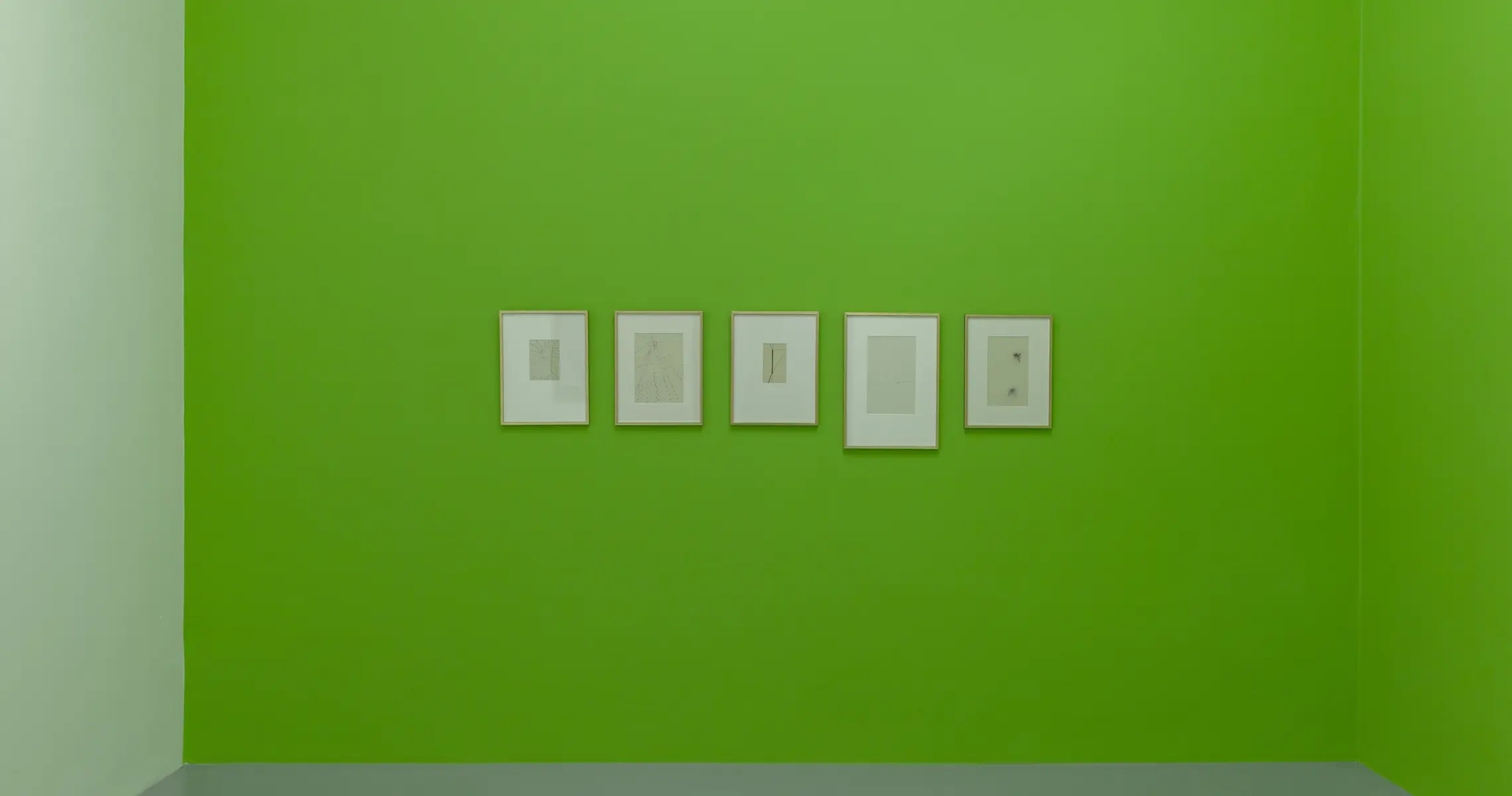
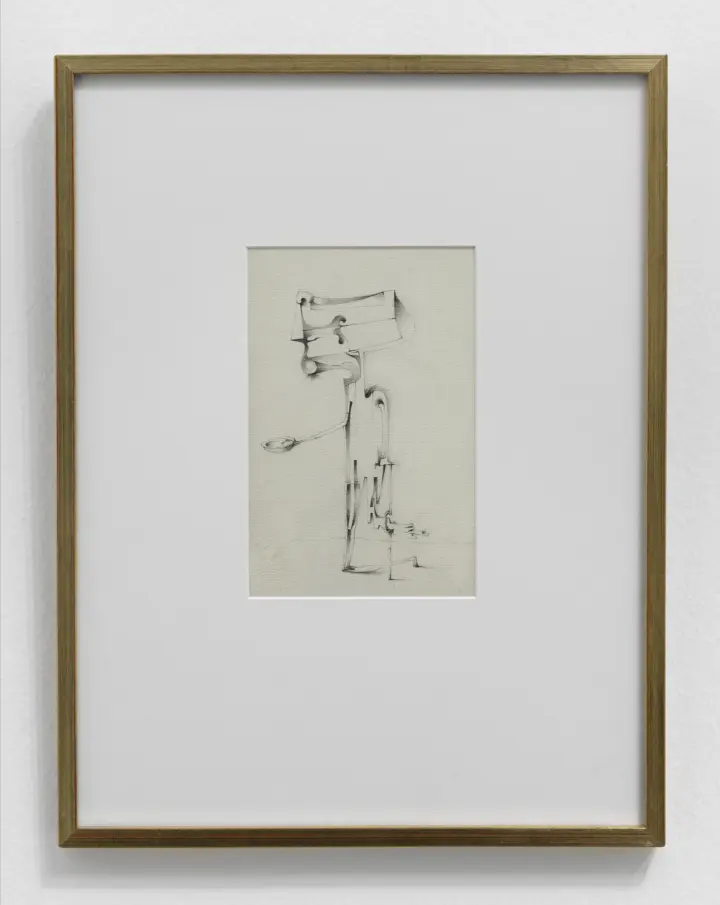
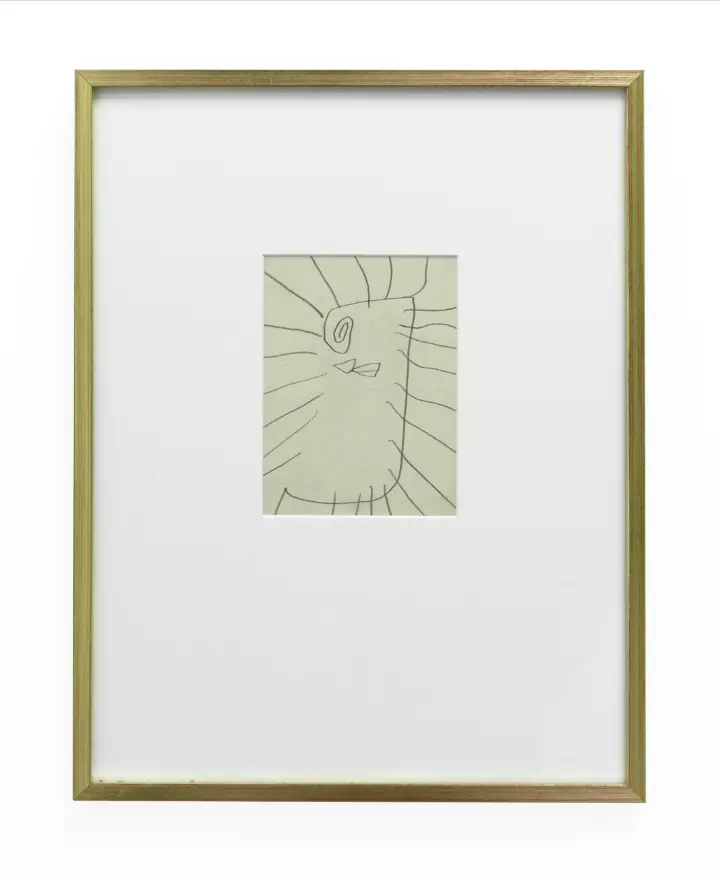
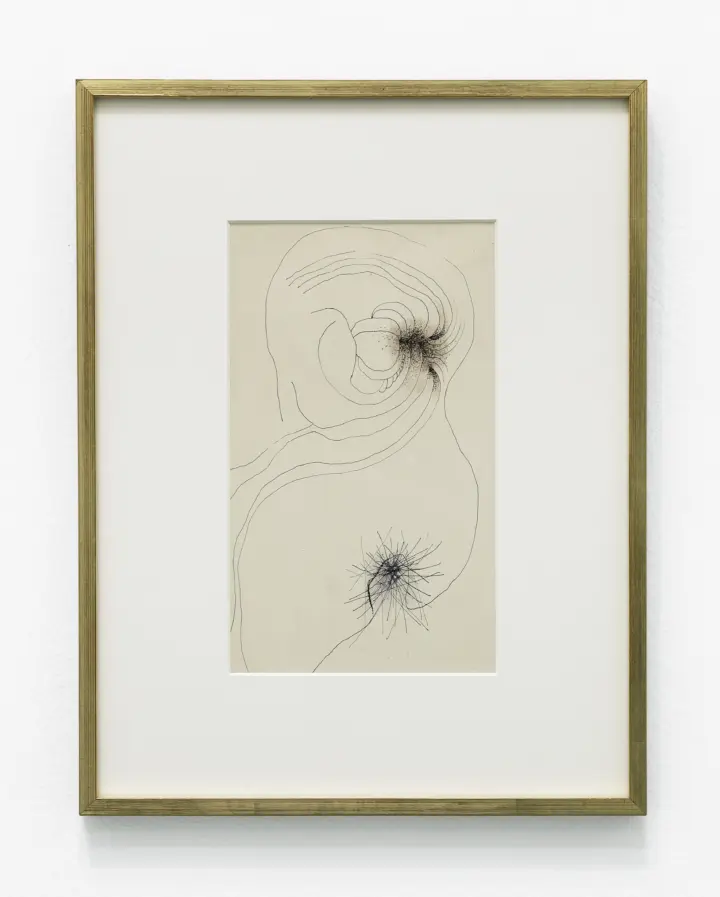
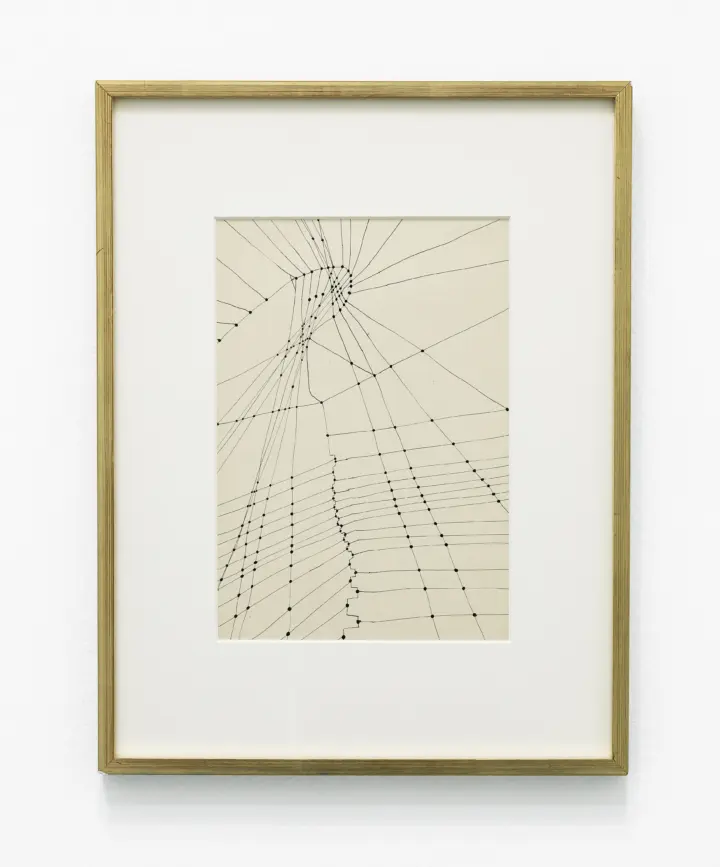
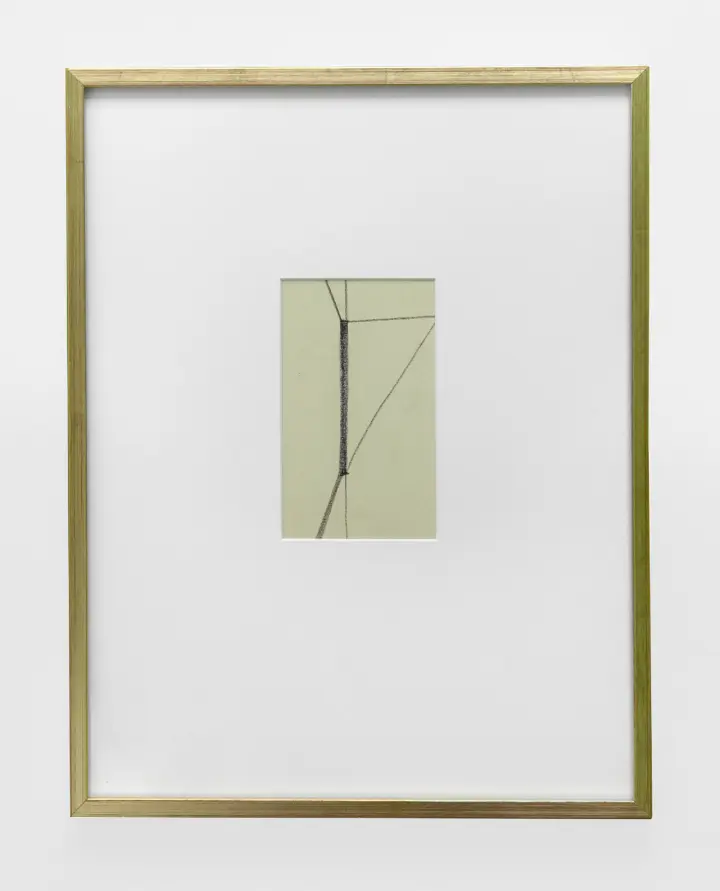
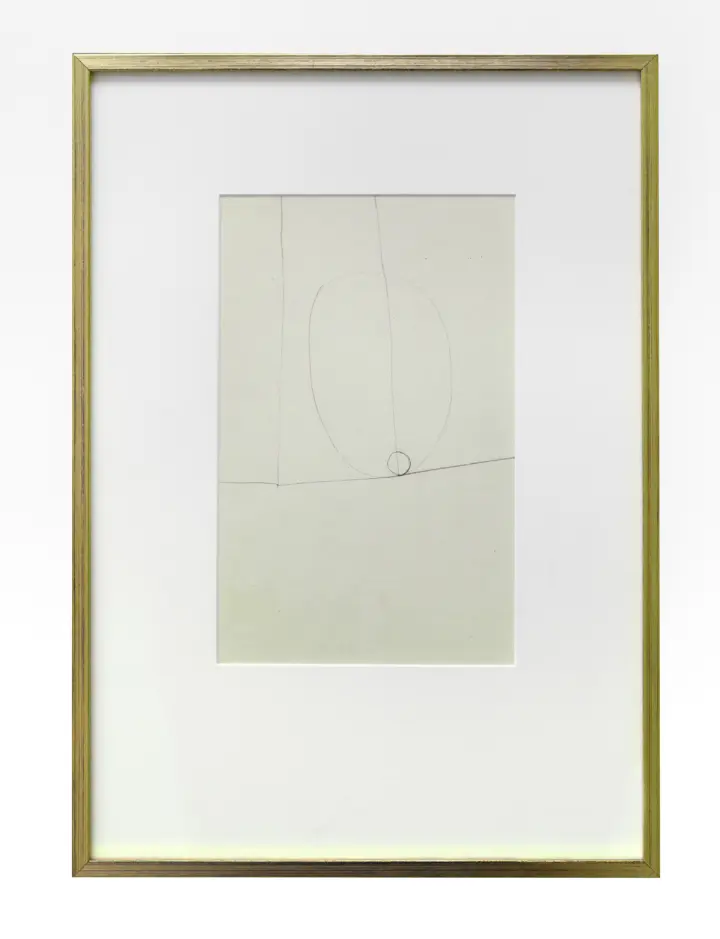
The drawings are where this calculation can be seen stripped bare. The earliest ones, produced largely a few years after his period as a disciple of Batlle Planas (1950–1953), retain his imprint, but also correct it. Each stroke responds to a diagrammatic way of thinking: the line is placed at the service of a topography that locates the points where something unpredictable might appear. In one, a serrated break sutures the place where the grid was broken in order to introduce temporality. In another, notation, controlled to the extreme, lends the accident the force of necessity. In other sheets, the break occurs through the distance between systems of lines that operate alternately as gesture and notation. A spiral grows through minimal variations. In others, the figure emerges from the frequency of the stroke. From this point onward, the line abandons contour and is used to connect. It links two points. It keeps them linked. The line works. On the one hand, there are strokes that discriminate, that distribute regions across the paper; on the other, pencil incisions come to scratch at the coherence of the system.
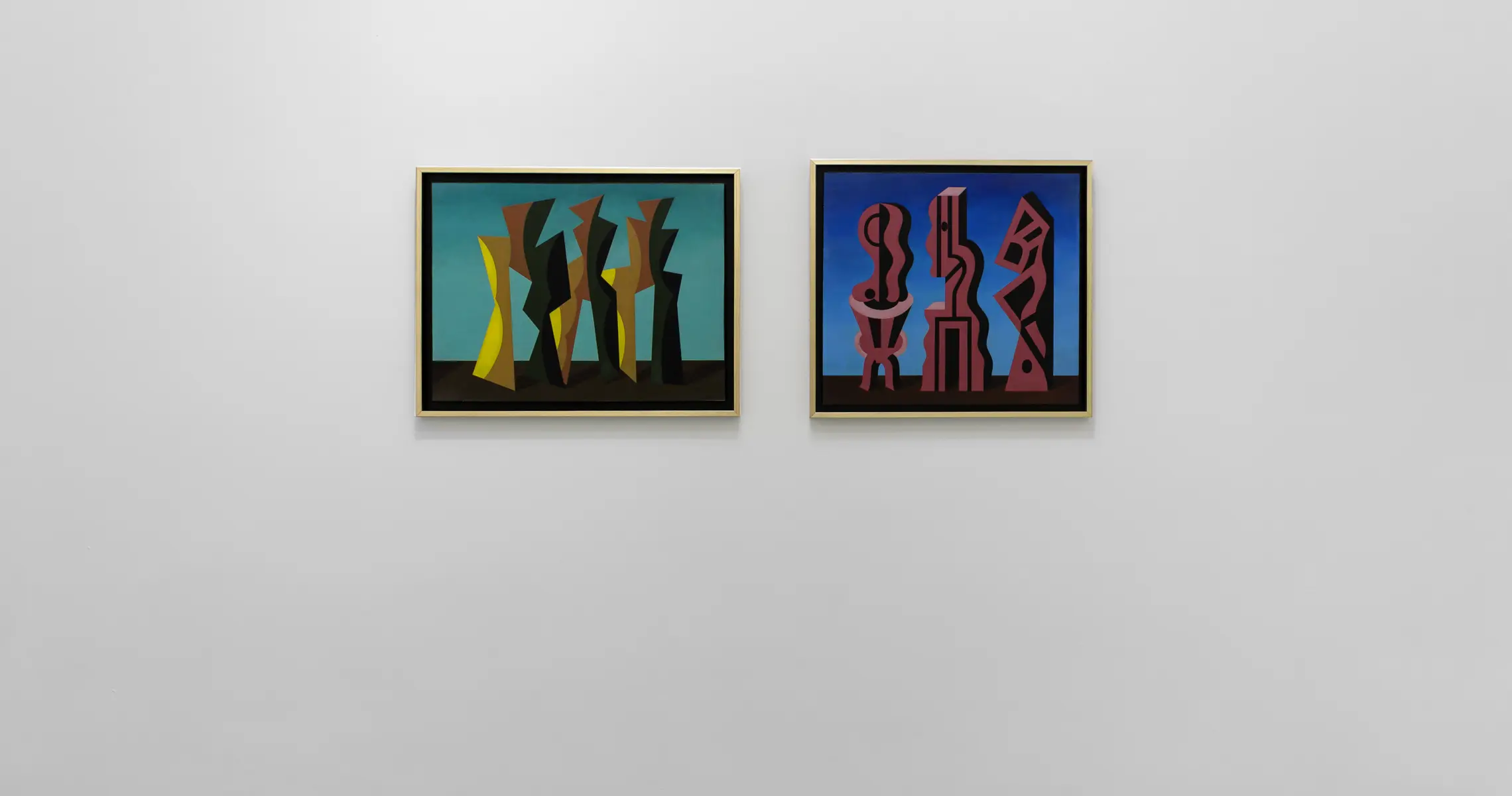
4.
The genealogy of this operation perhaps comes from Paolo Uccello. In two sheets at the Louvre attributed to his hand, perspective begins with the act of placing points: a constellation of small points establishes the vertices of the polyhedron. The finest lines come afterward, linking point to point: perspective as a network. Aizenberg takes up this gesture. The point is the event, the line, its link; everything else, pure connection.
5.
In these papers there is automatic drawing, but subjected to operations of verification, delay, and inspection. Aizenberg introduces small somatic deviations into systems that might appear ideal, and small regularities into traces that might appear automatic. This is where his relationship with a Surrealist legacy that he is willing to cool down comes into play. The epic of automatism—that energy that exhausts itself—is tempered by a discipline of notation that does not prevent the accident, but forces it to account for itself. The drawings are dated with diarist precision.
6.
The mythology of extreme order and the drive toward separation also extend to the object. To represent in the West meant establishing a world apart from the world. Louis Marin put it better: the frame modalizes the gaze before framing a subject. Every representation presents something, while at the same time presenting itself by presenting it. The frame turns the painting into an object. And the object was what Surrealism knew how to look at.
7.
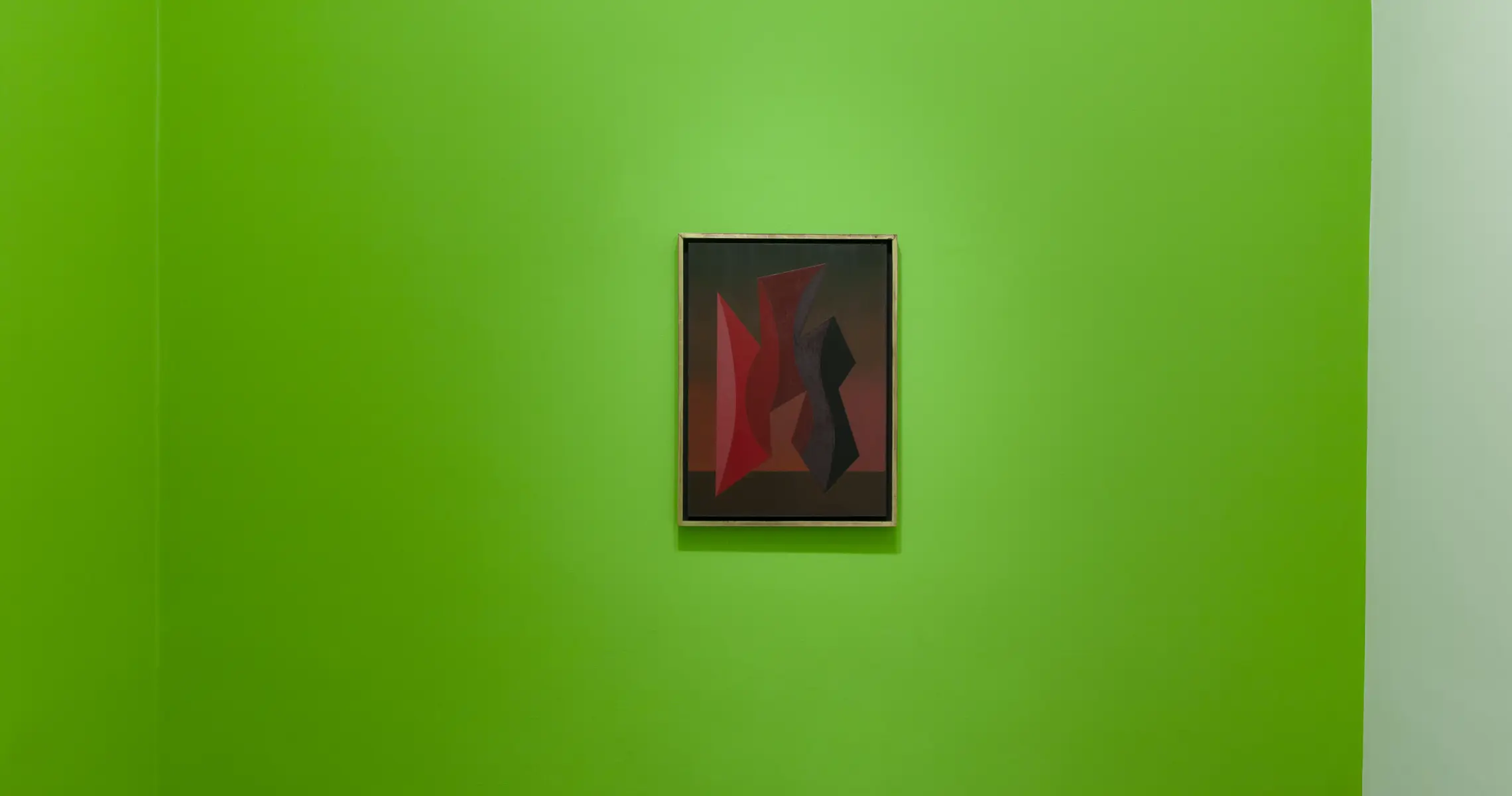
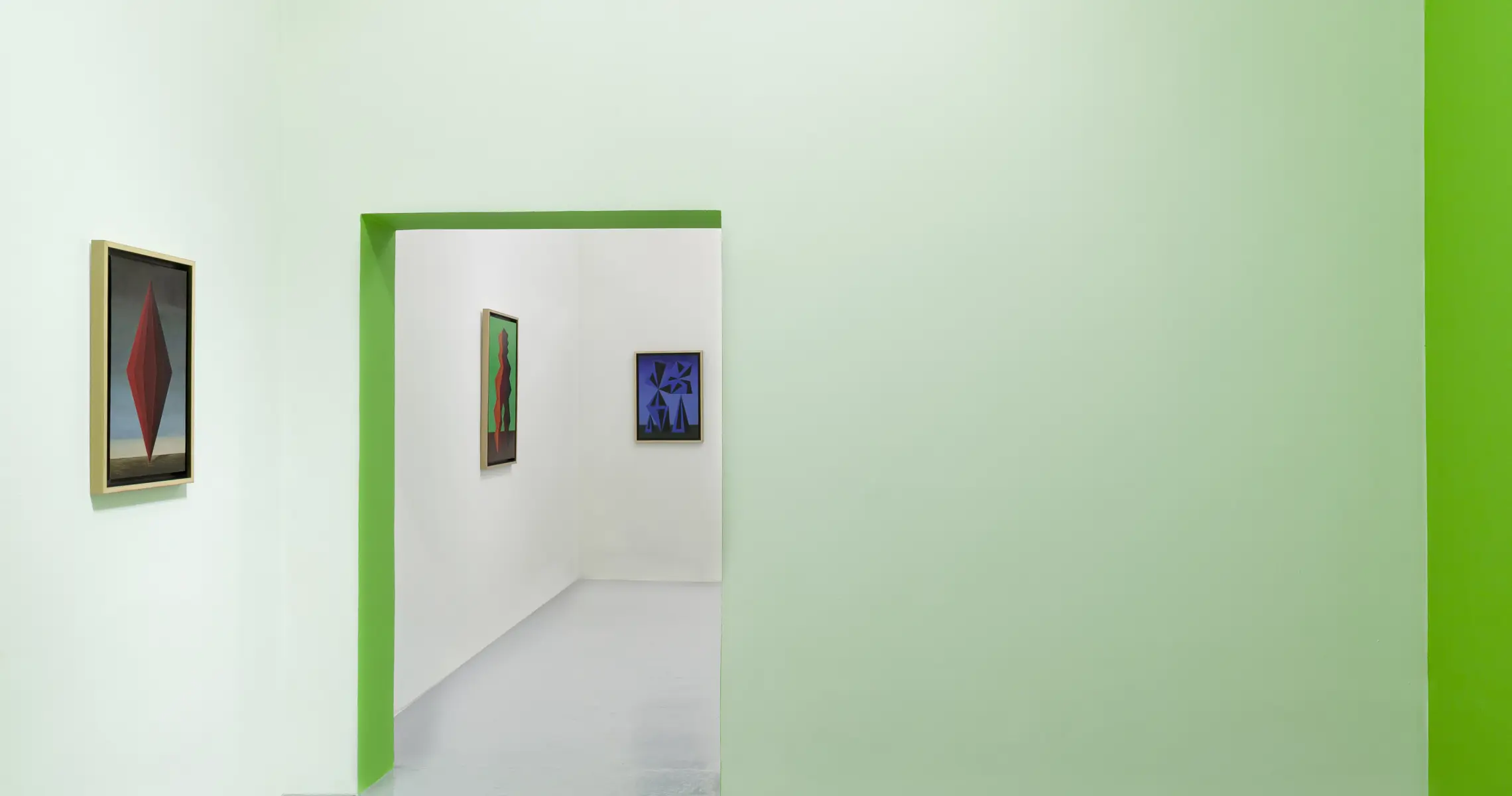
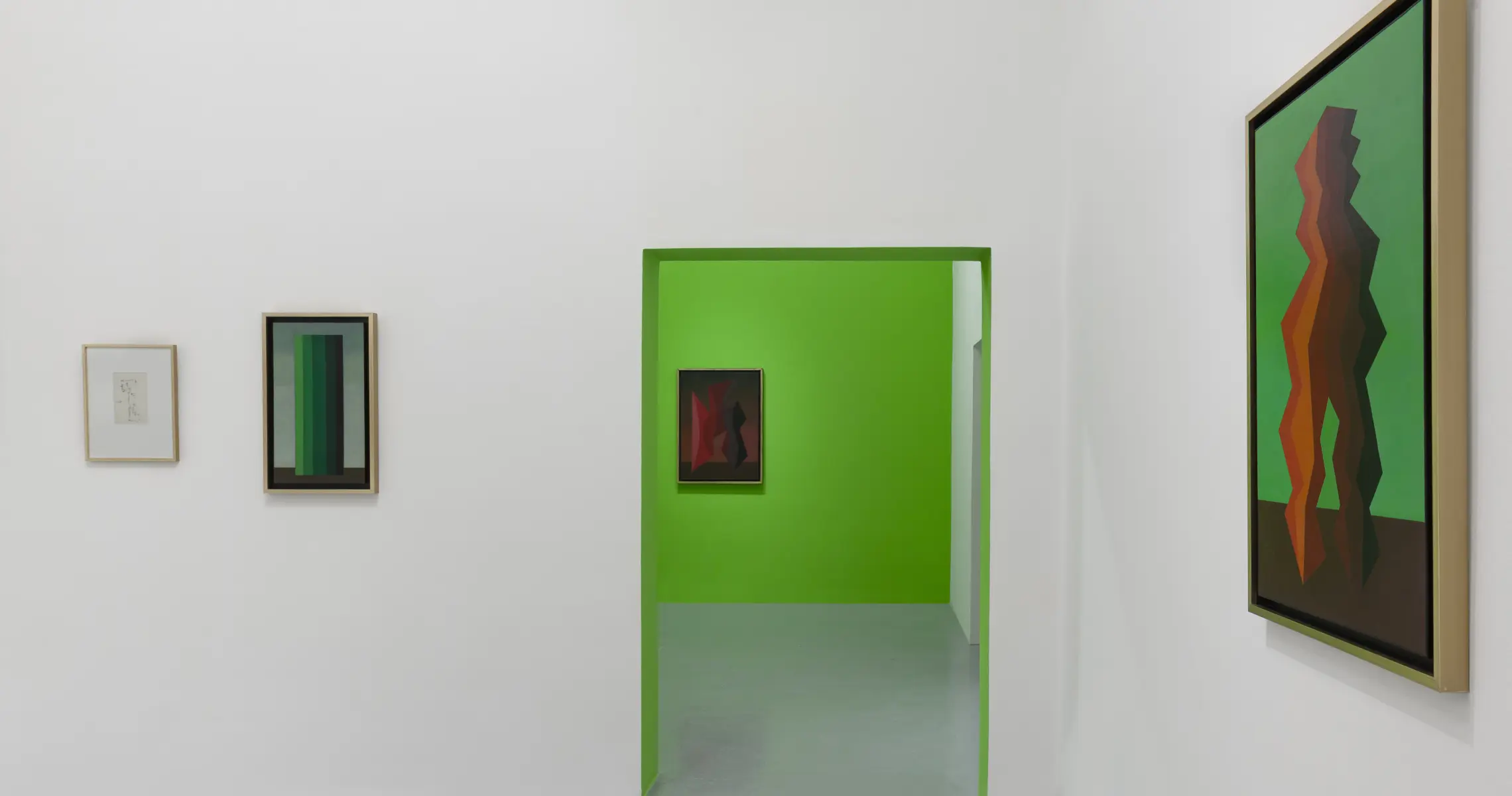
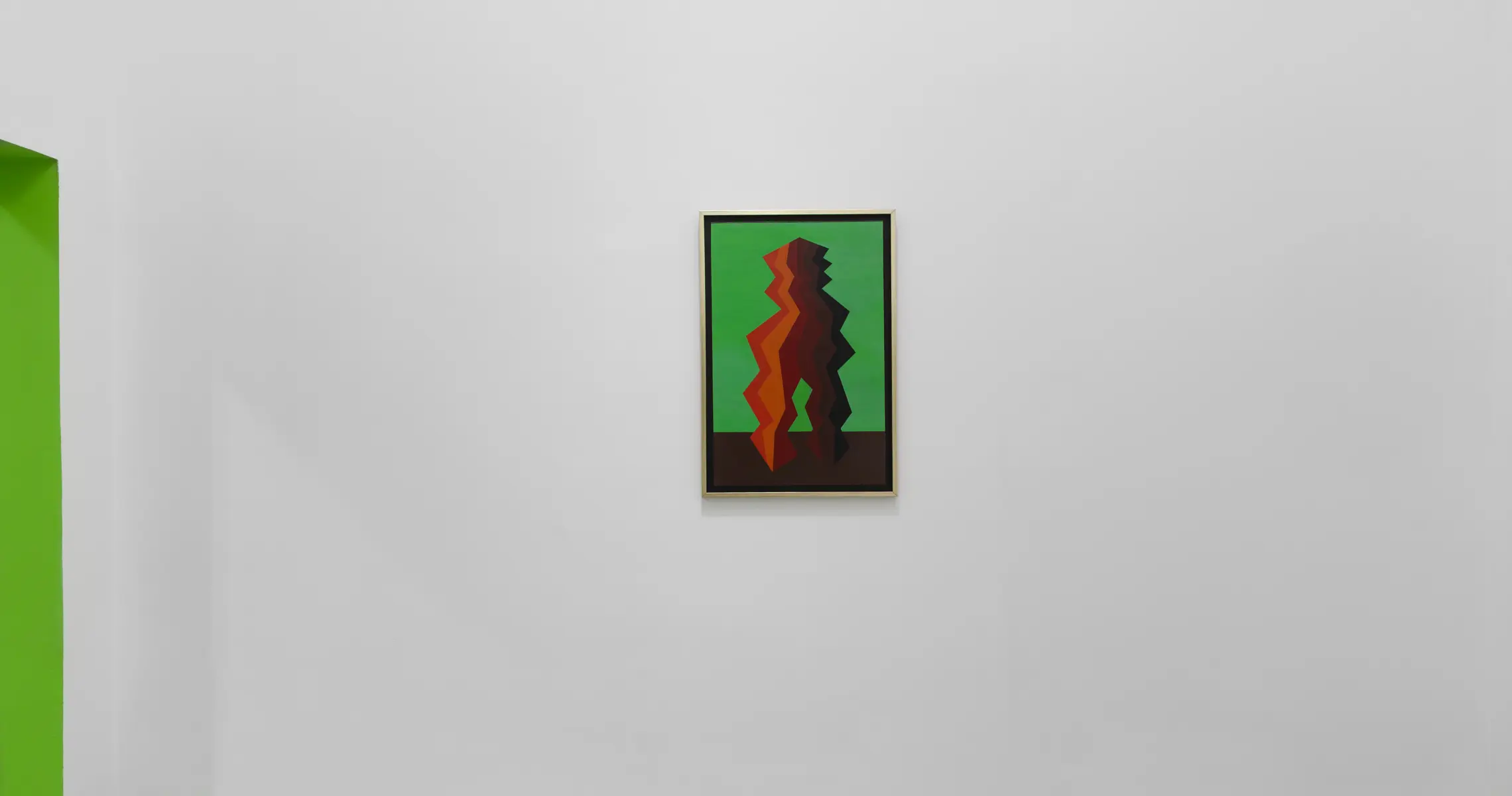
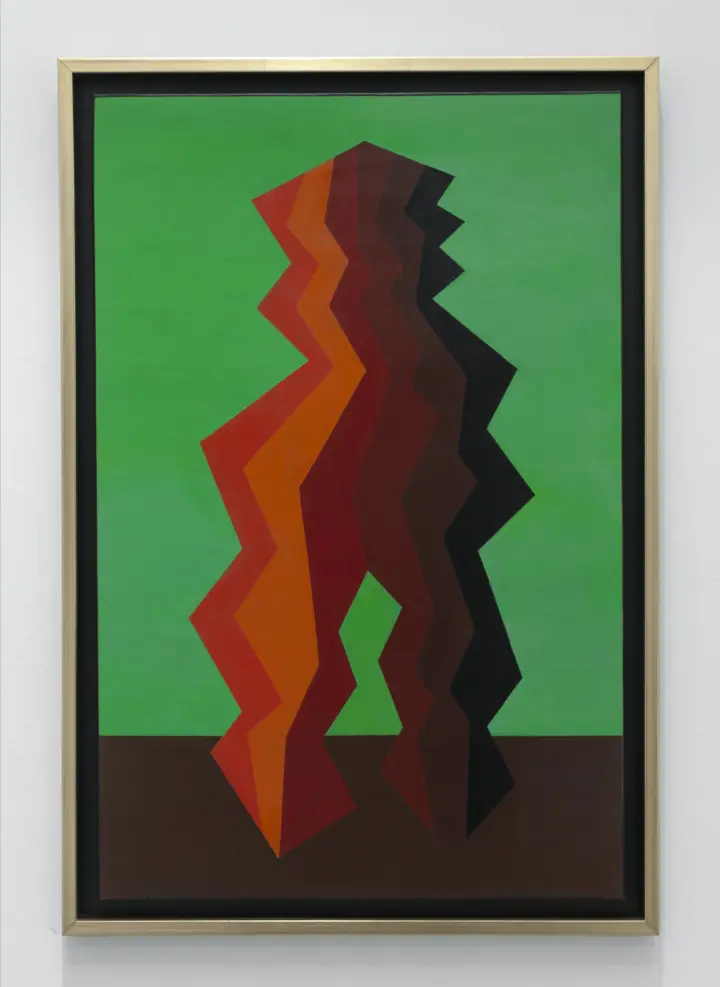
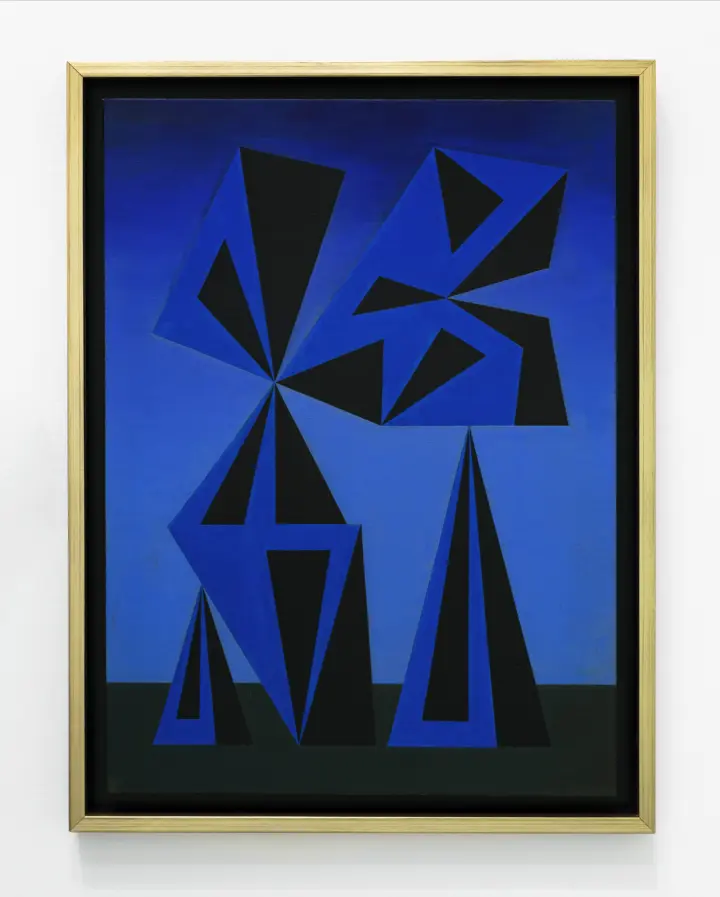
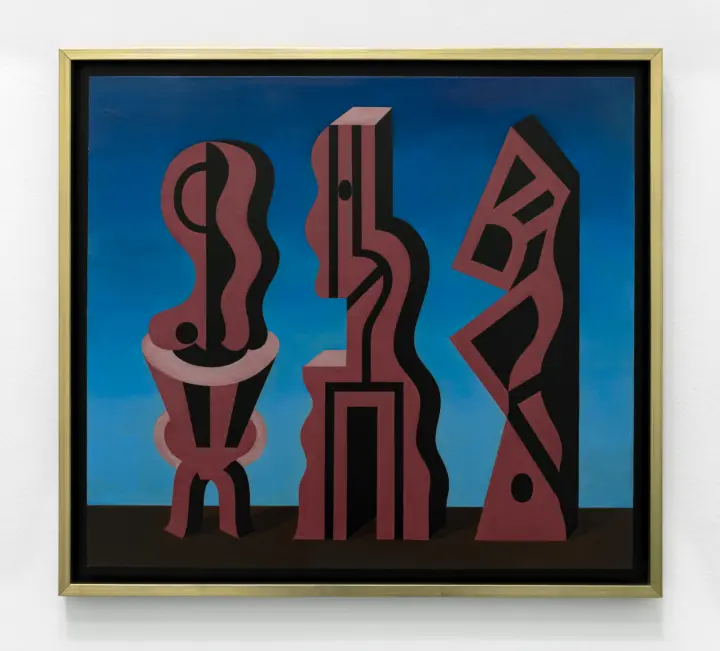
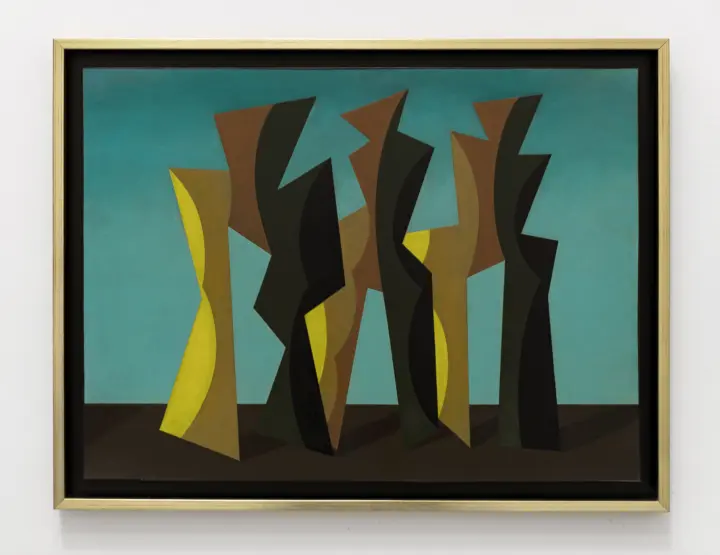
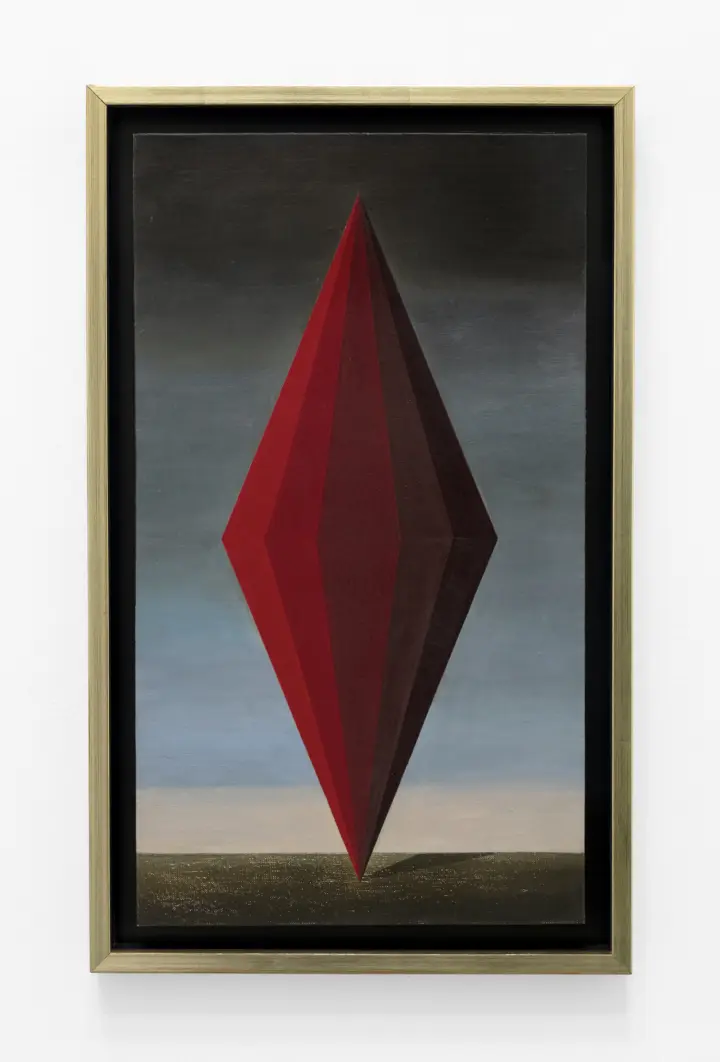
The paintings pose the problem of distance in reverse. Manipulating the ungraspable breadth of the world through the introduction of a geometric figure is an idea that the history of art traditionally associated with the historical styles characterized as tactile. According to a certain theoretical tradition, the impulse toward abstraction arises from exposure to the elements: where the world presents itself as arbitrary and confused, the geometric form is the only place in which man finds repose. The mutable object is torn from its contingency and absorbed into an aura of permanence and necessity. It is, fundamentally, an apotropaic procedure. Placed in the middle of a desert, Aizenberg’s figure repeats this operation. Morphologically, it is small, but the amount of space it administers is enormous; and the vaster the space whose chance and arbitrariness it must control, the greater its appearance of necessity. The desert proliferates distance; the form cuts it down and sets a limit to it. Geometry appears as an absolute in order to make the void measurable: where space threatens to have no measure, it forcibly introduces one.
8.
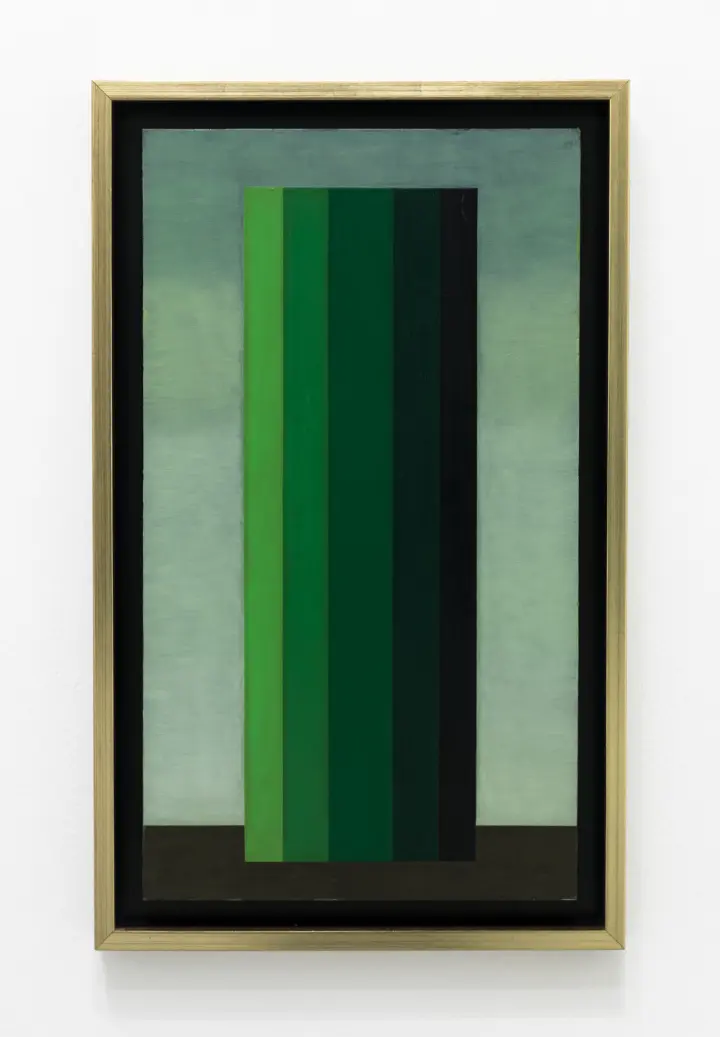
That scheme, however, does not remain the same throughout time. In the oils of the 1970s and early 1980s, geometry establishes its measure within the immensity of a deep background, with a gradated sky, at times Quattrocento-like. Its progressive abandonment then takes place. In place of atmospheric distance, another distance is introduced, strictly chromatic and tonal. Flatness emerges, and with it color ceases to describe and begins to act. Color as event, something that happens and ceases to happen. As if painting were asking how much one thing can differ from another without disappearing, distance comes to reside in the minimal interval between two values. This is a distinction that runs through the entirety of the late work: there are forms that occupy space and forms that produce it. The indication of depth coexists with unlocatable zones. The distance between two points is now there to exacerbate an angle. The fan is the motif that carries out this operation literally: a single vertex distributes identical rods, and difference comes to be measured in degrees. In this poetics of unevenness, there is also a difference in pressure, a gentle slope toward the subtle in terms of facture: transition as program, the scraped notation of the minimal as technique; on the horizon, painting’s degree zero.
9.
Here it is worth recalling an old warning that Aizenberg seems to have known by trade. Alberti asked that circumscription be done with sottilissime lines, so fine that they almost escaped the eye, and explained why: a line that is too apparent no longer shows the edge of a surface but a fissure, like those found in stone or wood. The difference in level must be sufficient to separate and insufficient to crack. In the same treatise, the complementary requirement: the point, indivisible by definition, must nevertheless have a minimum extension from the moment one wishes to make it visible. The minimum is not zero. All of Aizenberg’s painting works by skirting this threshold without crossing it. His dosing of differences in level is a decision about the conditions under which an image appears.
10.
Much has been said about the silence of his painting. Too readily, we tend to forget that this silence, which returns whenever his work is discussed, also has a history. In twentieth-century art criticism, this vocabulary became attached to the so-called Italian primitives, with whom the artists and critics gathered around Valori Plastici constructed a genealogy for modern art. Silence was sought in De Chirico’s painting; but before and alongside him, it was also recognized in Giotto—in whose magical silence of forms Carrà said contemplation found repose—in Simone Martini, Uccello, and above all Piero della Francesca, so dear to Aizenberg. In 1927, the publishing house Valori Plastici published the monograph Roberto Longhi had devoted to him. By then, Piero had already appeared in D’Annunzio’s Le città del silenzio; and in 1950 Berenson would condense that modern reading into a disjunctive title: Piero della Francesca o dell’arte non eloquente. A painting stripped of the signs of eloquence, then: impassive, utterly still. For centuries, the iconography of conversation had taught that speaking also meant moving one’s hands. A silent art was therefore expected to suspend gesture. To be the opposite of an art in movement.
11.
This history allows us to read differently what Aizenberg does with tradition, like a machine that—in this respect too—reveals itself sensitive to recalculating distances. Tradition presents itself to him as a system of proximities and distances that can be measured again, and he measures it again. The frontality of architecture in certain painting that extends from the Duecento to the early Quattrocento—where the city, before being a setting, is a group of people who decide to live together—reappears in his canvases stripped of anecdote, as syntax. The city emerges through the reiteration of elementary appearances. He works with disparate memories and does not merge them: each provenance remains at the proper distance from the others. In the same way, he approaches literature without losing the specificity of the image. Nothing is assimilated: everything comes close to the point at which more than one thing can still be seen.
12.
Silence quickly becomes a sign of a wise, heroic, or sibylline position. Here one must be cautious. What the work sustains is something more precise, closer to what Barthes would call the neutral: an intensity withdrawn from the obligation to manifest itself as emphasis, which extinguishes the signs of passion without extinguishing passion itself. Gradients, variants arranged in steps, a fine practice of difference. Small difference as method. In this sense there is silence: insofar as painting claims the right to a materiality made of delay, and therefore distinct from the materiality of communication. Slow glazes. A slowing down. Making perception last longer. A broken rhythm preserves the delay, and from it emerges a new stability.
13.
This delay also has a theoretical thickness that exceeds the case itself. Nine reflections on distance were enough for Carlo Ginzburg to remove it from the realm of deprivation. Distance makes the familiar strange, makes visible something that familiarity had rendered invisible, produces perspective, turns presence into representation, includes or excludes, intellectually brings closer what is physically distant and, at the opposite extreme, anesthetizes what is too far away. Aizenberg administers distance like someone who knows this repertoire and chooses, in each work, which of these operations will be activated. Hence his work functions as a machine that calibrates distance and proximity.
14.
There remains one final order of distance, the one that concerns us, those of us who live among technical images. There are things that remain recognizable while the distance connecting them to the rest changes without being noticed. A minimal difference between two nearly indistinguishable states is one of the possible definitions of what Duchamp called inframince in his manuscripts, and it allows us to think about what changes even when everything seems to remain the same. That is what occurs in the interval opened between reproductions and works. A highly effective photographic transmission partly explains why this work has become available to the contemporary imagination as a repertoire of visual formulas without the body that sustains them. This happens to almost all painting since photography took on the task of disseminating it. And this withdrawal prepares the surprise of what can only occur as an effect of presence: the uneven sheen that changes with the position of the body, the tonal transition that photography renders uniform, the grain of the support that receives the material, the time the eye needs to notice a difference that the reproduction may never convey. An idea of the work also appears in the inventory, in the catalogue entry, in the recorded measurements, and in the documentation photograph. None of these equivalents records the instant when a glaze becomes visible to the body standing before it.