POSTREALISM
By Sofía Dourron
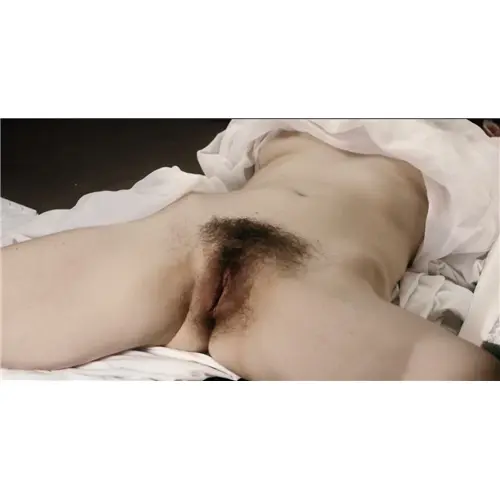
Gustave Courbet’s The Origin of the World (1866) continues to elicit, even 160 years later, a wide range of reactions: from rejection and astonishment to covert voyeurism. Yet, if we follow Linda Nochlin’s interpretation, the work above all crystallizes a structure of power that was naturalized and institutionalized by Western art and remains in force to this day. By stripping the female figure of a face, Courbet denies her identity and subjectivity, reducing her to a passive object of contemplation for an implicitly male viewer and, of course, for a painter who is always active.
The violence embodied in the work also extends to its title: calling the female genitals “the origin of the world” transforms the body into a kind of universal allegory while simultaneously erasing the person who inhabits it. For Nochlin, this exemplifies the logic of realism as ideology: far from being a neutral mode of representation, nineteenth-century realism reproduced and legitimized the power relations already embedded within the European political and social system.
The regime of visibility established by the work was further amplified through a history of concealment and narratives suspended somewhere between myth and literature. Commissioned by the Turkish diplomat Khalil Bey, who first kept it hidden behind a curtain and later behind a panel depicting a snowy landscape, the painting disappeared from the Hatvany Collection in Budapest during the Second World War, only to resurface in Paris, where it was sold to an anonymous buyer. After the war, the work found a new home in Jacques Lacan’s country house.
Paradoxically, the psychoanalyst concealed it behind a wooden device created by André Masson, whose sliding cover—a schematic drawing of the original painting designed by Masson himself—revealed the work beneath, once again reinforcing the patriarchal symbolic order embedded within it. It was not until 1988 that The Origin of the World was finally exhibited publicly at the Brooklyn Museum, bringing to an end more than a century of veils and legends.
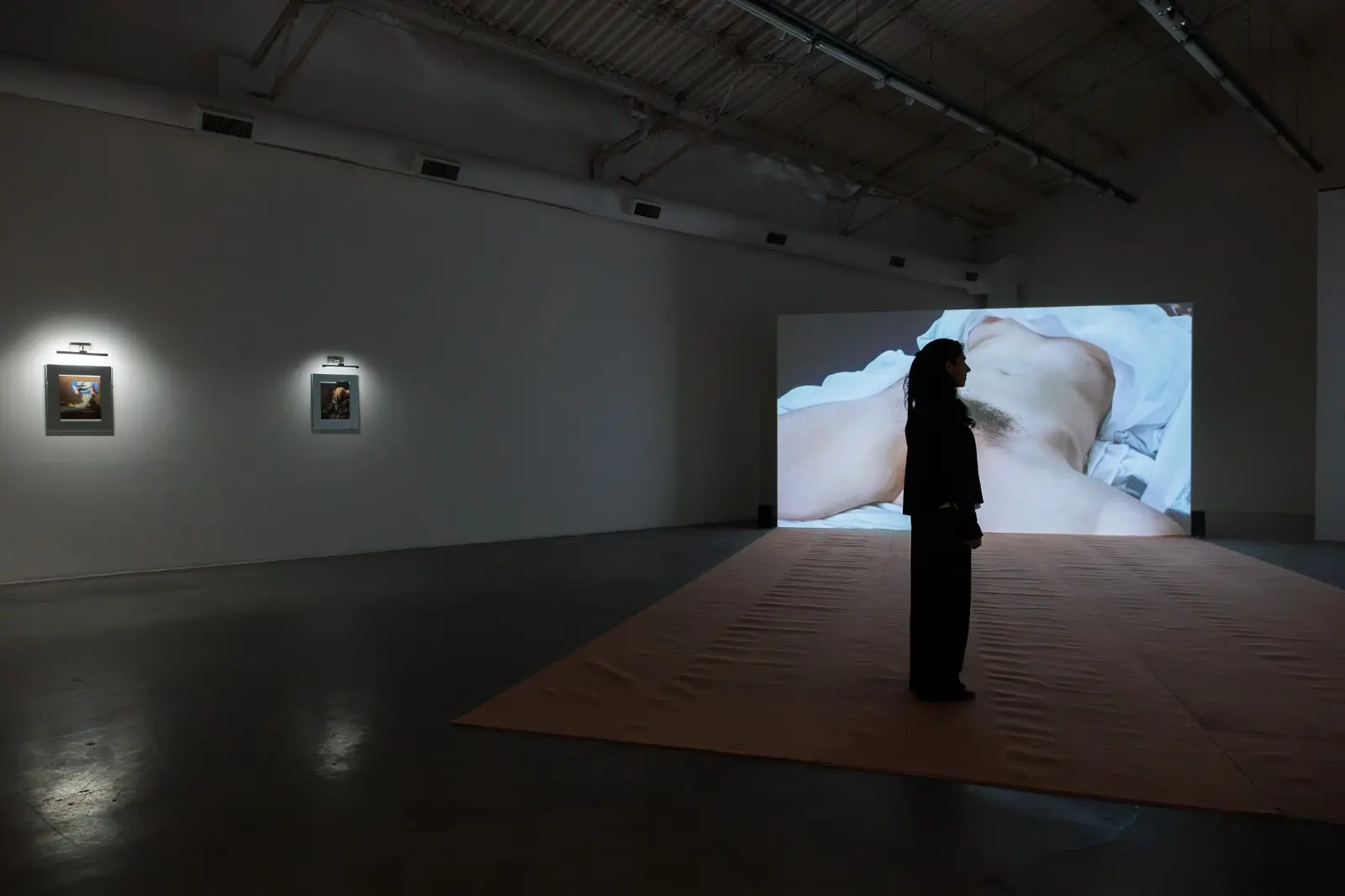
Jazmín López’s eponymous work, which gives this exhibition its title, proposes an audiovisual recreation—a single continuous ten-minute shot of Courbet’s painting—that dismantles the original’s eroticizing narratives by exposing the mechanisms through which images are produced. From the very beginning of López’s work, the editing and the off-screen dialogue among the women who make up the production team suspend cinema’s classical narrative function and instead propose a reflection on art, anonymity, and the act of looking. They question how framing and mediation shape perception while simultaneously dismantling some of the medium’s most hegemonic conventions. At the same time, the insistence on a fixed, uninterrupted shot rejects the sexualized continuity of the eye moving across the body and, in a single take, disarticulates the male gaze described by Laura Mulvey. Instead, the work redirects attention toward the operations through which the body is framed and fragmented, while the dialogue restores and reveals the conditions of the image’s production and circulation.
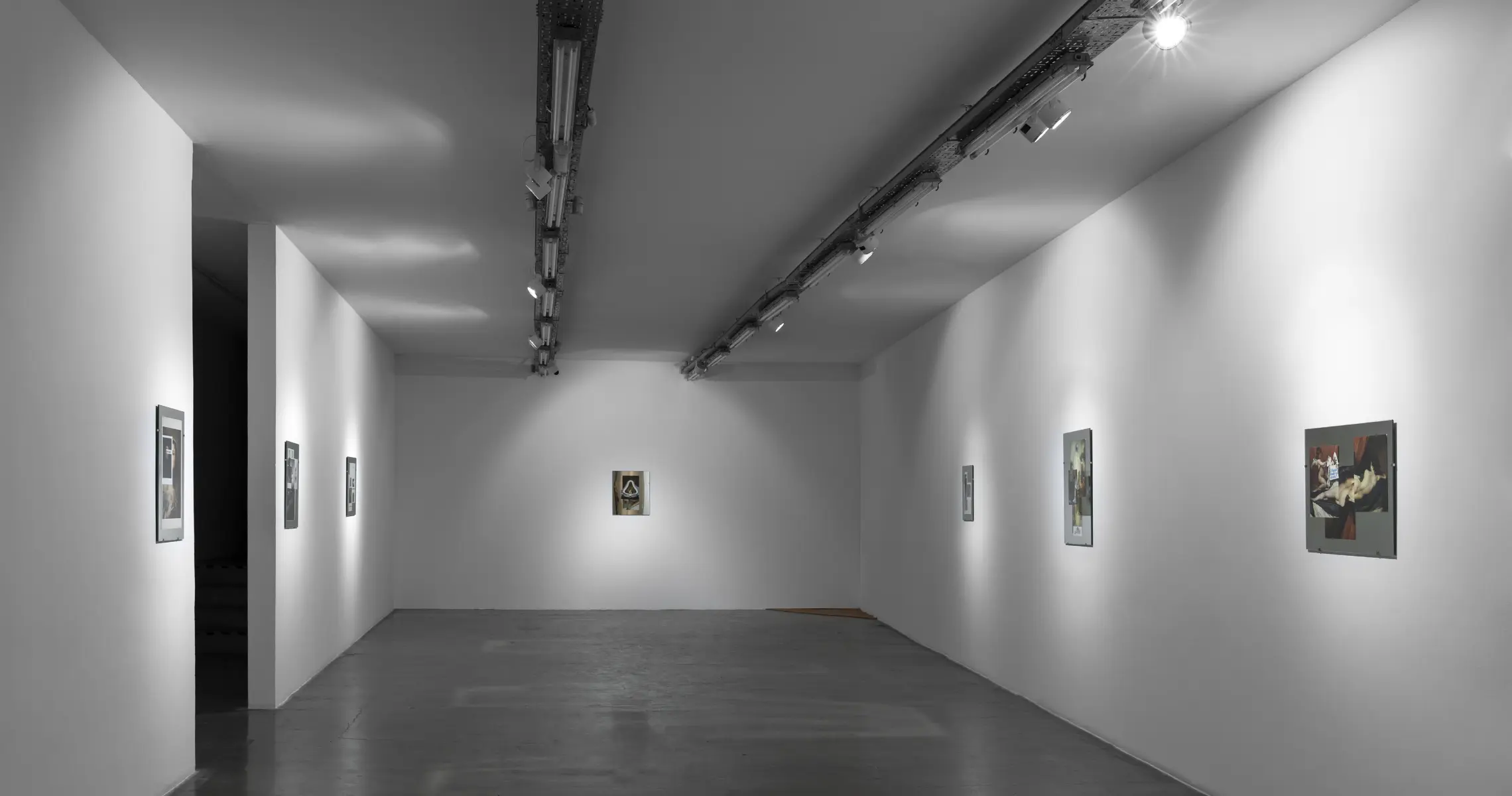
That single long take gradually gives way to the appearance of a behind-the-scenes space that increasingly exposes the cinematic artifice until it dissolves it completely: the model gets up, someone offers her a coffee, the crew celebrates, the set is dismantled. The exhibition insists on these processes of mediation through its use of space: the usual entrance to the main gallery has been blocked by a drywall partition, and visitors must first pass through the offices and then through the gallery’s back rooms—one of the quintessential sites for the circulation of art—before reaching the work. Fiction collapses; its own tools betray it.
Jazmín López’s The Origin of the World retains the original format of Courbet’s painting while radically enlarging its scale. Through this gesture, it interrupts both the history of the painting’s invisibilization and the structures of power built around the reclining body and the external gazes that consume it. The monumental scale of the body in López’s work nullifies—or overwhelms—the viewer, who no longer consumes the image from a position of power but is instead subsumed, almost crushed, between the model’s legs. This gigantism transforms the objectified and stripped-down figure of the original, restoring to it a renewed force and position within the framework of the Western pictorial art system.
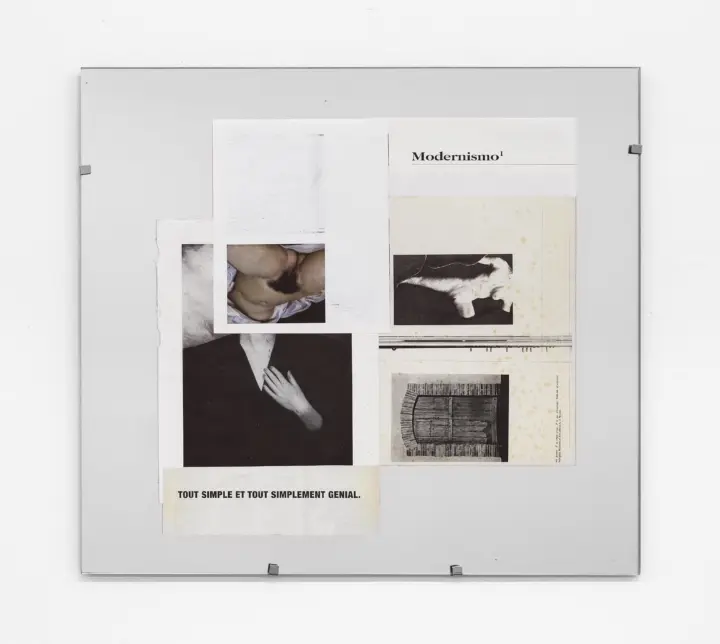
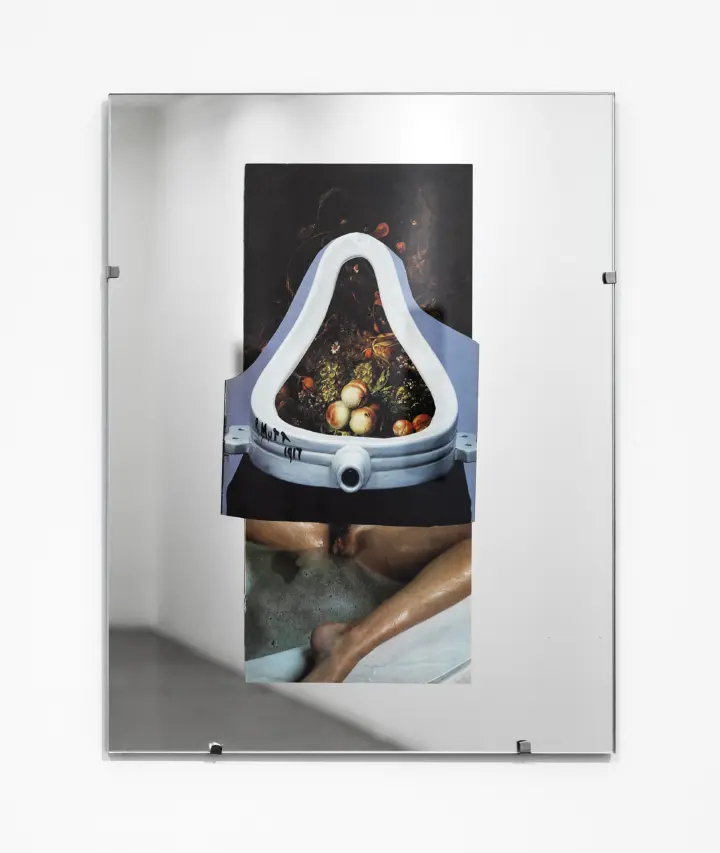
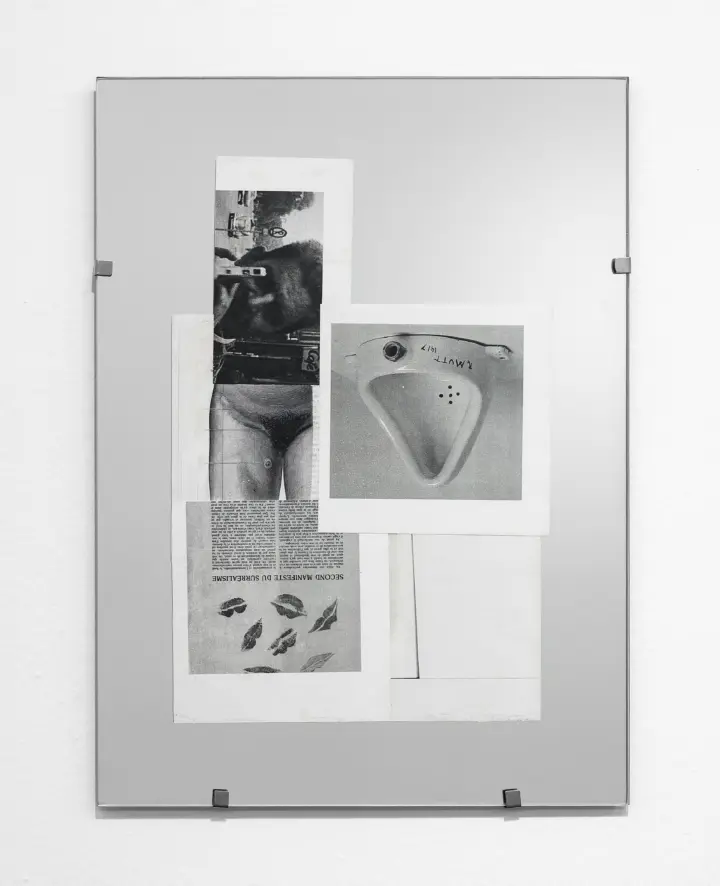
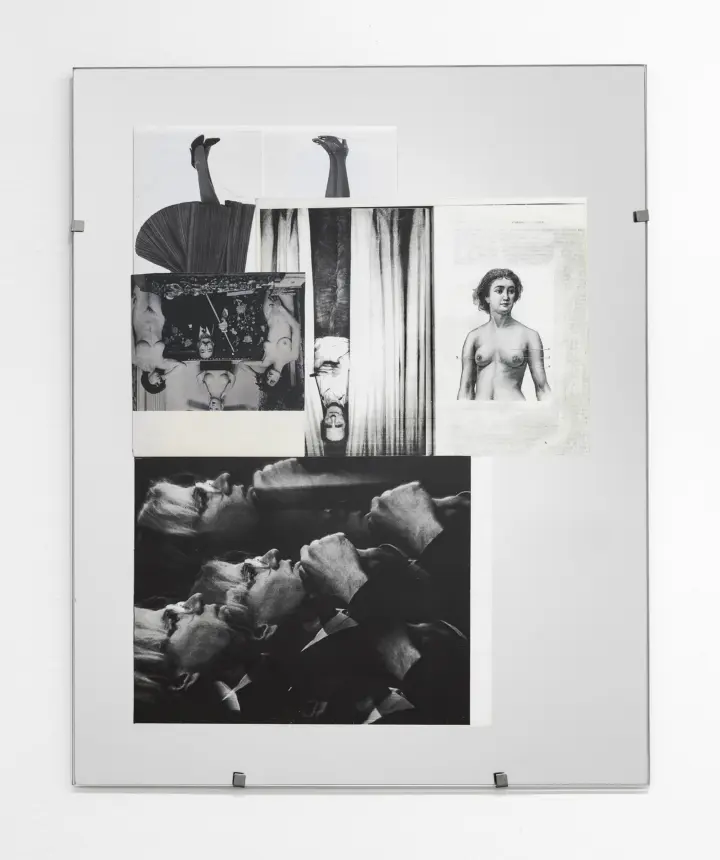
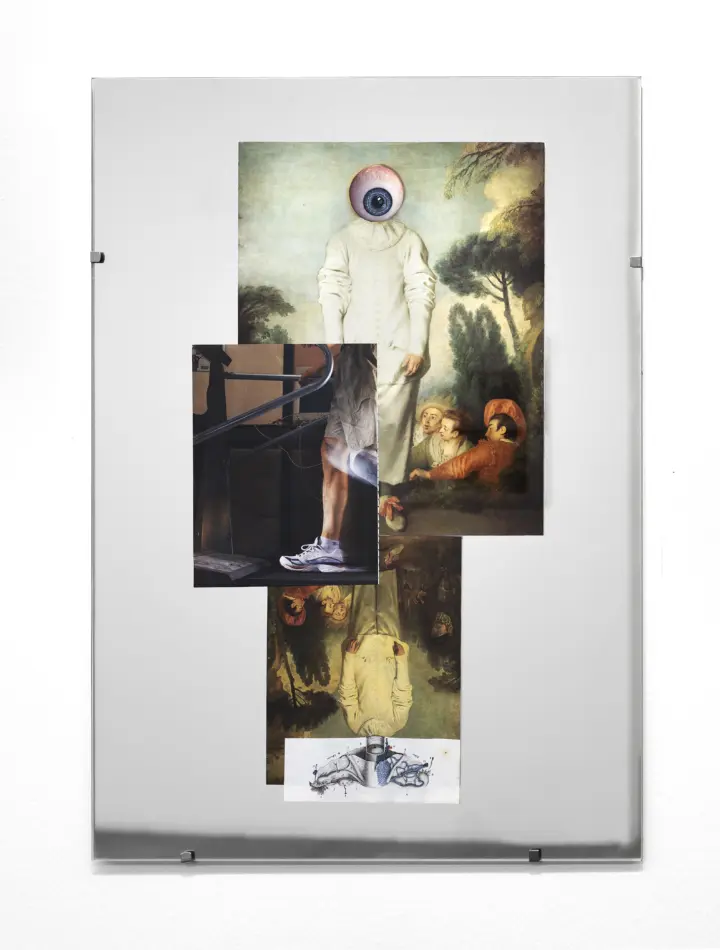
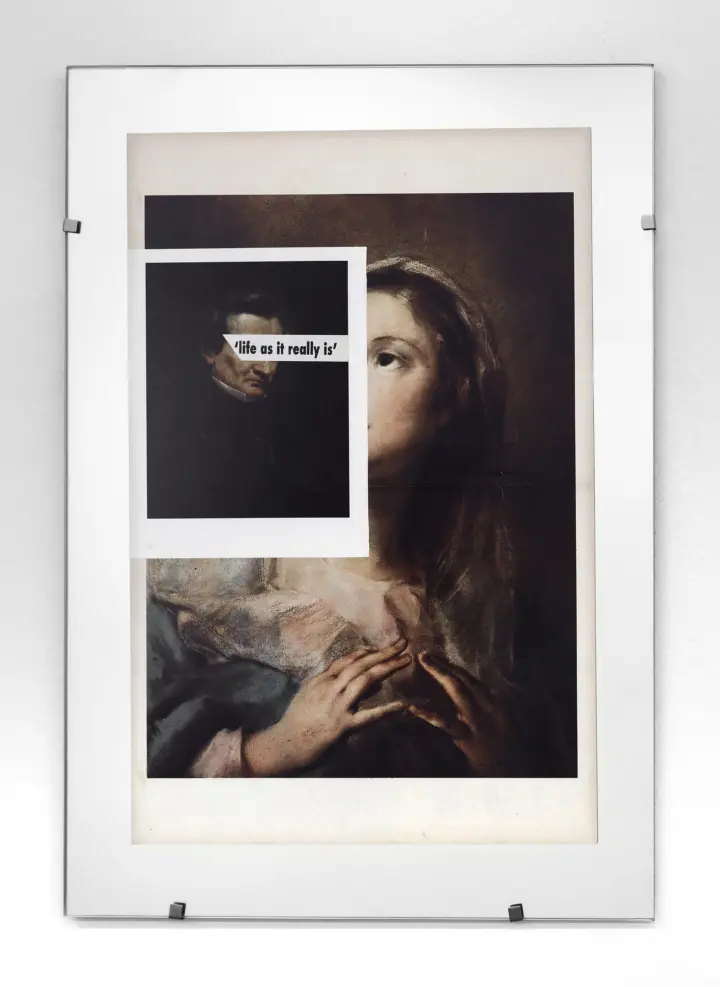
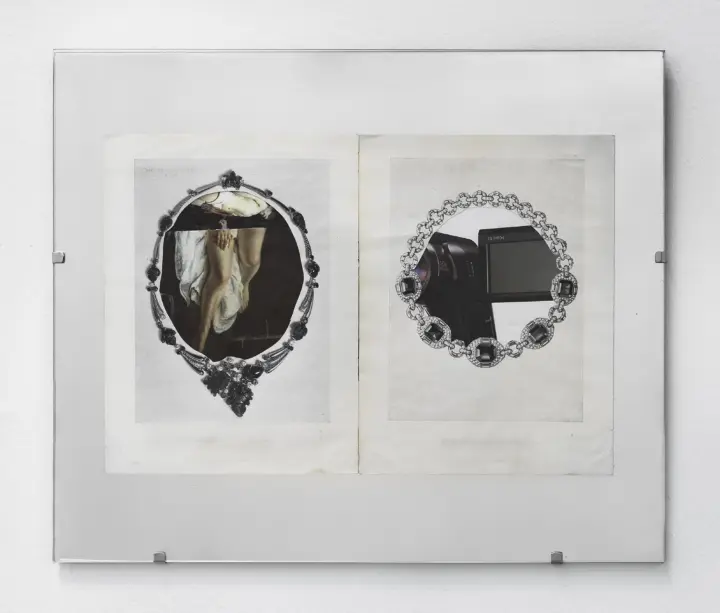
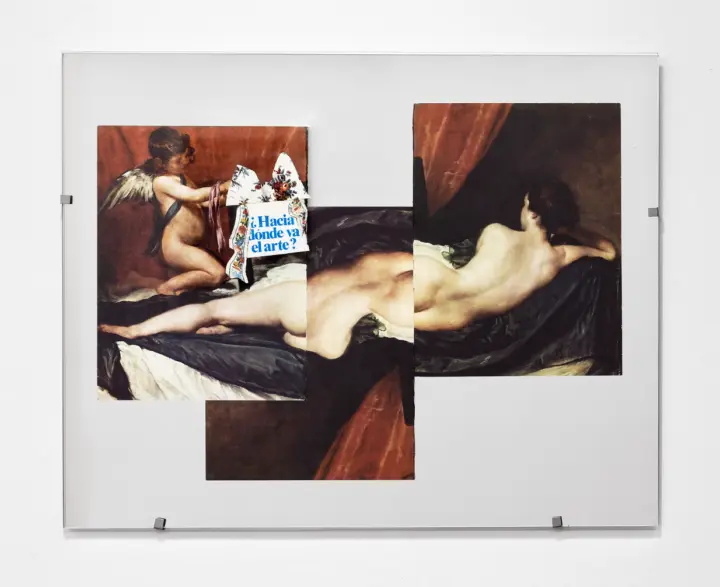
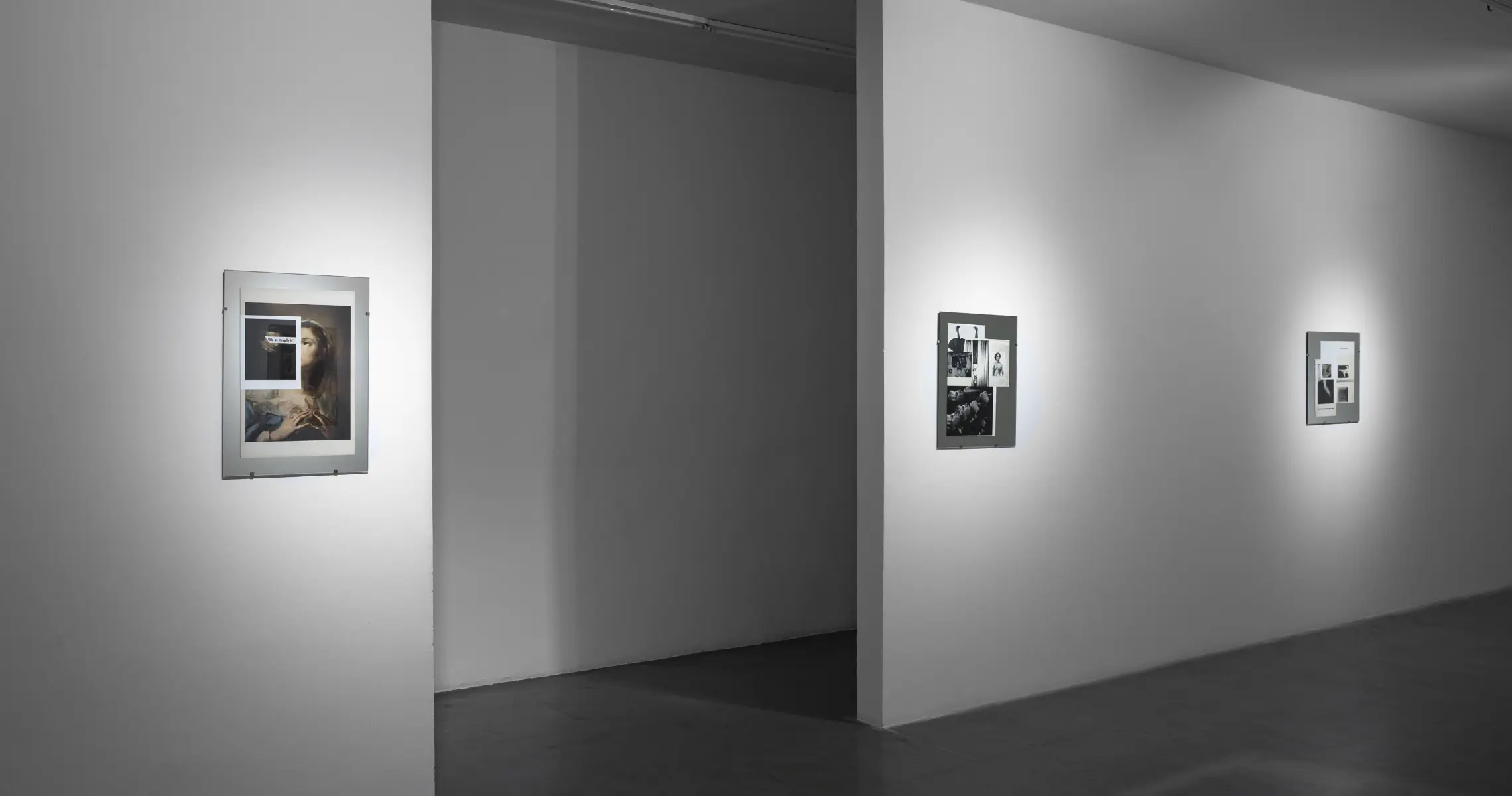
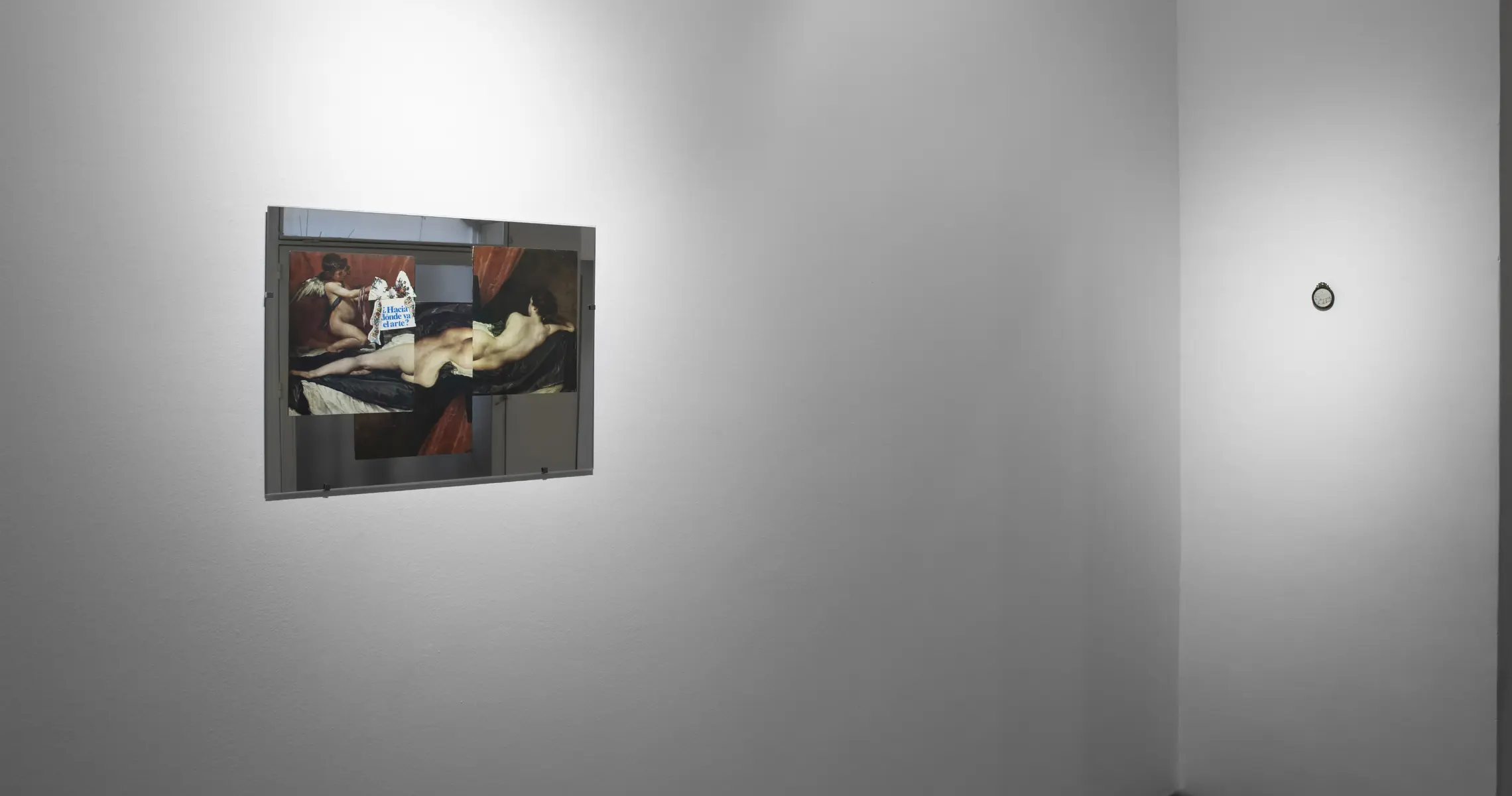
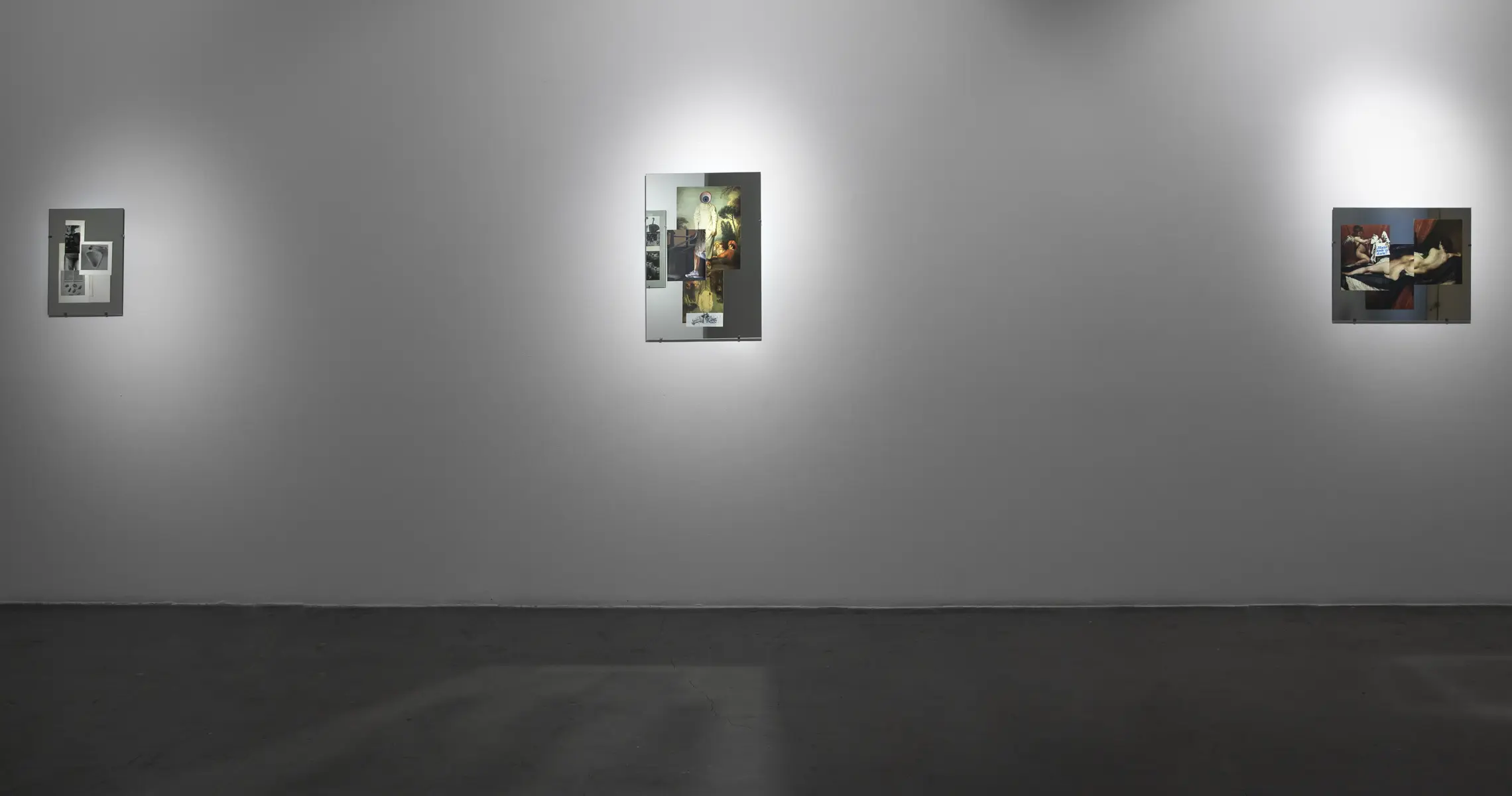
If Courbet’s realism opened new horizons by portraying the world without idealization and by incorporating political and social dimensions as artistic subject matter, it did so while simultaneously reinforcing masculine spaces and modes of looking. López’s operation goes further, imagining what comes after realism. By revealing the mechanisms of both cinematic and pictorial image-making, it performs a double movement upon the real. Both the video work and the accompanying series of collages demonstrate that realism does not imitate reality but constructs it: it selects, organizes, and gives form to the subjects and objects that compose it, shaping our perception with particular insistence on feminized bodies and the regimes of consumption and visibility to which they are subjected. The fragments of art history reconfigured and brought into tension with images from books and magazines in the collages mounted on mirrors reflect us back to ourselves, returning us to questions that continue to endure: who has the right to look, under what conditions, and with what consequences.