

Desde el 28 de agosto
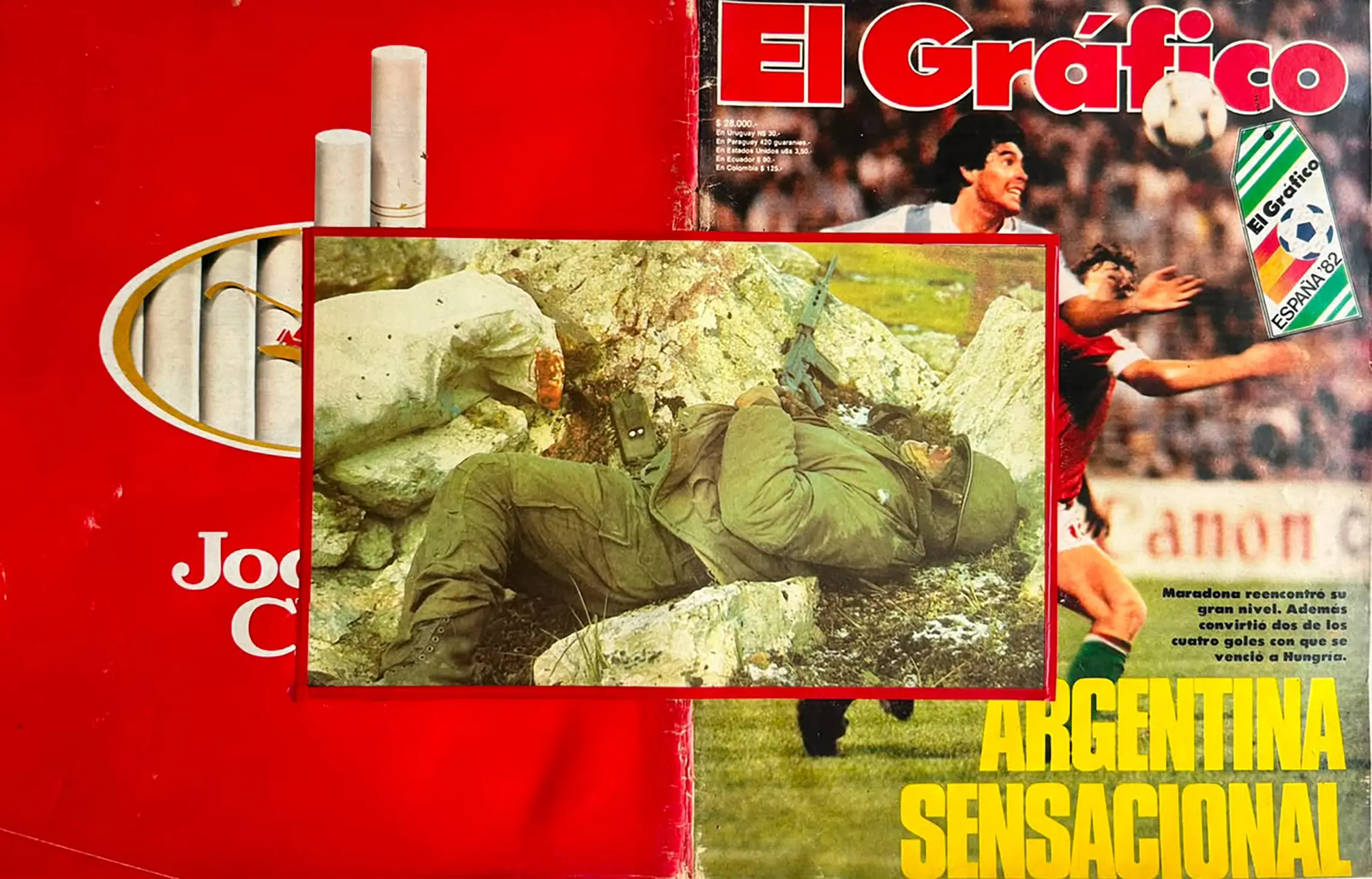
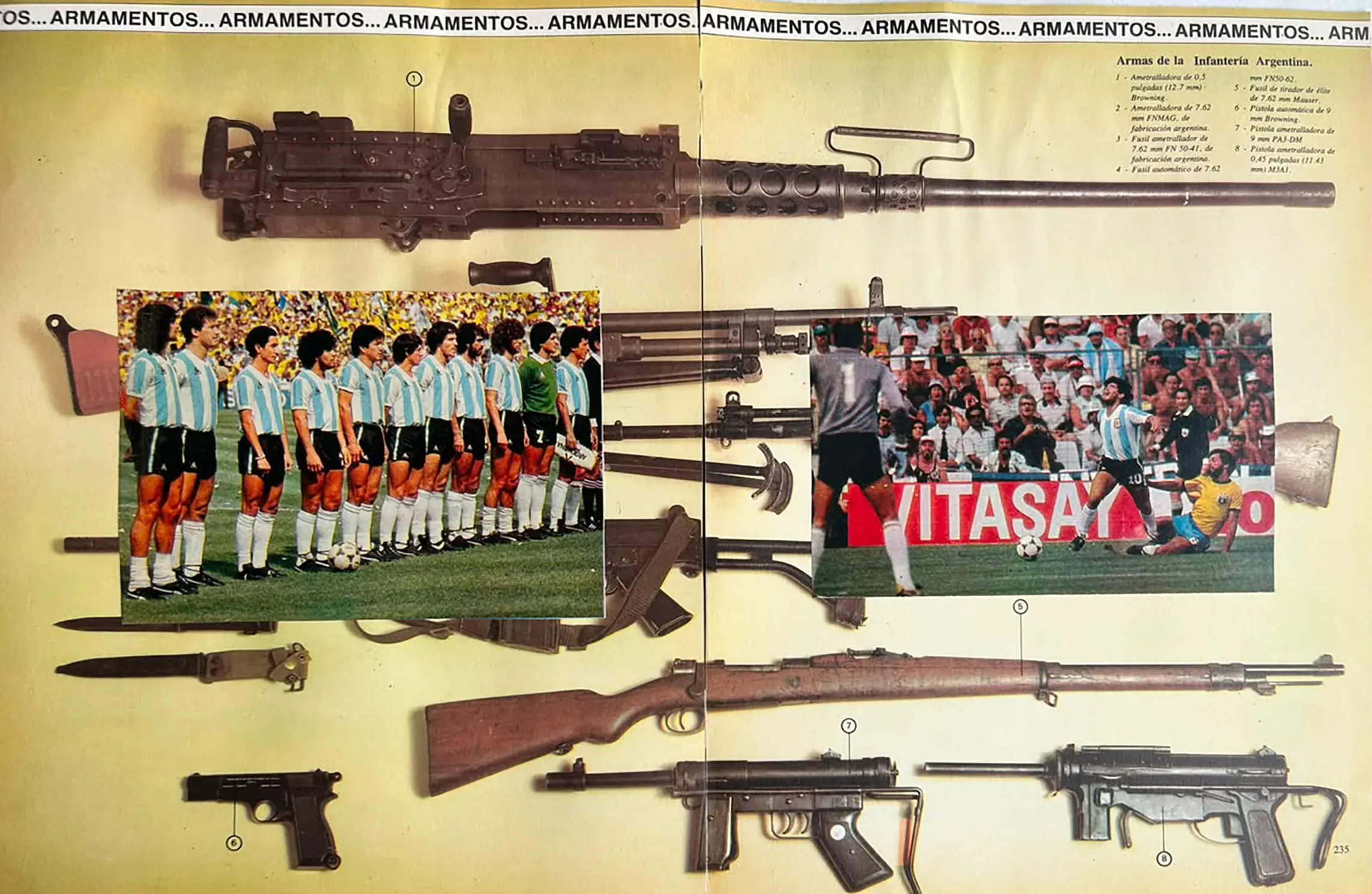
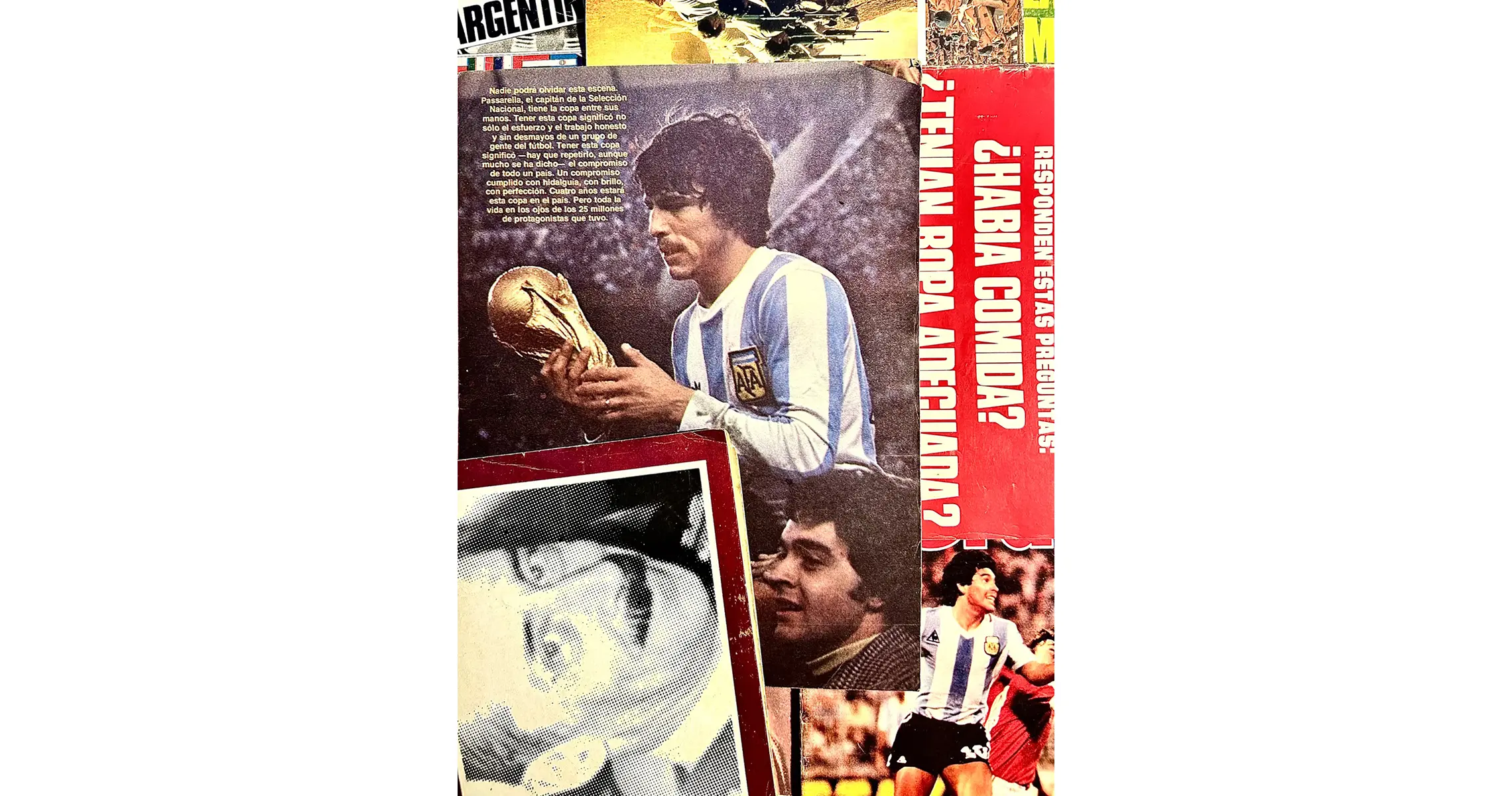
The exhibition brings together three series of collages made by Herrera in 1998, in which the artist explores the symbolic construction of the national body through images of Argentine football during the 1978, 1982, and 1986 World Cups. The works reflect on the relationships between sport, power, and memory, and on the ways in which bodies are used to represent, discipline, or contest the idea of the nation.
MANAGING ENTHUSIASM
Anatomy of Fervor brings together three series of collages made by Carlos Herrera in 1998 that explore the symbolic construction of the national body. Through images of Argentine football, the work reflects on the relationship between sport, power, and memory, asking how bodies are used to represent, discipline, or contest the idea of the nation.
During the last civic-military dictatorship, the 1978 World Cup turned the footballer into an emblem of a victorious nation, while state terrorism was making thousands of bodies disappear. Four years later, the Falklands War shifted this heroism onto the body of the soldier, transforming sacrifice into a national imperative. Pope John Paul II’s visit, calling for peace and an end to the war, transformed the image of the Falklands hero into that of a victim. The defeat in the Falklands accelerated the collapse of the dictatorship. Elections were held on October 30, 1983, and on December 10, Raúl Alfonsín took office, bringing the last military dictatorship to an end and restoring democracy to the country. In 1986, Diego Maradona emerged with a figure that transcended both military and sporting narratives: a popular body capable of re-signifying a historic defeat and becoming a collective myth.
The exhibition structures this trajectory around three typologies: the victorious body (1978), the sacrificed body (1982), and the mythical body (1986). Rather than reconstructing a history of Argentine football, ANATOMY OF FERVOR explores how power manages affects, produces heroes, and shapes collective imaginaries, while also considering how certain bodies exceed these mechanisms and open up new forms of memory and representation.
Carlos Herrera
July 2026